AfD rise raises questions over ties to neo‑Nazi networks
Electoral success and internal factions have deepened scrutiny of AfD’s links to banned neo‑Nazi organisations and former militants now active in party ranks.
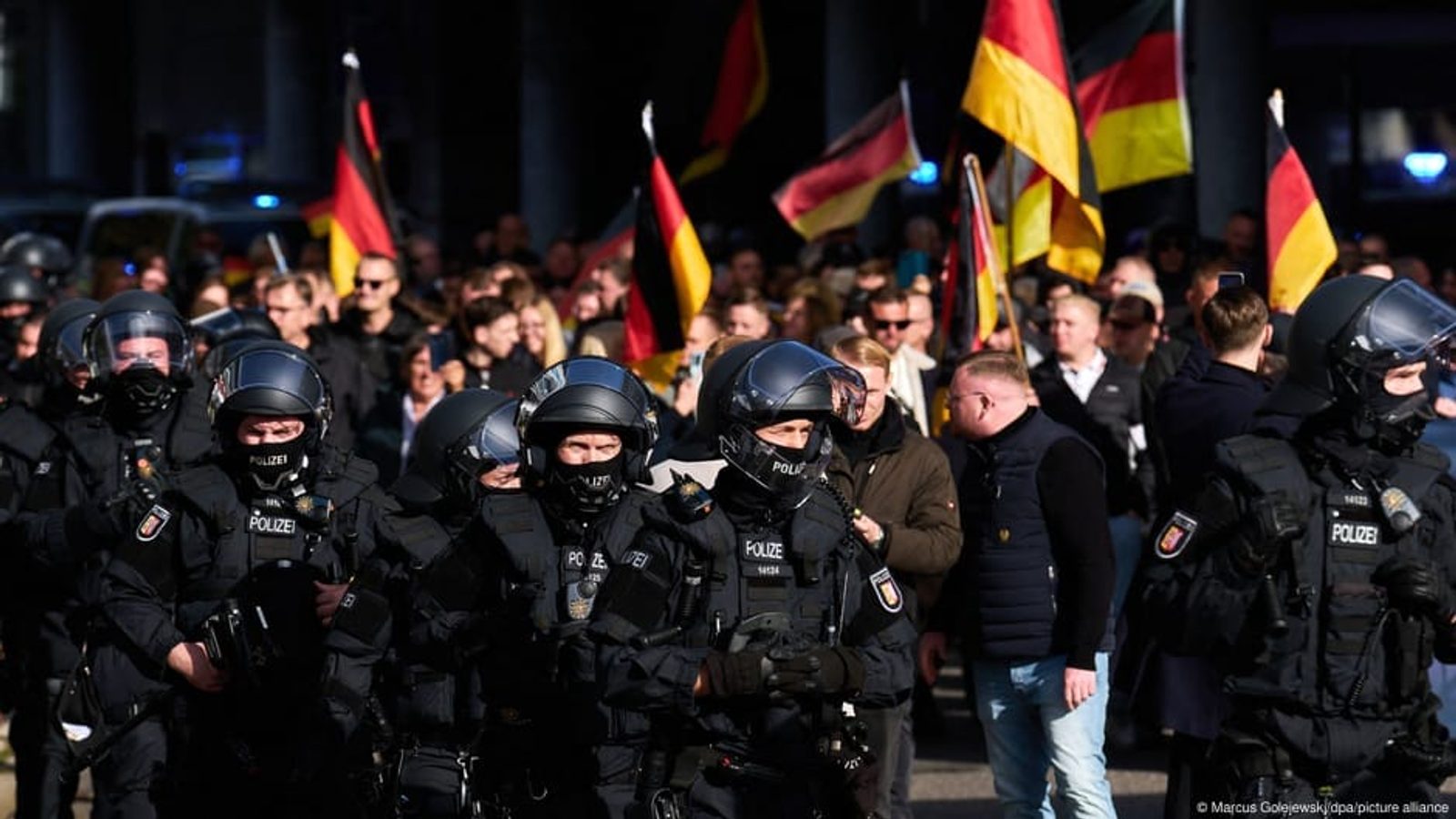
Alternative for Germany (AfD) has surged in recent regional elections and now poses a realistic bid for top offices: in September 2026 it emerged as the strongest force in Saxony-Anhalt and is positioning candidates for senior regional posts, while the party has publicly set a 2029 goal of supplying a chancellor candidate with co‑leader Alice Weidel as Spitzenkandidat.
Questions about ideology and links to the militant far right
The party’s rise has intensified scrutiny of its ideological orientation. The Federal Office for the Protection of the Constitution classifies AfD as a “suspected case of right‑wing extremism” and, in some federal states, as a proven right‑wing extremist body. Fabian Virchow, a researcher on right‑wing extremism at the Düsseldorf university of applied sciences, warns: "If we look at AfD as a party as a whole, it is an extreme‑right party that also shows tendencies toward a fascist movement."
Observers note competing currents inside AfD: Alice Weidel represents a market‑radical strand that calls for a minimized role for the state, while other figures such as Björn Höcke push for a strong, ethnically defined state. Those internal differences coexist with a broader process of normalization of radical right positions that makes the party attractive to militant groups.
Longitudinal research from Leipzig underlines the social context for this shift: the study finds a rise in right‑wing extremist attitudes in German society and reports that roughly two‑thirds of people with a firmly formed right‑wing extremist worldview would vote for AfD, a level of support earlier far‑right parties failed to achieve.
High‑profile incidents in 2026 have sharpened the debate. In August 2026 police raided 15 suspects accused of continuing the work of Artgemeinschaft — until its ban in 2023, one of the largest cadre organisations of neo‑Nazism — and authorities say two of those targeted are current AfD members of the Saxony‑Anhalt regional parliament; their lawyers deny the allegations. Separate reporting indicates four staffers in the AfD parliamentary group were formerly members of Heimattreue Deutsche Jugend (HDJ), a neo‑Nazi youth organisation that promoted National Socialist racial ideology and ran paramilitary camps for young people.
Two of those former HDJ members held leadership positions in the banned group and now work closely with AfD politician Ulrich Sigmund, who "wants to be elected" in December as the first provincial premier from AfD. Sigmund declared: "We have the mandate to govern."
Some of these organisations are explicitly listed on AfD’s own incompatibility list, which is intended to bar people with extremist pasts from party activity. Yet enforcement appears inconsistent: Andreas Kalbitz was expelled in 2020 for failing to disclose past membership in the Heimattreue Deutsche Jugend, but later returned to work for AfD — this time as an aide to Hans‑Thomas Tillschneider, who rose to become vice‑president of the Saxony‑Anhalt parliament.
Attempts to obtain an official stance from AfD’s federal leadership and from individual MPs and staffers on how the party handles members with extremist pasts met with silence. That muteness fits the concern voiced by Virchow that public rebuttal has lost much of its potency as right‑wing extremism has become more embedded in the political centre.
Note from the editors: to protect the personal rights of a collaborator with the network that supports leaving the far‑right milieu, the name used in interviews has been changed to Laura Neumann; her real name is known to the editors.
Photo: press material from the event