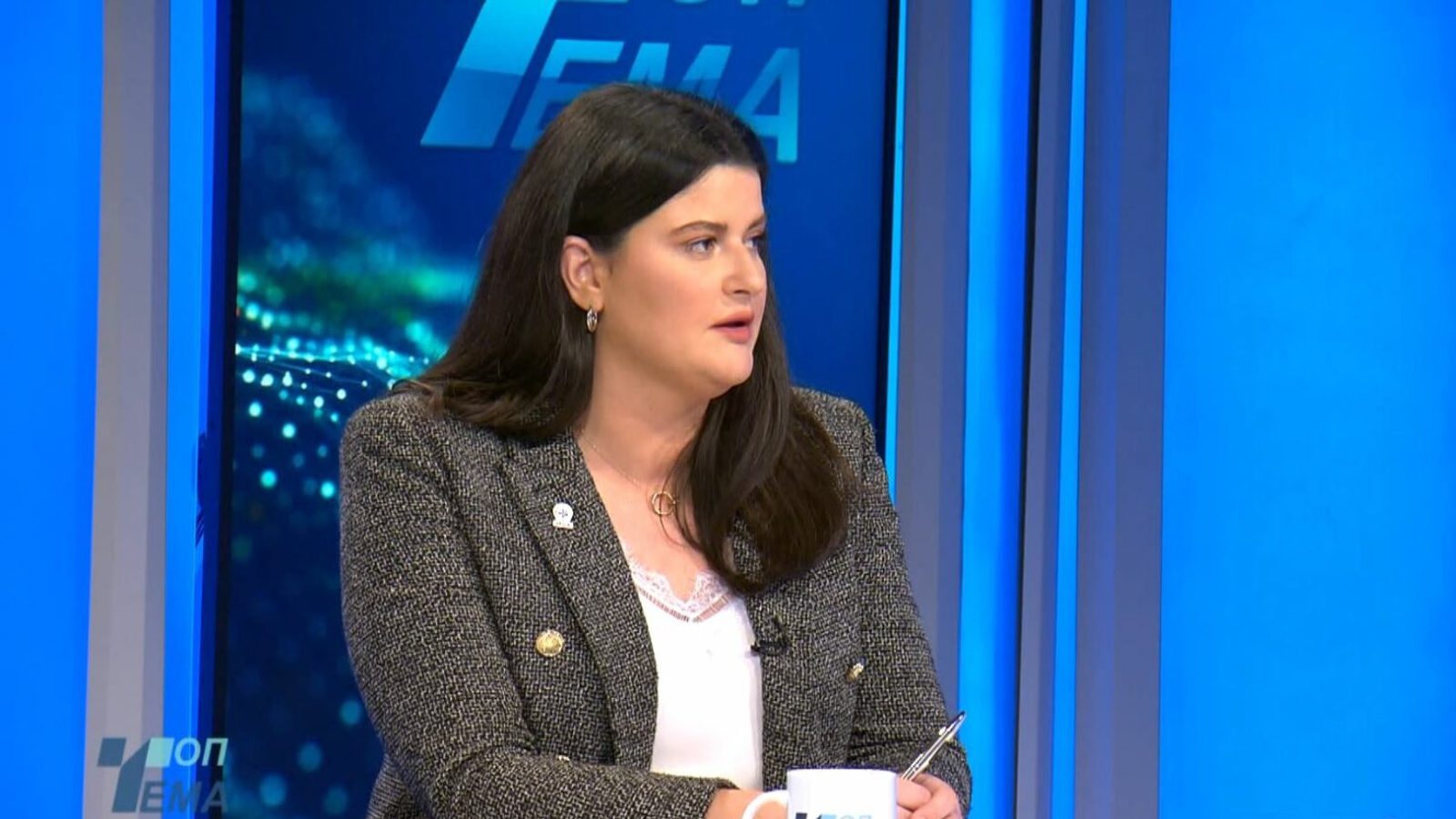
AI can speed judicial proceedings but legal responsibility stays with lawyers, prosecutor says
Prosecutor Ana Gogovska‑Jakimovska and other speakers urged human oversight, stricter rules and forensic checks at a Faculty of Law debate.
Artificial intelligence can significantly accelerate prosecutors' and courts' work by helping analyse huge volumes of data, but lawyers remain personally responsible for the materials they submit, Ana Gogovska-Jakimovska said today.
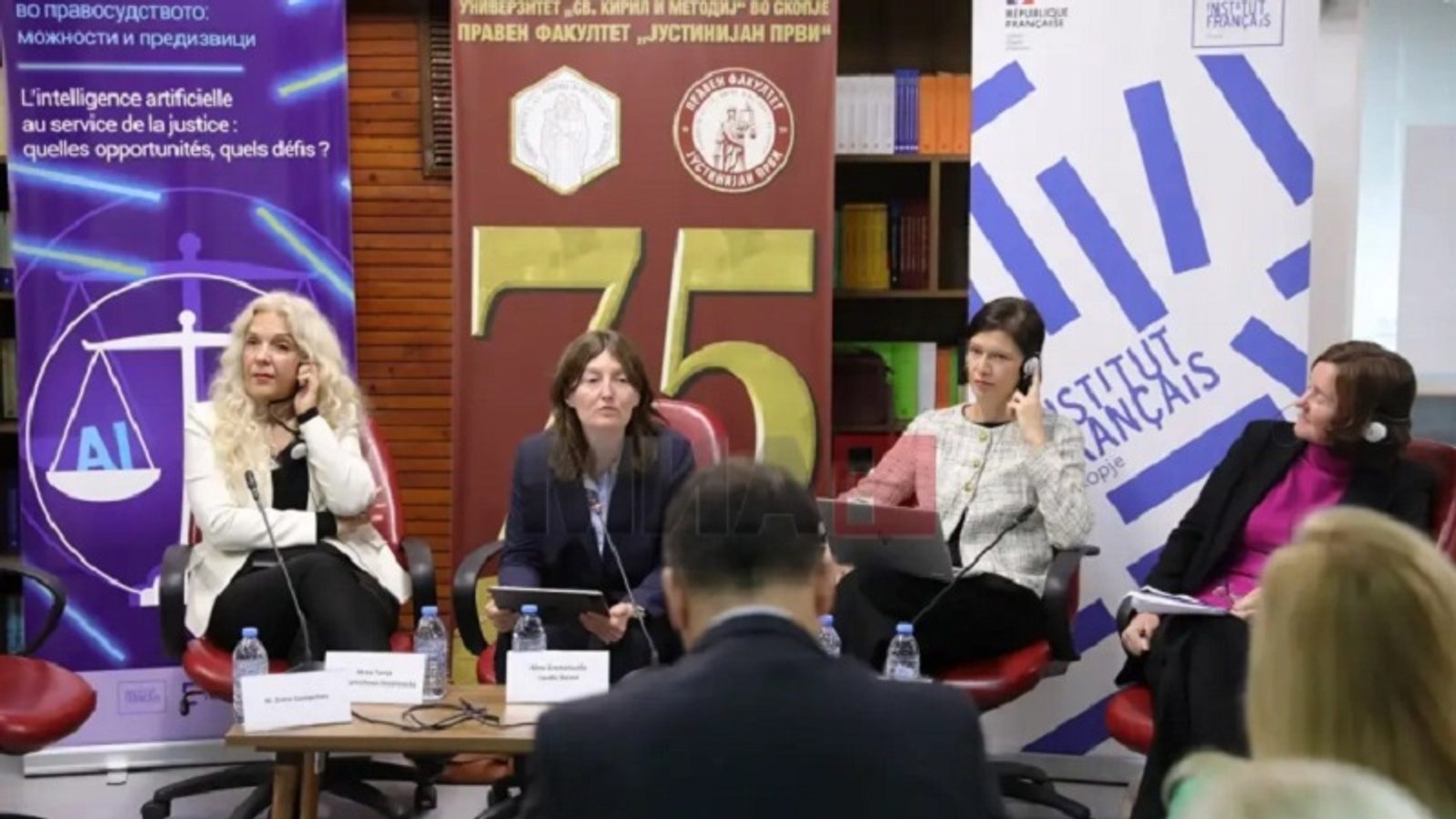
The remark opened a debate titled "Artificial intelligence in the judiciary: opportunities and challenges?" held today at the Faculty of Law "Justinijan Prvi" at the Ss. Cyril and Methodius University in Skopje.
Gogovska-Jakimovska, a public prosecutor at the Office for Prosecution of Organized Crime and Corruption (OJO GOKK), said systems based on AI could save precious time when handling thousands of bank transfers, account records, communications and electronic devices under tight statutory deadlines. She stressed, however, that the office does not yet use advanced AI tools and currently relies on standard software for analysis and linking evidence, although she expressed hope that more modern tools will be introduced soon.
"Responsibility remains personal"
She warned against blind reliance on technology and underscored the enduring duty of lawyers to verify results produced with the help of AI. In English translation she summarised the point as: "You cannot, if you prepare an indictment using artificial intelligence and it directs you incorrectly, go to the judge and say: 'Judge, excuse me, but the artificial intelligence directed me incorrectly.' Responsibility remains personal, yours, and therefore you must always verify the data you have obtained based on the use of that artificial intelligence," Gogovska-Jakimovska said.
Gogovska-Jakimovska also argued that AI will never replace the judge's or prosecutor's role because of the necessary human contact, empathy and communication with parties. She flagged the growing misuse of deepfake photos, videos and voice messages in extortion schemes and highlighted the key role of digital forensics in proving the authenticity and legality of electronic evidence in criminal proceedings.
French Ambassador Christophe Le Rigoler said the speed of AI development outstrips earlier forecasts and raises regulatory dilemmas. He contrasted the European approach — which he said insists on clear rules and legal frameworks — with the American model, and called for human-centric safeguards. "These values must remain at the heart of our action. The development of artificial intelligence does not mean that we should abandon the principles of transparency and responsibility nor the principle of human oversight over these processes," he said, adding that protection of human rights must come before technological and commercial interests.
Law professor Tanja Karakamisheva warned that uncritical reliance on AI-generated material already carries concrete professional sanctions. She pointed to a decision of the European Court of Human Rights of 13 November that barred an Albanian lawyer from representing applicants before the Court after using non‑existent case law and inappropriate sources. Karakamisheva said law schools must teach students independent legal reasoning and treat AI as an auxiliary tool rather than an authoritative source. She also reported that, with support from the Ministry of Education and Science, the faculty is finalising an interdisciplinary English‑language publication on human rights and the rule of law in the AI sphere, together with an analysis to align domestic legislation with European regulation, and that work on a National AI Strategy is underway.
The debate was organised by the French Institute in Skopje and the Embassy of France, in cooperation with the Faculty of Law "Justinijan Prvi", France's National School for Judges and Public Prosecutors (ENM) and Expertise France as part of broader support for judicial reform and digitalisation in North Macedonia.
Photo: MIA