Bulgaria invested nearly €3bn in batteries, built 5.7 GW and became regional energy‑storage hub
In less than two years Bulgaria installed 5.7 GW of battery capacity, using EU and private funds to become a regional electricity‑storage centre.
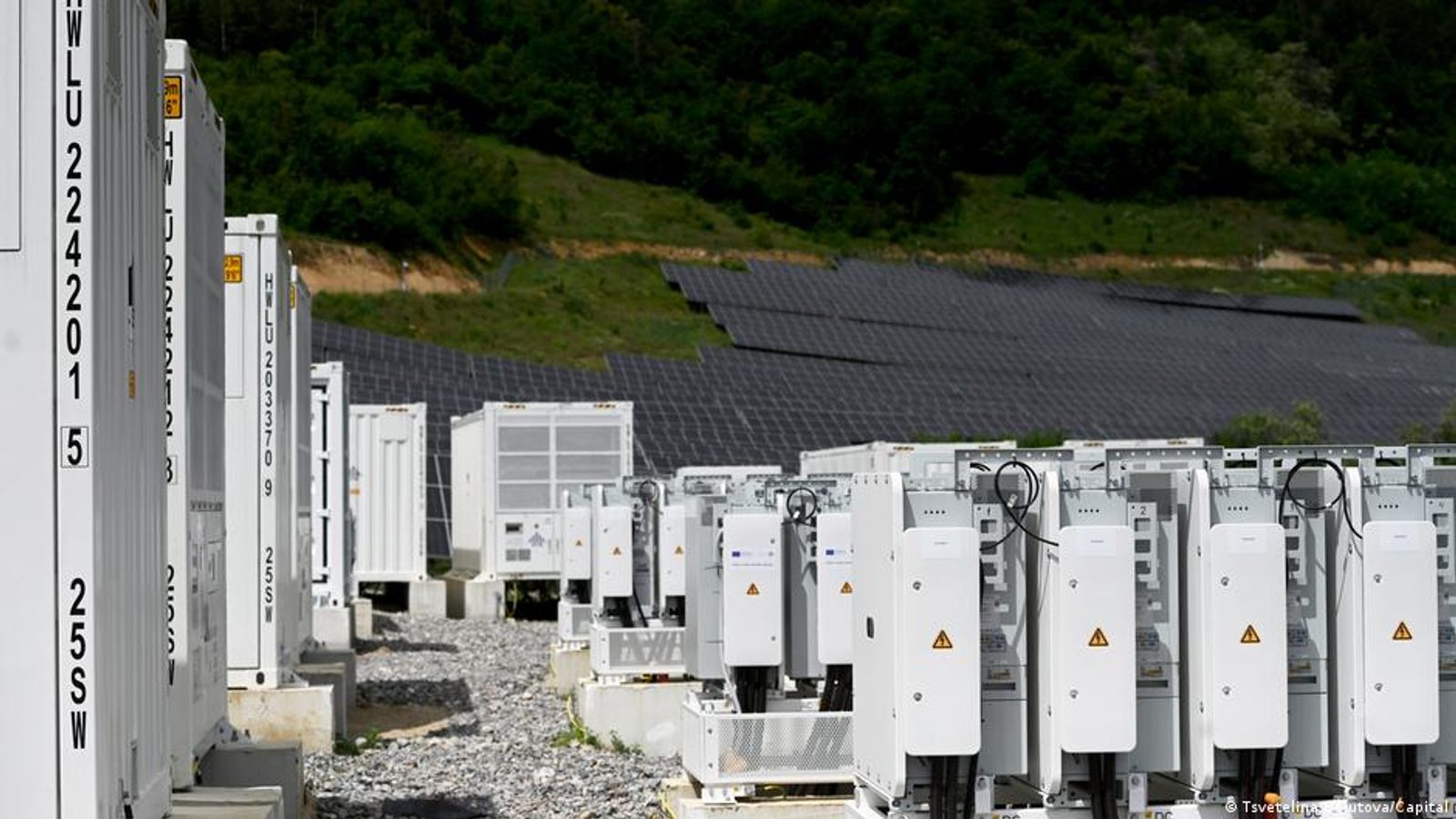
Bulgaria has installed about 5.7 gigawatts of battery capacity in less than two years and, by some counts, attracted nearly €3 billion in public and private money—turning the country into a regional hub for electricity storage in Southeast Europe.
The surge has been unusually rapid for a country of 6.4 million people and gives Bulgaria one of the highest ratios in the world between battery storage capacity and total installed generation. The build-out has allowed the grid to absorb large volumes of cheap solar output during daytime hours and discharge them into evening peaks, earning revenue in neighbouring markets.
Growth milestones are stark: in January 2026 the energy think‑tank Ember estimated Bulgaria’s operational and under‑construction battery capacity at 1.66 GW. Eight months later ENTSO‑E data showed capacity had more than tripled to about 5.4 GW, and the Bulgarian Ministry of Energy told AFP that capacity has reached 5.7 GW. "Two years ago no one imagined we would even have half of this capacity," said Ivaylo Stanchev, editor‑in‑chief of the business title Capital.
Funding, markets and short‑term effects
The expansion was jumpstarted by EU recovery funds such as NextGenerationEU and follow‑on Ristor programmes, which approved €700 million for 113 projects, while private investors are estimated to have contributed roughly €2 billion—bringing the total close to €3 billion, according to calculations by Capital. Most lithium cells are sourced from China, while developers are largely Bulgarian and other European firms seeking exposure to a fast‑growing segment.
The batteries proved crucial this summer when neighbouring countries experienced droughts and cooling constraints on nuclear and hydropower output. Bulgaria stored abundant daytime solar—also buying extra volumes from Greece and Romania—and then supplied electricity in the evening when prices rose. "If they were fully charged, the batteries could store enough energy to power the whole country for several hours," Stanchev said, illustrating the scale of the rollout.
The market impact is already visible but concentrated in summer months. There is no official assessment isolating batteries’ exact contribution to wholesale price reductions, yet average wholesale prices between 1 and 16 August in Bulgaria were €132.2/MWh—about €14 lower than Romania—benefiting industrial consumers even if regulated household tariffs remained unchanged.
Experts warn, however, about risks to conventional producers and the sustainability of the current business model. "Such a record development must always be viewed with some caution," warned Kaloyan Staykov, chairman of the board at the Institute for Energy Management in Bulgaria. "While the price of electricity in the evening peak is now lower, the producers who previously made higher profits in those hours must make up lost revenues, which exerts pressure on the base price of electricity," he added.
Looking ahead, Bulgaria is phasing out coal, planning rehabilitation of the Chaira reservoir hydro plant and aiming to add two new reactors at the Kozloduy nuclear station. Solar capacity has more than quadrupled between 2022 and 2026, ENTSO‑E data show, and investors are discussing further large battery projects—former minister Deljan Dobrev said talks with Tesla were advanced. Analysts say the future will depend on the emergence of additional grid services and regulatory changes that can sustain revenues as more battery capacity comes online.
Photo: press material from the event