The long shadow of the Berlin Wall
Personal testimony and statistics show that differences between East and West Germany persist more than three decades after the Wall fell.
The Berlin Wall may have been physically dismantled decades ago, but its imprint still shapes lives and politics across Germany. Visitors to the former Stasi prison at Hohenschönhausen hear personal accounts that make the division feel immediate: one man who tried to flee the GDR in 1987 remembers solitary confinement and the constant fear that has lingered ever since.
How a sudden border became a 155 km barrier
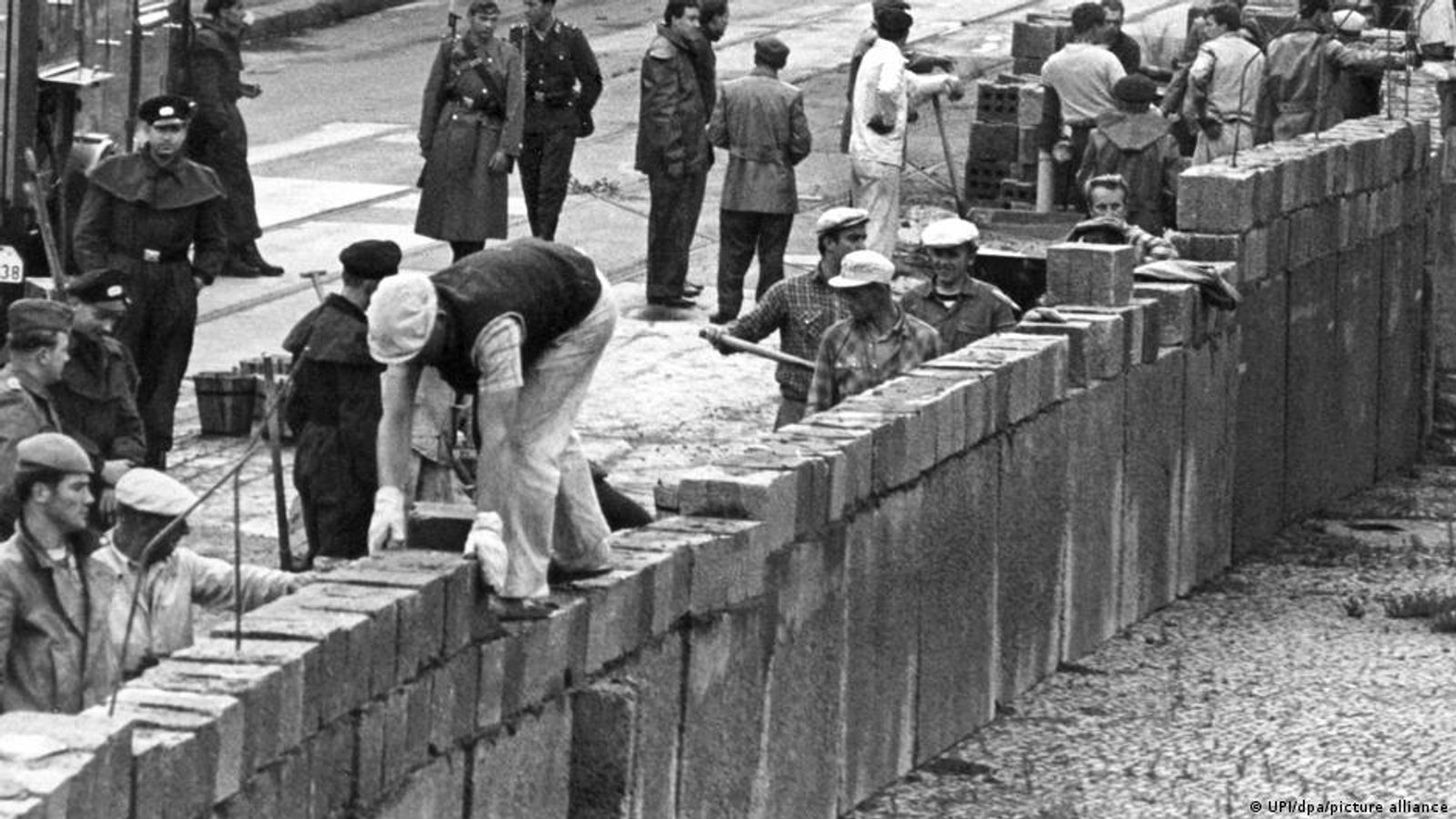
On the morning of 13 August 1961, soldiers and construction teams ordered by the leadership of the Socialist Unity Party (SED) began sealing the Soviet sector of Berlin—using asphalt, paving slabs and concrete posts. The makeshift measures of that week grew into a fortified barrier that ultimately stretched 155 kilometres.
The move answered a migration crisis: according to the Berlin Wall Foundation, as many as 4 million people left East Germany between the state’s 1949 founding and August 1961. From 1 to 13 August 1961 alone, some 47,000 people crossed to the West. At the time, East German leader Walter Ulbricht had told a journalist, "Nobody has the intention to build a wall," a phrase later proved tragically wrong.
Leaders in the West framed the new fortifications in stark terms. West Berlin’s mayor Willy Brandt warned that "it means that in the middle of Berlin not only a kind of state border is being drawn, but a wall like a concentration camp". East German officials preferred to call the installations an "antifascist protective wall"; Horst Sindermann, a member of the SED Central Committee, later admitted the goal was to keep people inside: "We did not want to bleed, we wanted to preserve the anti-fascist democratic order that existed in the GDR."
The human cost was considerable. The Berlin Wall Foundation records 140 deaths directly linked to the GDR border regime; other sources counted that attempts to flee the GDR cost the lives of 915 people in total. Physical measures—barbed wire, watchtowers, dogs and guards with live ammunition—turned everyday existence into a high-risk game for those who sought to leave.
That legacy is still visible in Germany’s social and economic map. Berlin’s federal commissioner for East Germany points to persistent differences in wages, collective bargaining coverage, pensions and unemployment: the eastern states lag behind. The weaker presence of long-standing civic organisations, churches and businesses in the East is another continuing consequence of the division.
Memory and interpretation diverge as well. A 2025 FORSA poll of about 1,643 Berlin residents found that among those who had lived in West Berlin before 1990, 52% described the GDR as dictatorial, while only 38% of former East Berliners chose that label. Some 29% of respondents with an East Berlin background called the GDR "humane" or "caring", compared with 4% among former West Berliners.
For survivors, cultural nostalgia can be painful. A former prisoner who spent four months in solitary at Hohenschönhausen after a 1987 escape attempt says the trauma remains: guards checked whether inmates slept on their backs, turning was forbidden, and even now he sometimes wakes from nightmares. "When today someone says that we already have GDR 2.0, that is an insult to those who were persecuted, you simply have to say it like that," he says.
Photo: press material from the event