Explosive drone reaches Leipzig/Halle airport, exposing gaps in Germany's defences
A drone loaded with explosives reached Leipzig/Halle Airport on August 14, 2026, revealing detection gaps and sparking debate over fragmented responsibilities and equipment shortfalls.
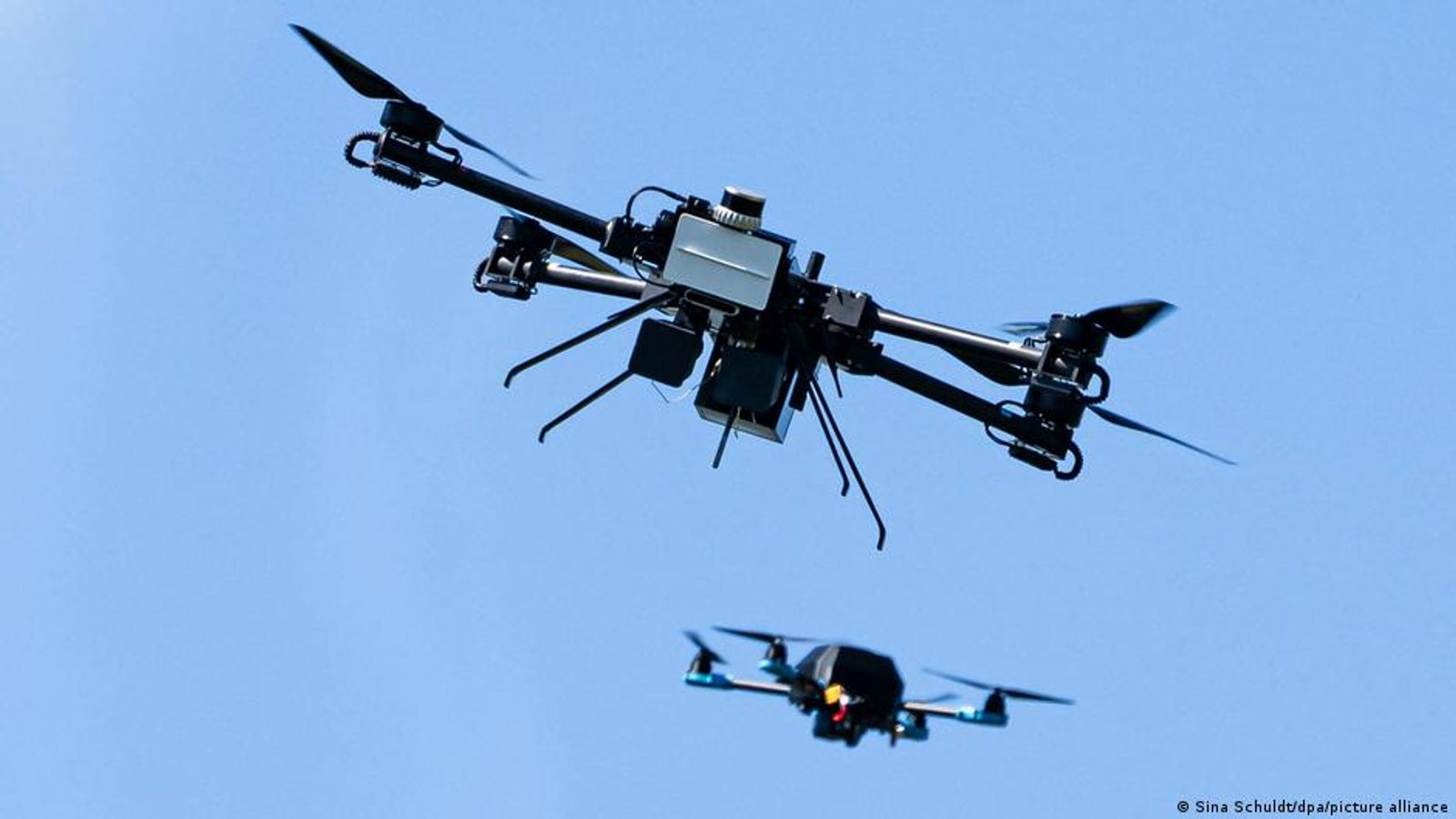
A small unmanned aerial vehicle loaded with explosives reached Leipzig/Halle Airport on August 14, 2026, exposing persistent gaps in Germany's drone-defence system after it remained undetected for hours.
The incident has raised alarm because Leipzig/Halle is also a logistics hub for military cargo flights, including Antonov transports to Ukraine. The Federal Public Prosecutor's Office has opened an investigation as officials examine whether a foreign actor was behind what Interior Minister Alexander Dobrindt (CSU) called a "hybrid attack scenario" and why the device reportedly ended up close to a Ukrainian Antonov cargo plane.
Detection shortfalls and rising incidents
The episode highlighted a wider trend: the Federal Criminal Police Office (BKA) logged more than 1,000 suspicious drone flights in 2025. Last October, drones disrupted air traffic at Munich Airport for several hours, leaving large numbers of passengers stranded.
Security expert Niko Lange warned that protection at German airports remains inadequate: "We do not have the necessary sensor networks and sensor belts to detect all types of drones, especially those that fly low and at slow speeds," he said. Gerald Visel, president of the European UAV association UAV DACH, added that the fact a drone "apparently could reach the airfield unnoticed and was discovered almost by accident" pinpoints the core problem.
Authorities have taken several steps in recent months: in December the Federal Interior Minister set up a Joint Centre for Drone Defence (GDAZ) in Berlin to collate round-the-clock information from the Federal Police, state police forces, intelligence services and the Bundeswehr into a common operational picture. Still, the Leipzig case shows a new coordination hub cannot compensate when a threat is not detected in time.
Responsibility for policing drones is split: each of Germany's 16 states has its own police force and normally holds jurisdiction once a drone takes off. The Federal Police may only intervene directly over major international airports or rail infrastructure. Greens politician Irene Mihalić — herself a trained police officer — warned that "the chaos in the allocation of competencies for drone defence poses a serious threat to our internal security," and has joined those calling for clearer, more centralized authority for the Federal Police. In December 2025 the Federal Police received a special drone-defence unit; Interior Ministry plans foresee expanding staff from an initial 130 posts across four locations to 300 officers at eight sites so forces can be "rapidly and flexibly present where needed."
Technical shortfalls remain a major concern. Manuel Atog, spokesman for an independent Critical Infrastructure working group, said airports often have detection systems but "in reality these are mostly detection-only systems. So far they have not prevented a single drone, and some airports still have no systems at all." The police union (GdP) also warned of resource shortages: "Unsafe railway stations, unsafe airports and a police force that must repeatedly beg for funds, legal solutions and state-of-the-art defensive technology are truly shocking," said union head Jochen Kopelke.
The Interior Ministry says the largest German airports are being gradually equipped and that the Federal Police has procured a significant portion of the necessary kit. The ministry listed eight priority airports—Frankfurt am Main, Munich, Berlin, Düsseldorf, Hamburg, Cologne/Bonn, Stuttgart and Leipzig/Halle—and said mobile drone-defence technology should be available at those sites by the end of the year. Legal changes in March also allowed the Bundeswehr, for the first time, to shoot down drones outside its own facilities if doing so can prevent an "especially serious accident," though the defence ministry stresses domestic security responsibility remains primarily with the police.
Photo: press material from the event