DUI and Alliance condition Baderter majority on acceptance of amendments
DUI and the Alliance for Albanians say they will not offer the Baderter votes unless most of their amendments are accepted; the three bills are currently blocked in parliamentary procedure.
Two ethnic Albanian parties say the ruling majority cannot secure the so‑called Baderter quorum to pass a package of higher‑education laws unless most of their amendments are accepted, complicating efforts to move the bills through parliament.
The three draft laws in question are the Law on Higher Education, the Law on Scientific‑Research Activity and the Law on Quality in Higher Education. Authorities say they lack the Baderter majority without votes from DUI, the Alliance for Albanians and the Albanian League; the Albanian opposition bloc has announced roughly 200 amendments for the package.
Representatives of DUI told MPs they will submit 35 amendments and will withhold their Baderter support unless the minister accepts most of them. DUI lawmakers say the proposals are substantive, prepared by university commissions, and not a mere political obstruction; they also expressed little confidence that a public hearing would change their position.
The Alliance for Albanians says it will file more than 100 amendments and likewise will not provide the Baderter majority if its key changes are not adopted. SDSM has also announced amendments and has not given the package its backing so far.
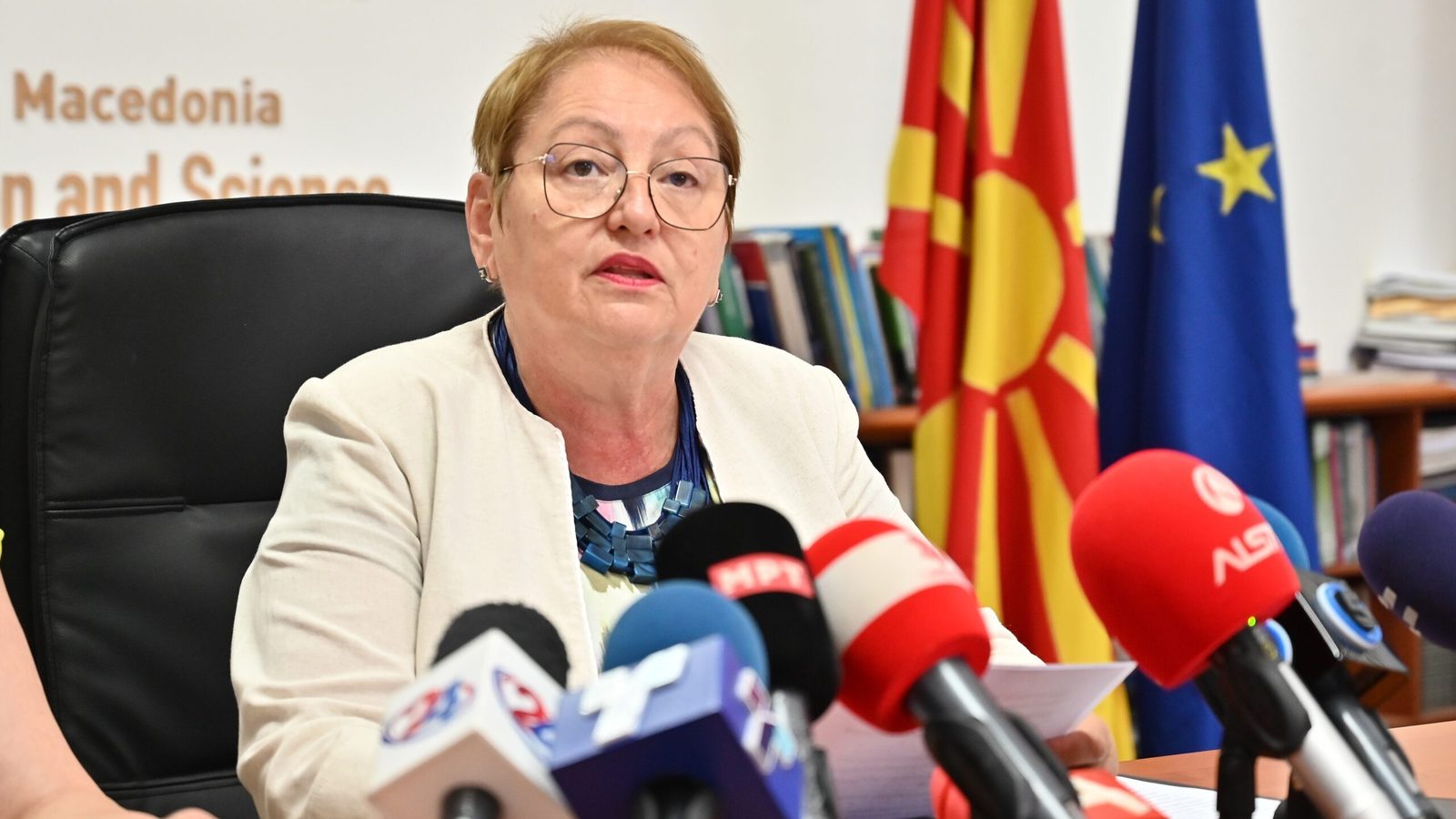
Education Minister Vesna Janevska appealed to all sides not to use the Baderter mechanism for political purposes and urged MPs to avoid blocking the three bills. She said she is prepared to hold another public debate in parliament and warned that "every lost day is a lost day for the young people in this country."
Janevska argued that the proposed laws do not touch issues of fair ethnic representation: "Yes, for passing education laws you need Baderter, that is what exists and it is a tool for protecting rights, for example the right to learn in one’s mother tongue. These three laws do not enter such a problem. Here we talk about substantive elements, about the organisation of higher education, about the quality of lecturers, about more practical work during studies." She added that the bills were prepared in a lengthy and transparent process with the academic community and that the government is working on a better law on fair representation.
For now, procedural objections raised by the Albanian opposition bloc have stalled the parliamentary debate; because of that blockade the ruling majority has been unable even to vote on the necessity of adopting the laws. Observers noted that Ali Ahmeti used a reserved speaking slot during the session.
Photo: press material from the event