Europe enters winter with lowest gas stocks in over a decade
IEA: European gas storage was about 75% at end‑October and market tightness could persist into 2027.
Europe is entering the winter heating season with gas storage levels at their lowest point in more than a decade, the International Energy Agency (IEA) has said. At the end of October, European underground gas stocks were around 75 percent full — the weakest level since 2013 — prompting the IEA to warn that tightness on global gas markets could continue into 2027.
Pressure on supplies and greater LNG reliance
The agency said the low fill rate raises the risk that Europe will become more dependent on liquefied natural gas (LNG) shipments, especially if the coming winter proves colder than expected or if there are disruptions in the gas network. The IEA highlighted the potential for sustained market strain into next year.
Analysts and officials point to the consequences of the war with Iran as a key driver behind the recent volatility on gas markets.
Conditions in Germany underline the broader continental shortfall. Data published by Gas Infrastructure Europe (GIE) showed that on 1 November the average level of storage fill in Germany was just 61.03 percent, and recent days had seen a slight decline in the average across facilities.
Most storage sites in Germany are subject to a minimum fill requirement of 80 percent, while six installations have a reduced target of 45 percent, producing an aggregate calculated national target of roughly 70 percent. Industry association INES, which represents operators of gas and hydrogen storage and whose members control more than 90 percent of German storage capacity, warned of supply risks tied to the low fill levels. INES said its September calculations showed an extremely cold winter could cause significant problems for supply.
German authorities, including the Ministry of Economy and the Federal Network Agency, have repeatedly said that security of supply during winter will be ensured. A spokeswoman for the Ministry of Economy insisted the situation now is "completely different" from the energy crisis of 2022. The ministry also said current reserves across Germany and Europe are sufficient to secure supplies even in low-temperature scenarios, according to assessments by continental transmission system operators and the European Commission.
Aside from state and private LNG terminals, governments point to other options to secure additional volumes, including pipeline imports from Norway and operational measures by network operators. Still, the IEA's warning suggests governments and markets will face continued uncertainty over gas availability into 2027.
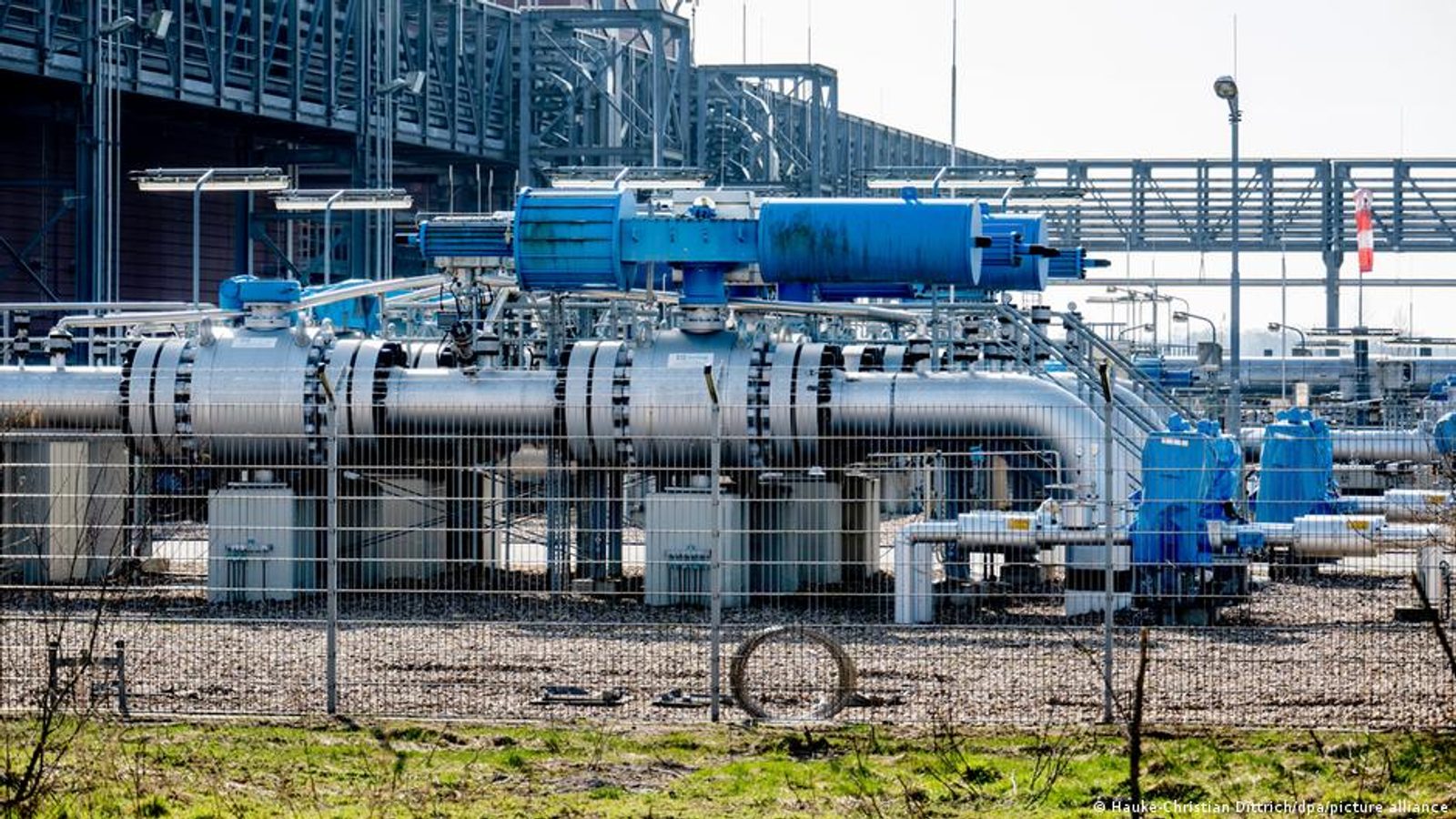
Photo: skladishte za gas vo Frideburg, Germanija)