Finland confronts rising debt and austerity ahead of April 2027 election
Debt is near 90% of GDP and the government must choose which services to cut ahead of the April 2027 election.
Finland is entering a period of fiscal strain that threatens the social model which helped it top happiness rankings for nine consecutive years. With parliamentary elections scheduled for April 2027, debate has shifted from whether to cut spending to which public services, benefits and pensions will bear the largest burden.
The state debt reached 90.3 percent of GDP in the second quarter, compared with roughly 65 percent before the pandemic. Officials warn that the increase reflects longer-term trends — slow growth and an ageing population — compounded more recently by higher defence and energy costs after Russia's invasion of Ukraine.
The European Union is pressing Helsinki to curb new borrowing: EU rules aim to keep deficits below 3 percent of GDP, and the European Council set the end of 2028 as the deadline for Finland to meet that target. The government led by Prime Minister Petteri Orpo, in office since June 2023, has pledged about €9 billion in savings over its mandate, but independent economists say deeper cuts will be needed.
Defence, energy and the budget gap
Defence spending has risen sharply. Finland committed before the war to buy 64 F-35A fighters from the United States for about €8.4 billion, and annual military expenditures climbed from $4.5 billion to more than $8 billion during the four years of war in Ukraine, according to SIPRI. The government announced plans to lift defence outlays to 3.2 percent of GDP, moving toward NATO's 3.5 percent guideline.
At the same time, rerouting energy supplies after severing large imports from Russia pushed up costs. The Bank of Finland noted a 50 percent increase in energy import costs in the early months of the Middle East conflict, and the proposed 2027 budget still contains a gap of €12.4 billion.
Economists warn that the adjustment will be painful for households and for employment. "Current estimates range between eight and eleven billion euros," said Jarkko Kivistö, adviser in the Bank of Finland's monetary policy and research department. Lauri Olapa, director of Finland's Centre for New Economic Analysis, cautions that "more than a quarter of the population is employed in the public sector and if these workers face layoffs, the savings rate will rise and private consumption will fall again."
Markets have so far been relatively calm: credit-rating agencies maintain mostly stable outlooks, though S&P gave Finland a "negative" outlook in April without cutting the rating itself. On 6 October the extra yield Finland pays over Germany for ten-year bonds was 38 basis points, compared with 128 in France and 107 in Italy. Still, officials and analysts note that this breathing room can vanish if another shock — a sustained oil-price jump, renewed tensions with Russia or a debt crisis in the eurozone — materialises.
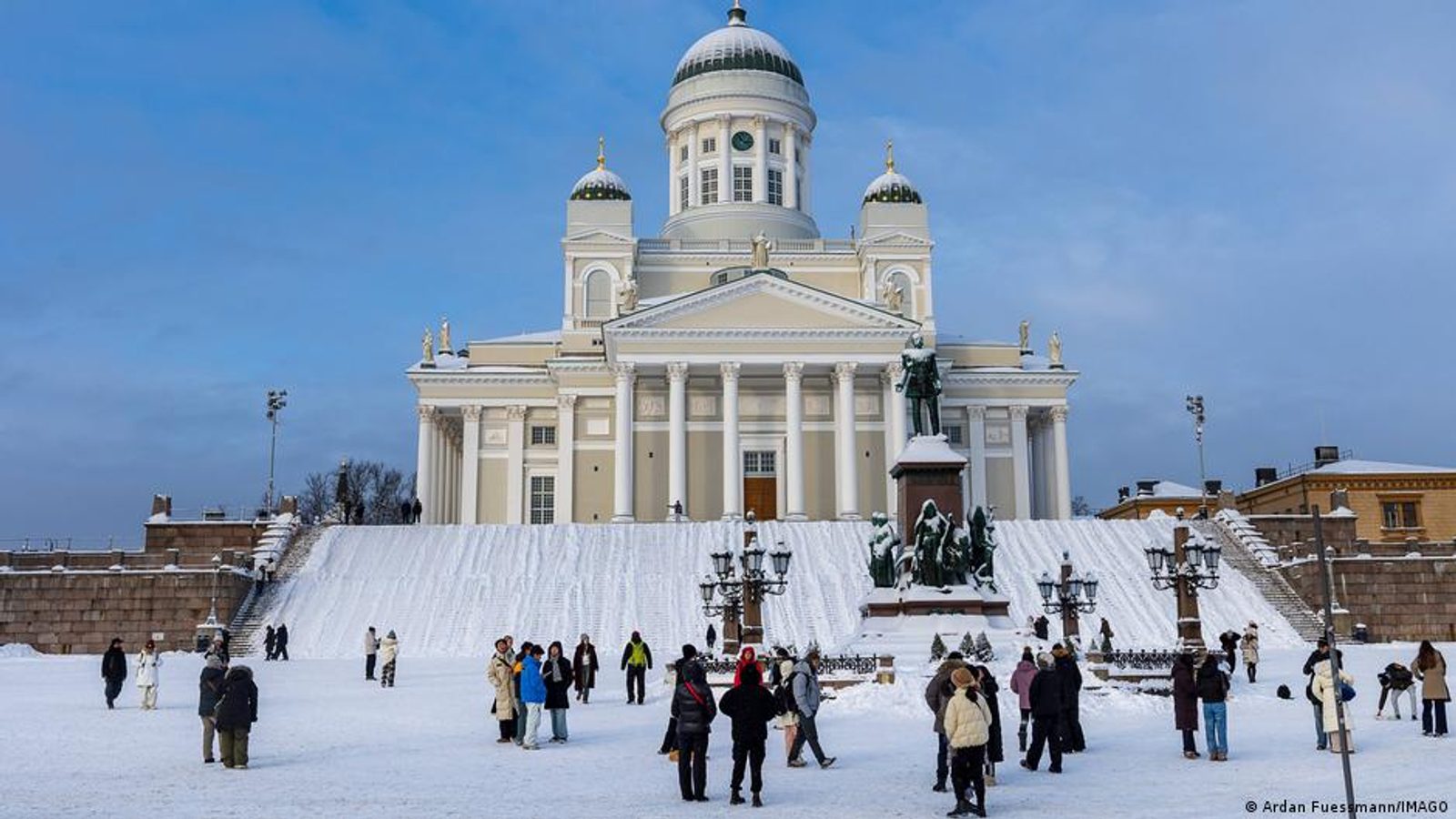
Photo: Helsinshkata katedrala na Senatskiot ploshtad)