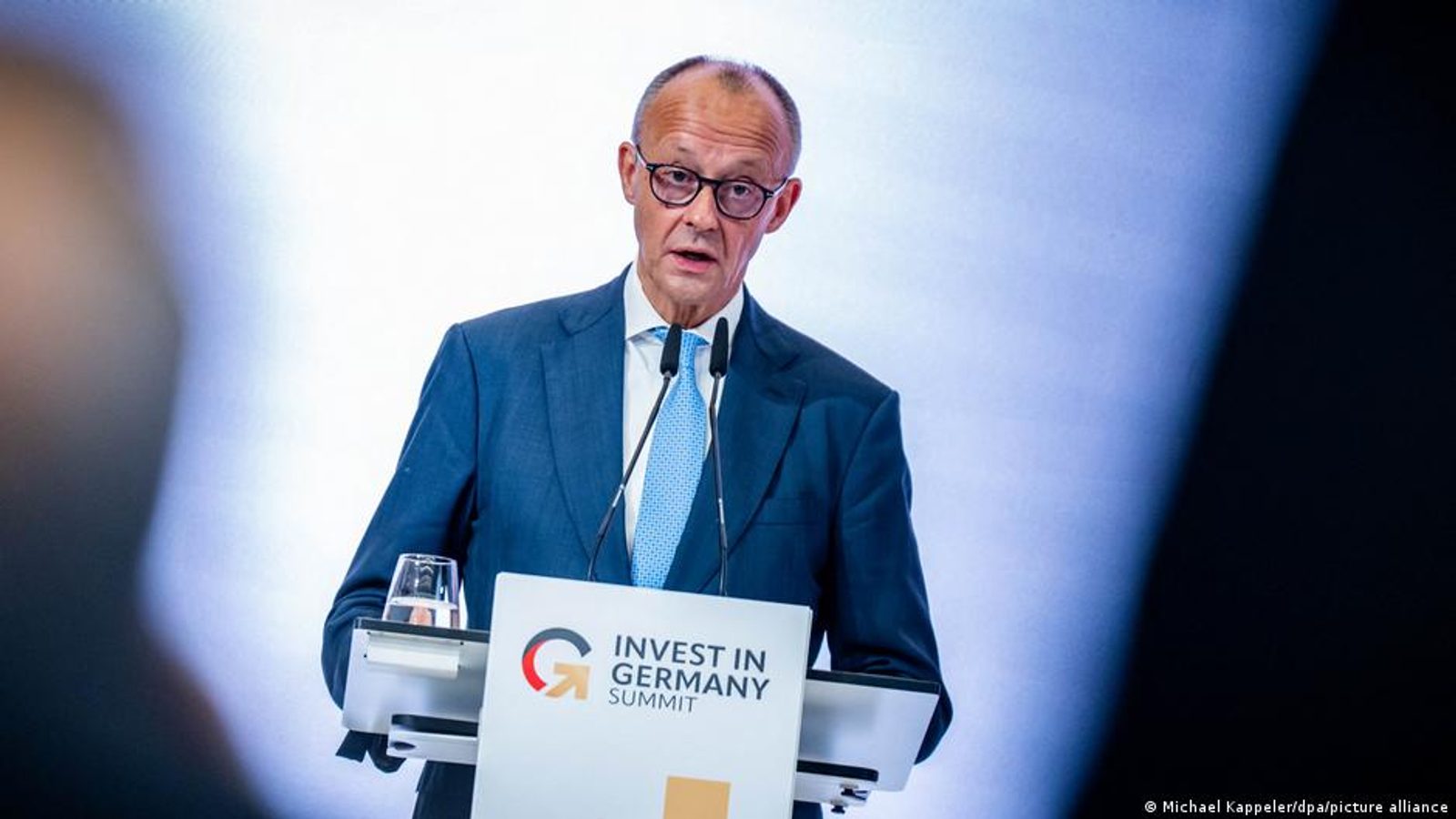
Germany unveils six‑sector high‑tech agenda to revive growth as AfD rises
Chancellor Friedrich Merz’s government is pushing AI, quantum, microelectronics, biotech, clean energy and climate‑neutral mobility to counter sluggish growth and rising AfD support.

Germany is trying to reshape its growth model with a new high‑tech agenda as support for the right‑wing AfD climbs. The government of Chancellor Friedrich Merz has identified six priority sectors — artificial intelligence, quantum computing, microelectronics, biotechnology, clean energy (including nuclear fusion) and climate‑neutral mobility — and is pushing for a faster shift toward advanced industries to arrest decades‑long structural pressures.
Economic stress and political consequences
The country faces simultaneous shocks: intensified geopolitical competition, persistently high energy costs and rising labour expenses alongside heavy regulatory burdens. According to the Federal Statistical Office, after two years of contraction real GDP rose by only 0.2% last year. Exports to China fell by 9.7% in 2025, with shipments of German cars and parts down by roughly a third. The government's latest forecast points to 1.3% growth in 2026 — modest compared with pre‑pandemic boom years — while opinion polls show AfD ahead of other parties nationally.
Those economic strains are among the main drivers of AfD's gains. The party promises to reverse Germany’s green transition, cut taxes, renegotiate EU arrangements, reform social policy and sharply limit immigration — measures that appeal to voters worried about jobs and prosperity.
Policymakers and industry groups are betting that new technologies and a startup boom can offer a counterweight. A report from a coalition of 147 companies and investors estimates that the priority technologies and related fields could attract up to €4.1 thousand billion (US$4.6 trillion) in investments by 2035. The challenge, analysts say, will not be to rely on legacy giants such as Volkswagen, Siemens and BASF but to build a dynamic ecosystem of new firms.
Oliver Falk, director of the ifo Centre for the Economics of Innovation and Digital Transformation, argues that “established companies will not be the primary conquerors of these new fields; the innovators — startups — will be.” He urges state support for early‑stage financing to bridge the “valley of death” between research and commercial viability and calls for better proximity between top universities, private capital and regulatory space to experiment.
Investment patterns already point in that direction. Data from Deutsche Bank and the StartUpdetector platform show more than 3,000 startups founded in Germany in the first half of 2026 — an 88% increase year‑on‑year — with about one‑third focused on artificial intelligence. Venture capital funding rose 44% to €5.8 billion in the same period, while firms such as Neura Robotics, drone makers Stark and Quantum‑Systems were among those to benefit. American investors are also buying stakes in specialised Mittelstand firms to access their know‑how.
Sven Gabor Jánszky, head of the To‑Be‑Ahead futures research institute, calls for special economic zones to accelerate the shift: “For a few specific technologies you reduce regulation, recruit ambitious workers and put capital into those zones,” he says, pointing to models such as Silicon Valley and Shenzhen. Proponents argue zones could help Germany secure leading positions at critical nodes in global value chains rather than attempt to dominate entire sectors.
Defence spending will add another technological stimulus. The International Institute for Strategic Studies projects Germany’s defence budget to reach about €120 billion by 2026 — roughly 2.6% of GDP — with a government target of 3.5% by 2029. Procurement demand for drones, sensors, communications systems and dual‑use technologies could strengthen domestic suppliers operating at the intersection of military and civilian markets.
Cost disadvantages vis‑à‑vis China — lower energy and labour costs and massive state subsidies — will remain. Yet experts note this need not be decisive. Falk points to the semiconductor industry as an example: “It may not be realistic to aim for leadership across the entire value chain, but it is sufficient to hold leading positions at specific critical points,” adding that Germany’s decades of high‑quality manufacturing and data from production processes give it an edge as a supplier of equipment and specialised components.
Photo: press material from the event