German economy grows but remains burdened by debt, high energy costs and labour shortage
Institutes forecast 1.3% growth in 2026 and warn of structural problems that could slow expansion to 0.4% in 2028.
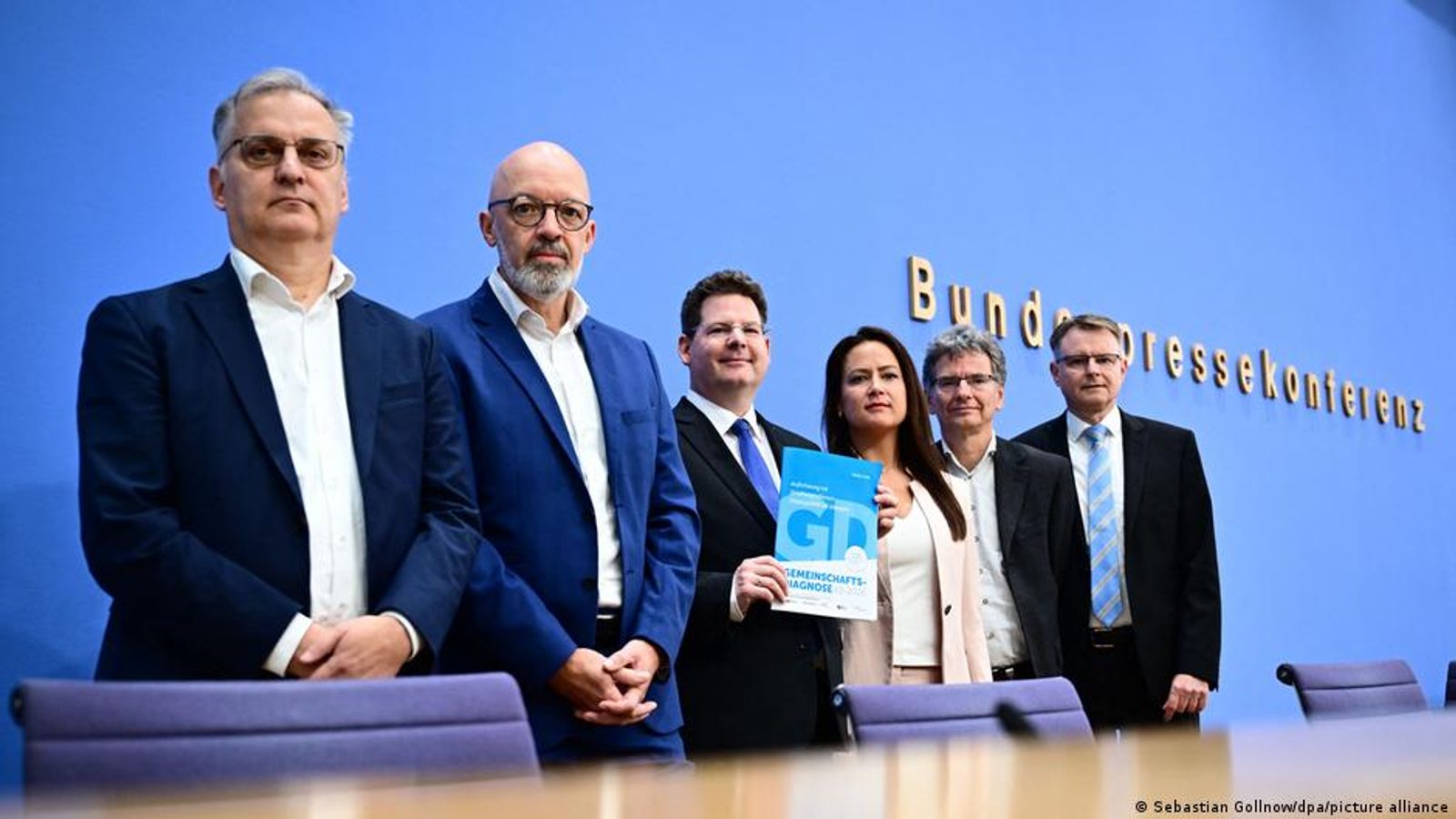
Germany's economy has regained momentum, driven by exports, investment in data‑center technologies and a push from government spending, but leading economists warn that lasting structural weaknesses could slow growth within a few years.
Growth now, slower horizon ahead
In a joint autumn assessment presented in Berlin on 24 September 2026, the country's major economic research institutes raised their growth outlook: they now expect GDP to expand by 1.3 percent in 2026 and 1.1 percent in 2027, well above their spring forecasts. However, the same analysts predict the recovery will fade, with growth slowing to just 0.4 percent in 2028.
"Germany's export‑oriented economy benefits from this, and behind it stands the global boom in artificial intelligence," said Oliver Holtemeler of the Leibniz Institute for Economic Research in Halle while presenting the joint report. Firms have seen stronger foreign demand for oil‑ and gas‑based chemical products, partly because competitors have faced delivery disruptions after the blockade of the Strait of Hormuz.
German companies have also profited from a surge in global data‑center construction linked to AI: demand has risen for energy‑supply equipment and ICT services. Public investment in infrastructure and defence has added a further near‑term boost by creating orders and supporting jobs.
But the institutes warn that the current upswing is fragile. "The engines of growth are weakening," said Stefan Kuc of the Kiel Institute for the World Economy (IfW). High energy prices, a shortage of skilled labour, population ageing and years of weak private investment continue to weigh on the economy.
The joint report carries a blunt title: "Economic recovery with structural problems — fiscal policy is on the wrong track." Analysts expect the budget deficit to rise from 4.1 percent of GDP this year to 4.7 percent in 2028, while debt‑servicing costs are climbing and will claim a growing share of public spending.
"We have two big building sites. One is demography, and the other is energy‑supply security and energy prices," Holtemeler warned, criticizing the lack of a clear strategy for phasing out fossil fuels. "Even the basic contours of a vision for how the energy transition should be carried out in line with the Climate Protection Act are not discernible."
On labour, Holtemeler urged greater openness to immigration of qualified workers: "We need openness to the immigration of qualified labour." Economists also recommend ending early retirement without a cut in benefits after 45 years of contributions, to keep older workers on the job longer.
Several experts flagged shortcomings in economic policy and business confidence. "If reform packages are announced quarter after quarter, then unpacked and postponed again, one might get the impression that the four greatest opponents of reform are spring, summer, autumn and winter," quipped Stefan Kuc.
Business leaders echo the call for decisive action. Helena Meljnikov, director general of the German Chamber of Industry and Commerce, told policymakers: "Companies do not need new debates now but decisions in economic policy. That is only possible with a resolute reform course: cost reductions, less bureaucracy, faster procedures and modernisation of infrastructure."
Structural change in the economy is visible: traditional industry continues to shrink — roughly 15,000 industrial jobs disappear each month, with the auto sector, mechanical engineering and metalworking particularly affected — while new AI and digital firms have multiplied over the past two years. Many of those startups still lack sufficient financing and some shift parts of their operations to the United States.
Economists also criticized a fuel subsidy due to take effect on 1 October, calling it a costly measure that benefits all households without clear targeting and for which they see no room in the budget at present.
Photo: arhiva