Global trade remains resilient despite wars in Ukraine and Iran and Trump tariffs
WTO data show overall trade growth last year, but energy shocks and country-specific US tariffs are reshaping supply chains and alliances.
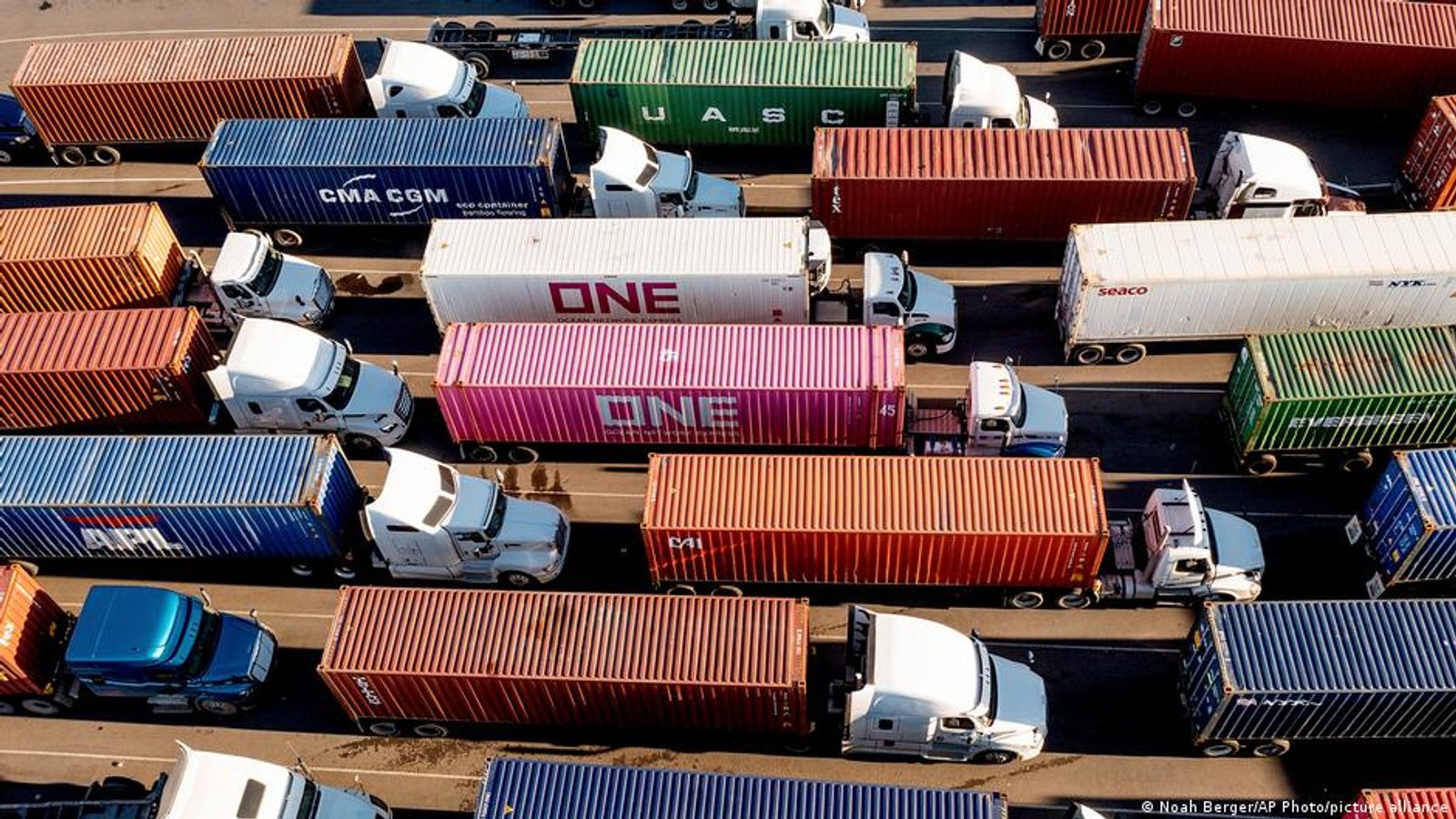
Global trade has weathered a string of shocks over the past six years — from the Covid-19 pandemic to the wars in Ukraine and the Middle East, and to sweeping tariffs introduced by Donald Trump — yet overall flows remain surprisingly intact.
Last week’s World Trade Organization review shows that goods trade rose by 4.6 percent last year and services trade grew by 5.3 percent, helped in part by strong demand for technologies tied to artificial intelligence. China remains the largest goods exporter while the United States is the biggest importer; the European Union ranks second in both categories.
Resilience under strain
Robert Stiger, chief economist at the World Trade Organization, described the disruptions as “the most serious and long-lasting disruptions since the system of world trade was created 80 years ago.” He added that the robust exports of AI-related products “may be hiding some of the decline in world trade that might otherwise have occurred.”
Even so, the WTO notes signs of a longer pause in globalization: since about 2015 world trade has been growing at roughly the same pace as global GDP. Moreover, roughly 72 percent of global goods trade still operates under core WTO rules, down from about 80 percent in 2022 — a reflection of unilateral tariffs and country-specific measures pushed by the United States.
Energy disruptions after Russia’s February 2022 invasion of Ukraine, and more recently the conflict with Iran that effectively closed the Strait of Hormuz for a period, reshaped supply routes. Eurostat data show the EU’s dependence on pipeline gas from Russia fell from 37 percent at the end of 2021 to about 10 percent now, prompting new contracts with the United States, Norway, Australia and Kazakhstan and a bigger role for LNG.
At the same time, Moscow found new buyers for discounted oil, notably China and India, while several producers, including the United States, Kazakhstan, Brazil and Venezuela, increased output and some nations released roughly 300 million barrels from strategic reserves in August to calm markets. Despite those moves, Brent crude has traded above $100 a barrel for much of the conflict and analysts warn of a tight supply outlook for the coming winter.
Policy-makers and economists differ on whether the current period marks a permanent reversal of globalization or simply a reconfiguration of trading circles. Thomas Sampson, an associate professor at the London School of Economics, says: "The world is certainly not becoming more globalised" but adds that "it remains an open question whether we are really moving into deglobalisation or simply changing the set of trading partners." He also warned that "trust in the US as a trading partner has collapsed," a deficit that could take years to repair even under a different US administration.
Alternatives to the multilateral system being discussed include a wider web of bilateral tariffs in the Trump model, denser free-trade pacts between blocs such as BRICS and Global South countries, or a coalition of like-minded economies — the EU, Japan, Canada, Australia and Mexico — upholding WTO-like rules that the major powers could not easily ignore. The WTO’s modelling suggests that deeper fragmentation could shave about 5 percent off global GDP by 2050, while the disappearance of the WTO in favor of only free-trade networks might cut GDP by nearly 7 percent. Strengthening multilateral rules could increase global GDP by roughly 3 percent.
Photo: press material from the event