Faculty starts inspection of "United Nations" bridge in Skopje ahead of BRT works
Inspections will establish whether the bridge needs repair or full replacement before BRT construction; prequalification for design and build extended to 23 November.
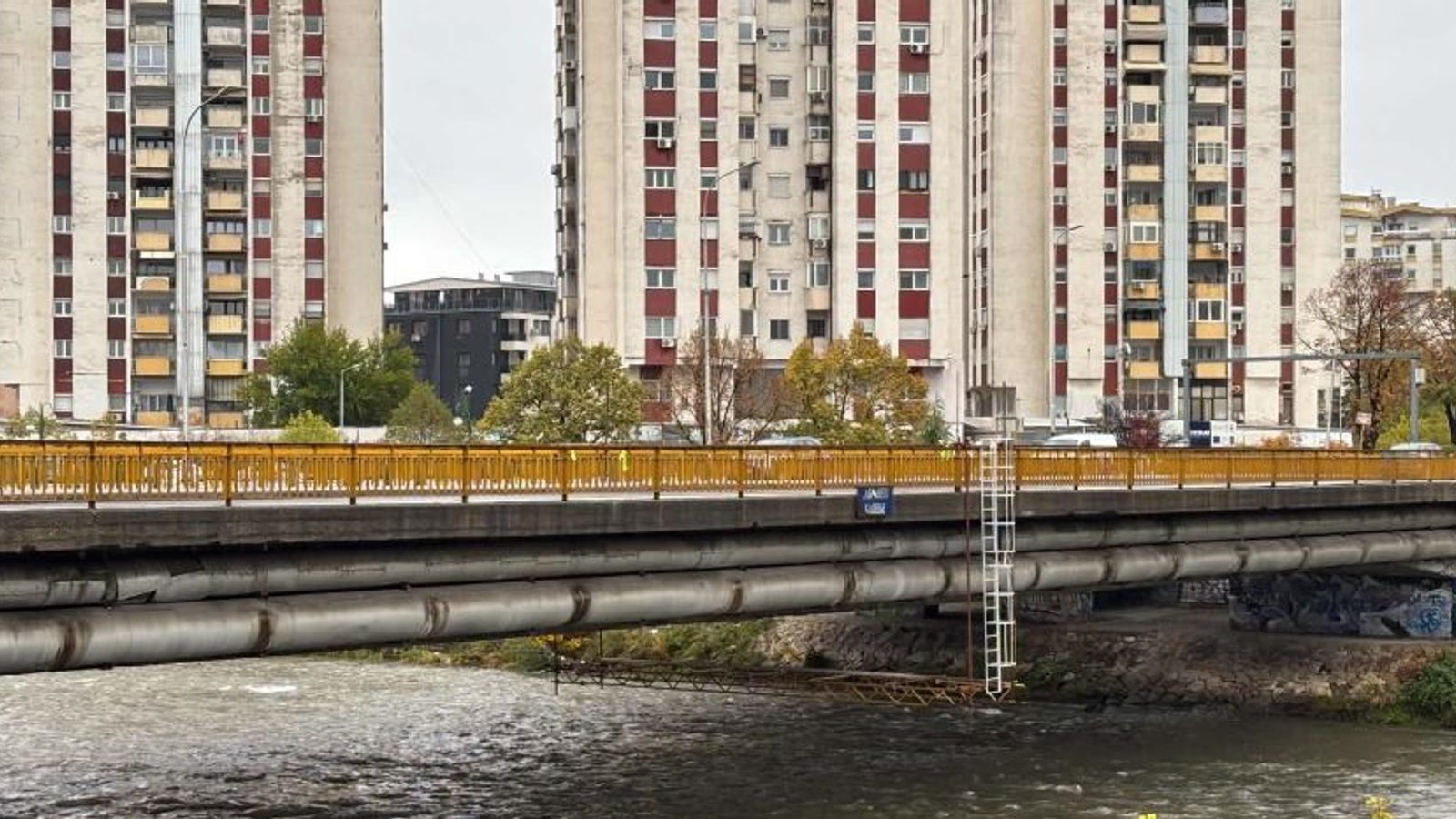
The Faculty of Civil Engineering has begun structural inspections of the "United Nations" bridge in Skopje, which forms part of the route planned for the city’s Bus Rapid Transit (BRT) between Gjorche Petrov and Novo Lisiche. The checks will determine whether the existing span can be repaired or needs to be completely replaced before construction work on the BRT proceeds.
"Today scaffolding is being installed and we will start inspections to assess its condition. By New Year the inspections should be finished and an expert report on its condition will be issued. There are actually two bridges here, one carrying traffic toward Karposh and on the other side toward Vlae and Gjorche Petrov. The bridge will be closed only when a test loading is performed — first one bridge will be closed, and then the other," said Goran Markovski, professor at the Faculty of Civil Engineering.
Capacity, lanes and the earlier demolition plan
Under the BRT decision made during the tenure of former mayor Petre Shilegov, the bridge was to be demolished and replaced with a new six-lane structure (three lanes in each direction). On the current alignment the roadway approaches to the bridge have three lanes in each direction, while the bridge itself has two lanes. That means, if a new bridge is not built, the BRT corridor would leave one lane for BRT buses and only one lane for general traffic.
The City of Skopje and the European Bank for Reconstruction and Development (EBRD) opened a prequalification tender for design and construction of the BRT and extended the deadline for that prequalification phase until 23 November. After the prequalification stage, an open tender will be announced to select the company that will design and build the system. City officials say the prequalification is intended to set high entry criteria so that only firms with experience implementing public transport systems take part. Procurement of the BRT vehicles will be conducted in a separate procedure at a later stage.
City planners have altered the original concept for the BRT alignment. Instead of running the buses through the central green median, the BRT will now operate in the lane immediately adjacent to it, separated from the rest of traffic by a new planter and greenery. No other buses will run in that dedicated BRT lane.
Parallel to construction planning, the city will reconfigure regular bus routes after the BRT opens. For example, Line 24 will no longer run from Kisela Voda to Taftalidze through the city centre and along Partizanski Odredi Boulevard; instead a route will run from Kisela Voda only to the city centre or to one of the BRT stations.
Byline: A. Antevska
Photo: SDK.MK)