Chiemgauer: Bavarian community currency that keeps money — and emissions — local
A community currency in Bavaria, launched in 2003, now pays residents bonuses for eco-friendly choices and records measurable CO2 savings.
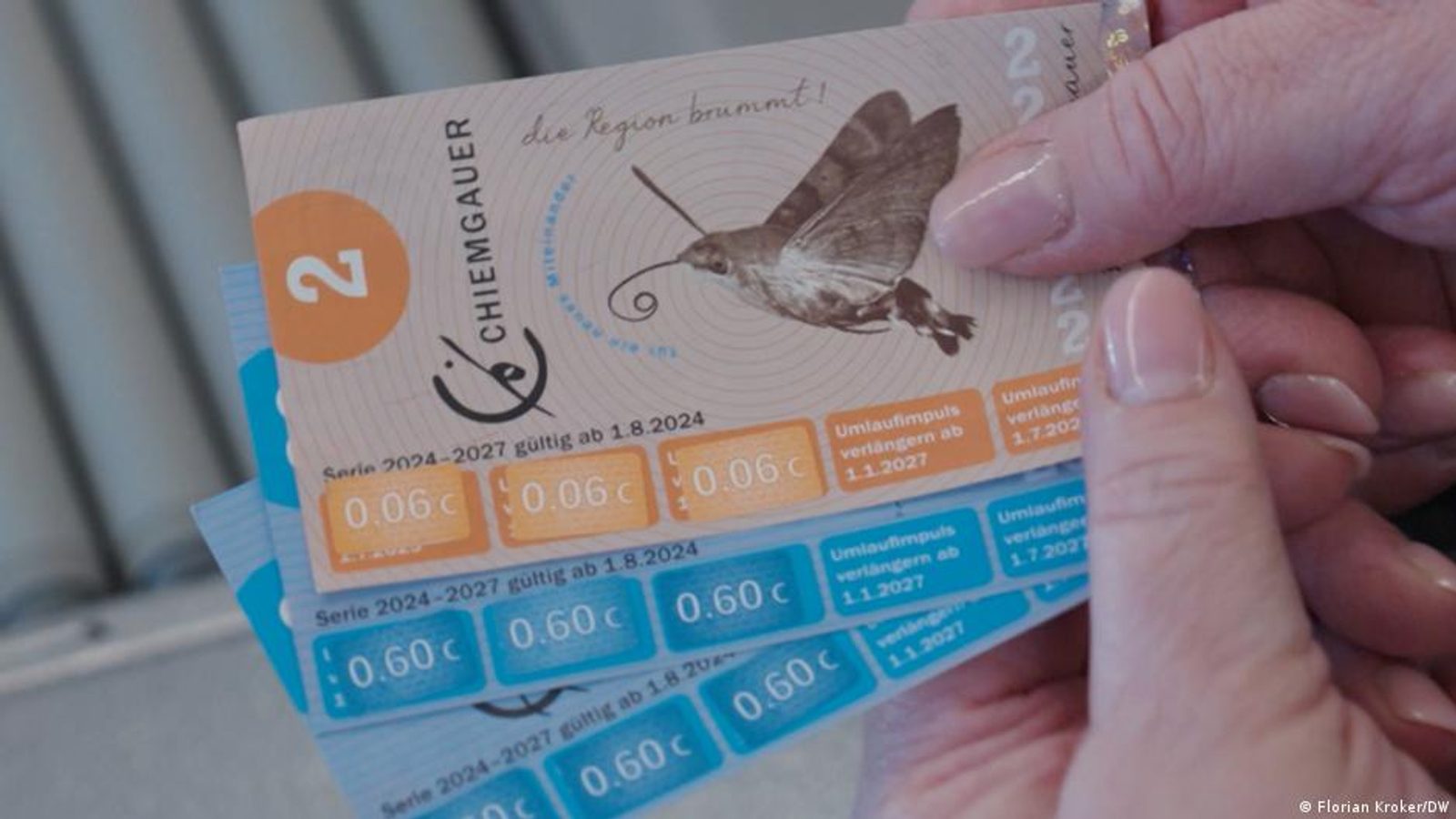
What began as a high-school economics exercise in 2003 has grown into a regional monetary experiment that its organisers say keeps money circulating locally and now rewards low-carbon choices: the Chiemgauer local currency in Bavaria.
The currency operates in and around Traunstein and is used by roughly 4,200 residents and some 300 businesses; one euro equals one Chiemgauer. Today the association that issues the notes reports an annual circulation of five million Chiemgauer and says the scheme is accepted in bakeries, bookshops and local markets across the Chiemgau region.
How the system works
The Chiemgauer was created in 2003 by a group of high-school pupils and their economics teacher, Christian Geller, who wanted to bolster shops being squeezed by large retail chains. Members receive printed banknotes and an electronic card option to spend locally. To keep the currency moving, holders must buy a small stamp for their notes every six months; for example, the stamp for a 10-Chiemgauer note costs €0.30. Notes expire after three years. Private users cannot convert Chiemgauer back into euros; businesses may do so by paying a 5% commission that helps fund the currency’s operations and local nonprofits.
“Around 10 to 15 percent of customers pay in this way,” Geller says, describing typical uptake in shops. He also points out the physical volume in the association’s vault: “This is more than 200 thousand Chiemgauer and they are worth as much in euros.”
In recent years the Chiemgauer association added an environmental layer: residents can earn bonus Chiemgauer for eco-friendly actions — from mending old jeans and joining car-sharing platforms to installing natural insulation. Rewards range from one to 200 Chiemgauer. “The owner of this balcony solar set received 100 Chiemgauer,” Geller says, referring to a two-panel installation. “For 20 years, this balcony power set will save 11 tonnes of carbon dioxide.”
The regional fund that pays these bonuses is financed by local contributors and functions like a small emissions-trading mechanism: for every tonne of CO2 emitted through the fund’s activities, organisers say nine tonnes are saved through the climate-neutral behaviours it incentivises. Across four regions in Germany using similar schemes, organisers report cumulative savings of 12,800 tonnes of CO2 over the past four years — roughly the emissions of 2,000 German cars in the same period.
Researchers stress the model is not unique: some 300 complementary currencies exist worldwide, concentrated in Europe and Brazil, and often intended to boost local economies or social aid. As Ester Barinaga, who studies complementary currencies at Lund University, puts it: “Money can be designed,” and she adds that “if money is created to reward pro-environmental behaviours, then there will be more people who behave pro-environmentally.” Critics note limits: less than 1% of the local population participates, many consumer goods still require imports, and a large-scale expansion could draw regulatory attention from the national central bank.
Photo: press material from the event