Chento’s ideals frame Siljanovska‑Davkova’s 2 August address
At the Chento memorial on 2 August the president urged reconciliation and reiterated a pro‑European stance; the prime minister focused his criticism on political rivals.
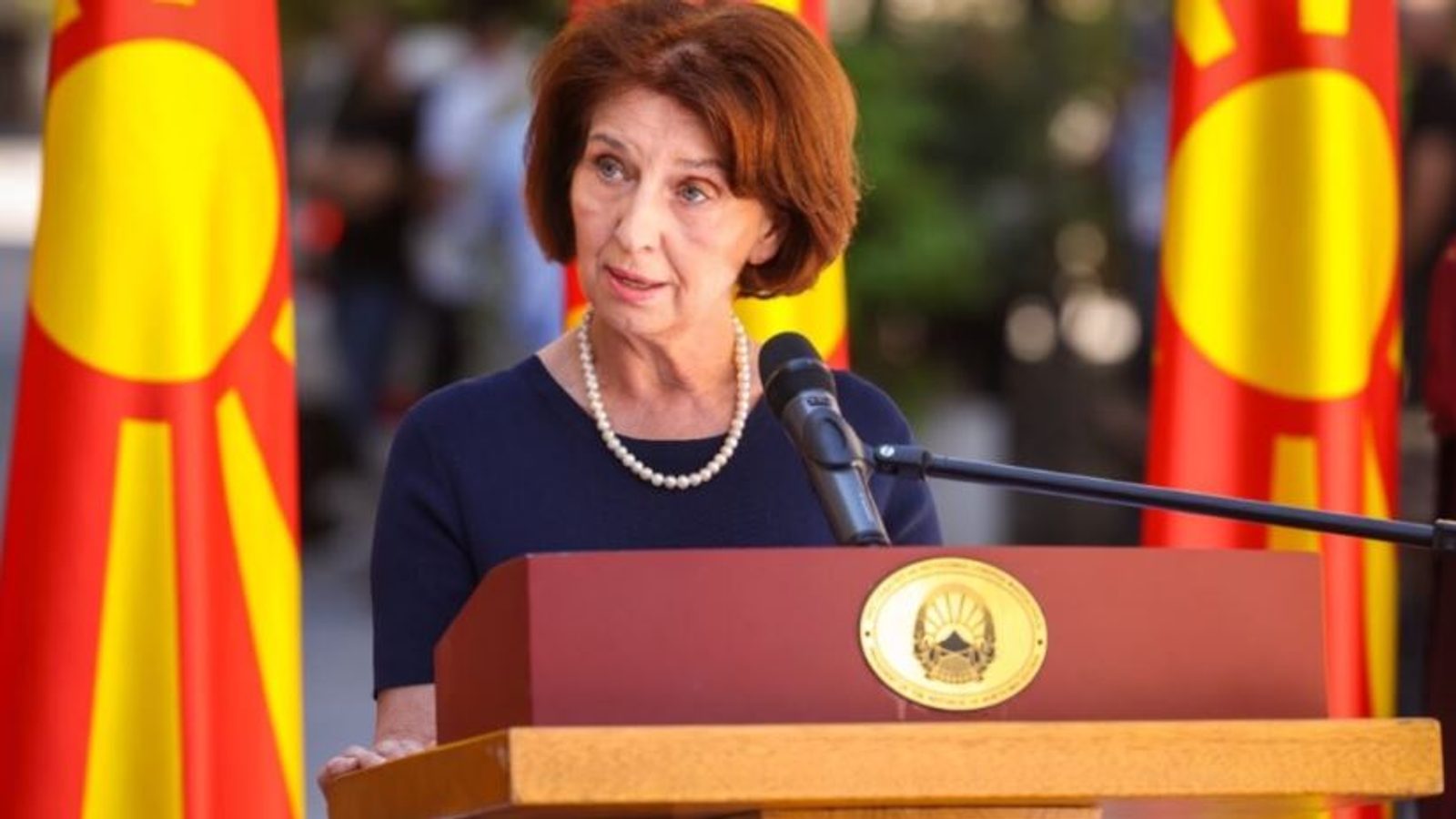
On 2 August in Skopje, President Gordana Siljanovska‑Davkova used the commemoration at the monument of Metodija Andonov‑Chento to link the wartime leader’s ideals with the country’s present foreign‑policy choices, stressing that North Macedonia defends itself through prudent diplomacy and a clear pro‑European orientation.
From the square by the Chento memorial the president argued that accession processes require adjustments but warned that her country’s experience has been burdened by persistent external claims. She put it this way:
"Our course is pro‑European oriented, like Chento’s. We know that every candidate country makes compromises related to adapting relations and processes of action or resolving various disputes. But our experience has a unique prefix, as a constant and unfinished series of demands with which our sovereign right to self‑determination is contested and violated," said Siljanovska‑Davkova.
Calls for unity and constitutional patriotism
Siljanovska‑Davkova appealed for national reconciliation and greater consensus on matters of national interest, arguing that the state needs unity more than ever and invoking Chento’s example as a call to set aside partisanship when vital national lines are at stake.
Prime Minister Hristijan Mickoski also spoke at the event; in his address he mentioned the European path only briefly and framed part of his remarks as criticism of political opponents. He said:
"I will never accept their conduct of concessions on issues that are a blockade of our path to the EU and I will never disappoint the people. I will not make betrayals to the detriment of the state and the people, as was done in the past, at any price," Mickoski said.
President Siljanovska‑Davkova further invoked ASNOM’s legacy to underline the need to protect minority rights within a constitutional framework. She stressed that ASNOM spoke to all communities and highlighted existing standards for minority protection, naming Albanians, Turks, Vlachs, Serbs, Roma, Bosniaks and others as groups whose rights are secured under the state’s legal text. She added that peace and coexistence in a diverse democracy are safeguarded by protecting communal rights without undermining individual human rights.
Photo: press material from the event