Canada and EU propose an "Alliance for the Future" and associate status for Canada
Leaders propose Canada as an EU "associate member" and a wider partnership focusing on minerals, supply chains, defence and sovereignty
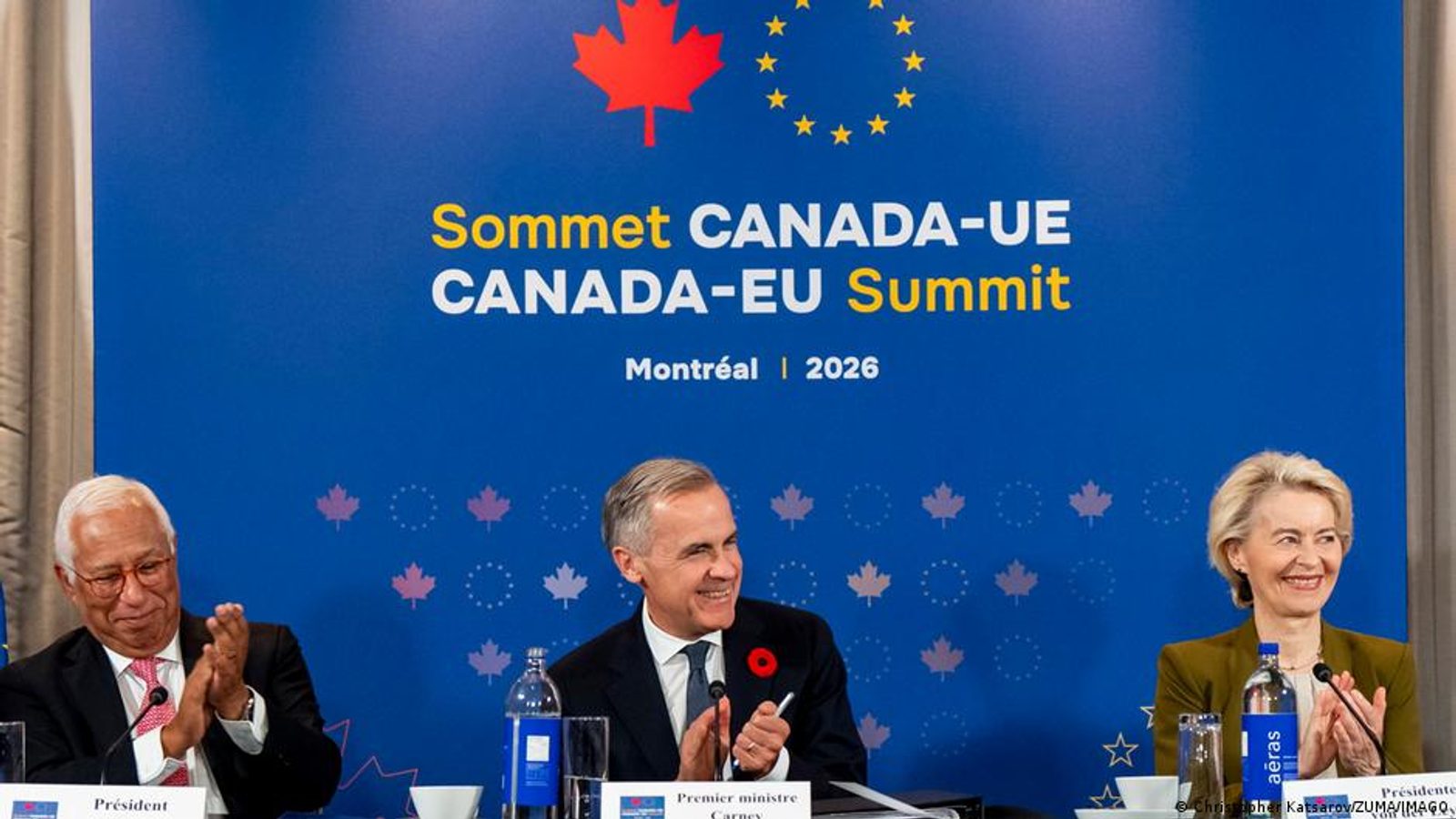
October 30, 2026 — At a summit in Montreal, Canadian Prime Minister Mark Carney and European Commission President Ursula von der Leyen announced a proposal to build a closer Canada–European Union partnership they called an "Alliance for the Future," and suggested Canada could become the EU's first "associate member." The initiative, they said, aims to deepen economic, security and defence cooperation as a bulwark against the growing use of trade as a tool of pressure.
Why the proposal matters
Von der Leyen warned that trade is increasingly being wielded to extract political concessions. "When trade becomes a tool of economic coercion, families pay the price, from supermarket shelves to the cost of a new car," she said. "We are watching in real time how our sovereignty is being attacked."
Carney framed the partnership as a way to strengthen Canada’s resilience against shock and outside influence. "Why does sovereignty matter in a dangerous and divided world? It allows us to withstand shocks," he said at a press conference. "It allows us to live the way we choose."
Both leaders described an arrangement that would go beyond a traditional trade pact: von der Leyen said the wider alliance would focus on critical minerals, resilient supply chains, defence and security. "This is a broader concept," she added during a business roundtable with Carney.
The plan has already drawn mixed reactions in Europe. Some member states, including France and Germany, have questioned the label "associate member," and aides warned the formulation could face resistance in Brussels. A senior EU adviser said the wording had been rejected by member states and may not survive the summit.
Political sensitivities extend to Washington. President Donald Trump suggested the Canada–EU deal could be seen as a "hostile act" and threatened tariffs on Europe if he judged the arrangement hostile. The White House said trade and economic officials had discussed the matter with their Canadian counterparts in recent days. A senior Canadian official told reporters the closer relationship was not intended as a move against the United States but reflected longstanding shared interests.
Carney sought to downplay the focus on names. "This new alliance is not a marketing stunt. The name is not important," he said, though he later used the term "associate member" to underline the potential economic opportunities. Any deepened partnership, he added, would require approval by the Canadian Parliament.
Photo: press material from the event