Coalition: Judicial Council violated rules in appointing acting presidents
The Coalition "All for a Fair Trial" claims that the Council did not respect Article 89 of the Law on Courts when appointing acting presidents in Skopje and Struga.

The Coalition "All for a Fair Trial" reacted that the Judicial Council violated the legal criteria when appointing the acting president of the Appellate Court Skopje and of the Basic Court Struga, after at today’s session it did not select the judges with the highest evaluation and the most points.
The NGO demands an immediate review and publication of the data
In the statement, the coalition points out that the Council directly violated the provisions of Article 89 of the Law on Courts, which clearly require that for an acting president the judge who received the highest positive evaluation and has the largest number of points should be selected. It is emphasized that this objective criterion does not allow a free choice among positively evaluated judges nor the introduction of subjective measures such as managerial experience or personal assessment.
As an example of humiliating practice, the coalition cited the procedure for the Appellate Court Skopje: although it was clear at the hearing which judge had the highest number of points, the Council did not support that proposal, but appointed another judge and justified the choice with his experience, managerial abilities and previous membership in the Judicial Council. The reaction also includes the following quote: "Particularly unconvincing is the justification that the selected judge would be put in a less favorable position because his last evaluation covered three, not four years due to his previous membership in the Judicial Council. The Methodology for evaluating judges' performance does not imply that points are accumulated for each year of the evaluated period, which could result in a judge evaluated for a shorter period automatically receiving a lower number of points. On the contrary, the result is determined through average scores, percentage indicators and pre-established scoring scales."
In the case of the Basic Court Struga, the coalition notes that a judge with only one year and three months of judicial service, who so far has not been evaluated for his judicial work, was appointed as acting president. To justify the choice, the Council also cited a period that the judge spent as an attendee at the Academy for Judges and Prosecutors, which according to the coalition does not constitute work as a judge and cannot generate points comparable to the other candidates.
"Article 89 does not require the Judicial Council to select the person with the longest overall experience in the judiciary. It requires that it appoint the judge who is assessed with the highest positive evaluation and has the largest number of points in relation to the other judges. A person who has not been evaluated as a judge at all cannot, by interpretation, be declared the judge with the highest evaluation and the most points. There is no ambiguity here that should be resolved by interpretation, but an absence of the factual prerequisite required by the Law," the Coalition states.
The coalition warns that the decisions are not merely temporary formalities: past practice, as in the case of the Basic Criminal Court Skopje, shows that the position of acting president provides a real advantage in subsequent regular selection procedures. Furthermore, continuous deviation from the rules reduces legal certainty and creates presidencies where the legal rule is replaced by the assessment of the majority.
Because of the above, the coalition calls on the Judicial Council without delay to reassess the legality of the two decisions, to remove the identified violations and to publicly publish the data from the last evaluation, the points of all judges considered and the legal basis on which it relied to be able to ignore the highest points or to appoint an unevaluated judge.
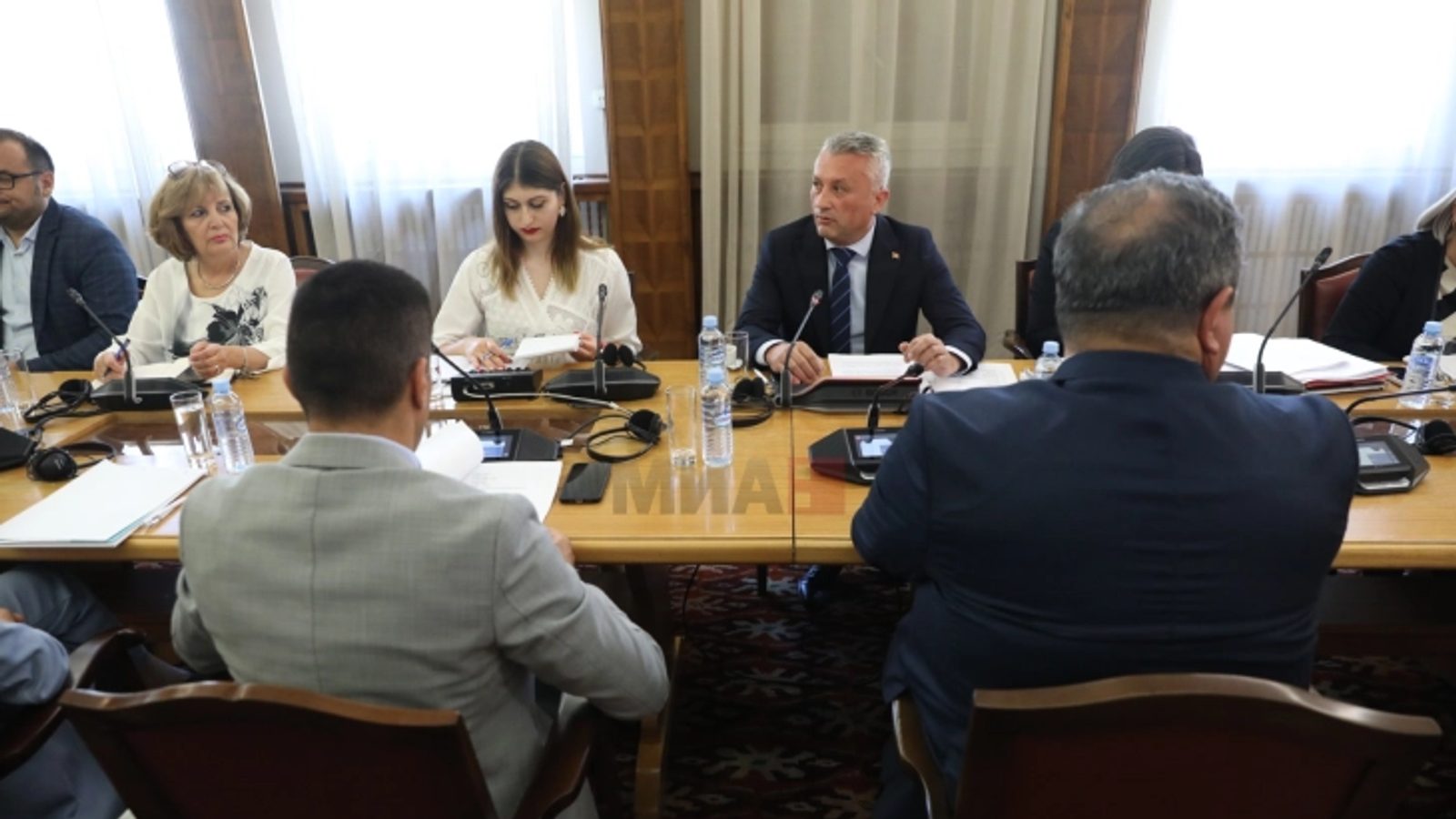
At today’s session, the President of the Judicial Council, Aleksandar Kambovski, announced that Judge Zoran Gerasimovski was appointed to perform the function of acting president of the Appellate Court Skopje, after he received support from nine members of the Council while two were against. Previously, a proposal had been considered to appoint Judge Tanja Mileva as acting president, but only two members voted for her while nine were against.
The coalition concluded the statement by reminding of the Council’s duty: "The Judicial Council has the right and the obligation to interpret the law in the exercise of its competencies, but as a body that must guarantee the autonomy, independence and professionalism of the judiciary, it has an even greater obligation to base its own decisions on the law, pre-known criteria and verifiable reasons. The law cannot be mandatory only when the result of its application coincides with the majority’s preferred choice on the Council."
Photo: press material from the event