Mickoski: Firms and law firms sink tenders to profit from appeals, defends procurement law changes
The prime minister says firms and law offices deliberately sink tenders to profit from appeals, and the higher non‑tender thresholds will prevent that.
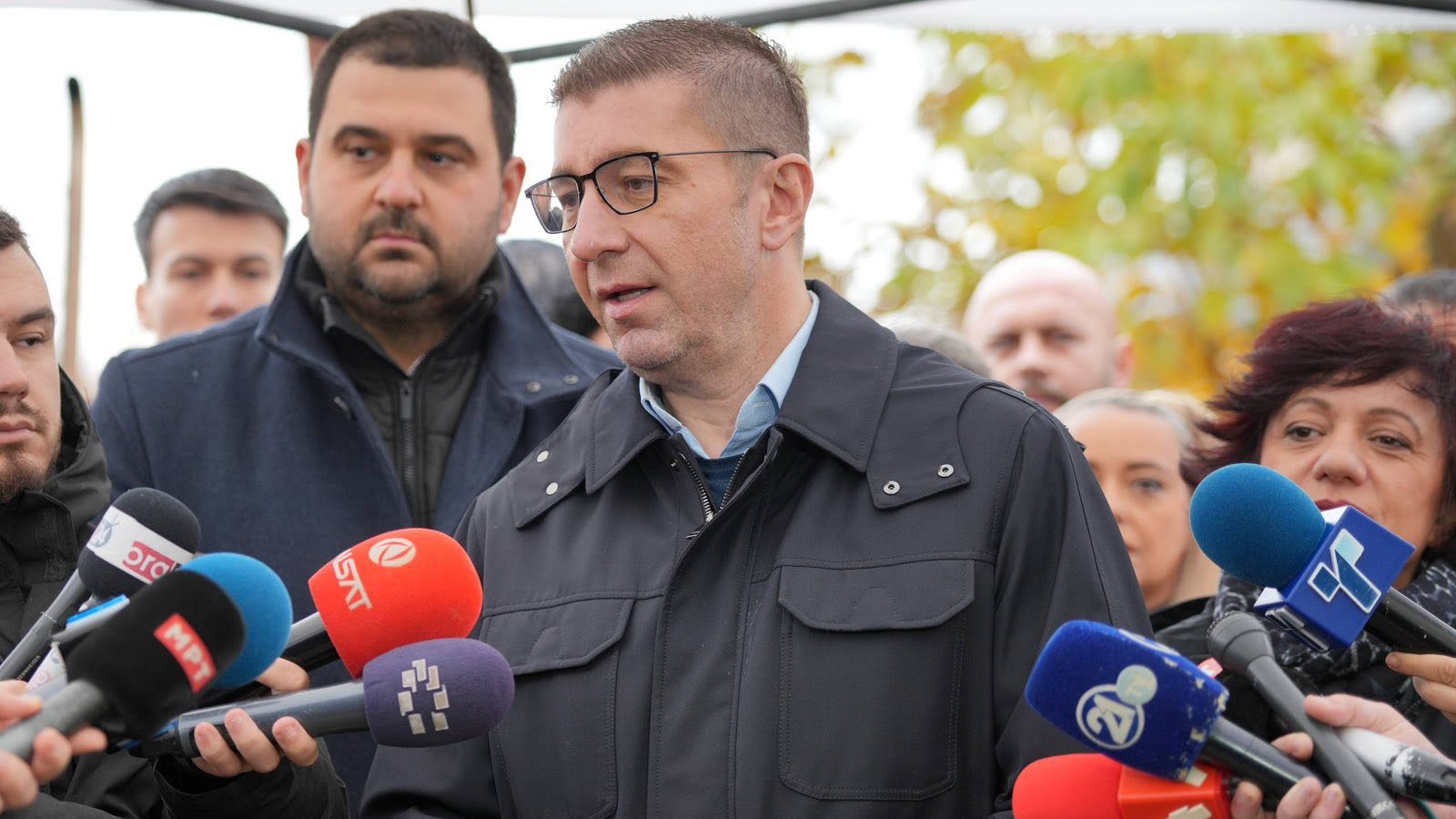
Prime Minister Hristijan Mickoski defended recent amendments to the Public Procurement Law and accused law firms and companies in North Macedonia of deliberately arranging for tenders to fail so they can profit from appeal procedures. Mickoski — who is also the leader of VMRO-DPMNE — said the change that doubled the threshold for procurements without a tender from €5,000 to €10,000 will reduce that abuse.
"Law firms and companies earn money by deliberately arranging for public procurements to fail — and specifically procurement cases for which the threshold of €5,000 has now been raised to €10,000 or from €10,000 to €20,000 — so that we do not end up paying more to those who deliberately torpedo procurements or extort than the size of the procurement itself. Sometimes these organized groups, which deliberately appeal tenders or have that tendency, collect more from the state or a company than the value of the procurement procedure itself. That can no longer happen and they will not be able to do it anymore," Mickoski said in response to journalists' questions.
When asked why the government had not taken into account the opinions of experts and non-governmental organisations who warned about risks from the amendments, Mickoski challenged their authority and defended the government's consultations.
Example and rationale
He gave a concrete example to illustrate his point. "Here is an example: a kindergarten announces a tender to service windows. That's 50,000 denars. Someone deliberately sinks that tender and then charges much more than 50,000 denars in the procedure. That can no longer happen. Or, if they wish, instead of the previous €100 for a complaint, they will pay a lot more and then we'll see them appeal," he said.
Mickoski also addressed a disputed provision in Article 13 of the bill, which would have allowed the reappointment of the chair and members of the State Commission for Complaints in Public Procurement. The provision was challenged by the commission's chair, Gordana Siljanovska-Davkova; Mickoski said it was proposed because of a shortage of experts and that the government removed the clause after objections.
"We did it because, unfortunately, there is not a large selection of public procurement experts in the country. There are five or six people. But fine, if that is controversial, we removed that article and we move on. But in the country there are only five or six people who can respond. If it's not one, it will be another. That is also the number of members of that commission. God willing we'll have a larger selection so we can include more people in the process," he said. The law was adopted keeping the higher thresholds for procurements without tender and measures on payment to access data.
Photo: Vlada