Levica: Constitutional Court ruling opens path to Strasbourg
Levica warns the decision perpetuates unequal media access and may lead to a Strasbourg challenge under European case law.
Levica said the Constitutional Court's decision not to open proceedings against parts of the Election Code that regulate access to media space and the allocation of public funds for paid political advertising does not end the legal dispute but instead clears a path for the case to be taken to the European Court of Human Rights in Strasbourg.
The party argued that the contested provisions create a system in which political actors do not enter the electoral contest on equal terms: some gain privileged access to public funds and media exposure in advance, while others are effectively excluded from both financing and paid political advertising.
Levica cites EU case-law and warns of a possible Strasbourg ruling
In its statement Levica referred to European jurisprudence, citing the Court of Justice of the European Union case C-294/83, Les Verts v European Parliament (1986), and argued that rules of electoral competition must not produce unjustified differential treatment or systemic mechanisms that lead to de facto discrimination and favoring of dominant parties.
“In other words, one of the most elementary questions of electoral democracy was placed before the Court: Can the state, with public money, produce different political visibility for parties competing for the same vote, even to the extent that someone is totally excluded from that possibility? The Constitutional Court decided to close that question in a drawer once again,” the party said in its statement.
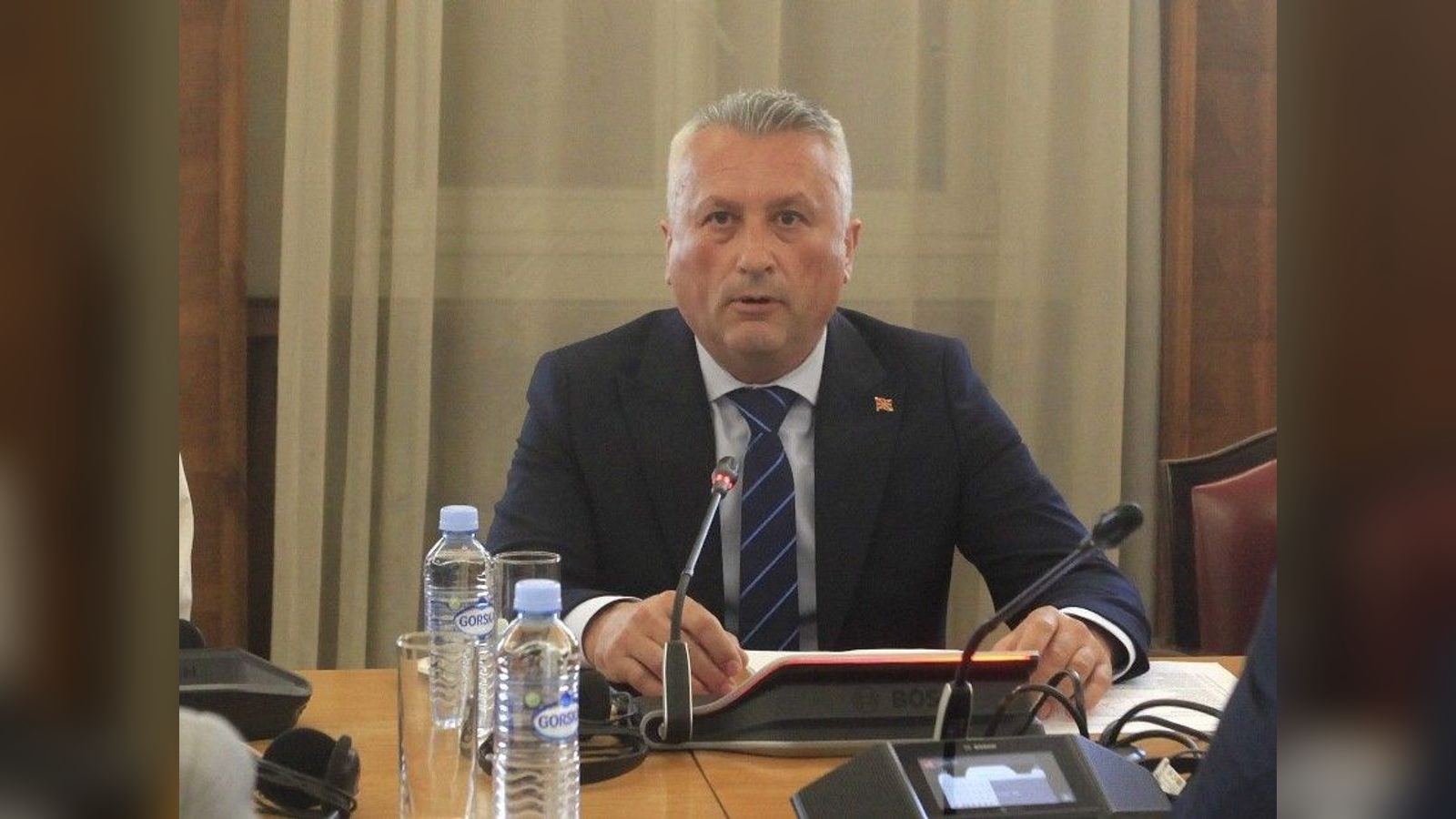
Darko Kostadinovski, president of the Constitutional Court, said after the hearing that a majority of judges remained of the view that the matter has already been decided, because the same provisions were previously subject to constitutional review. He added that he personally believes the challenged provisions are unconstitutional and create unequal conditions for political actors, and that he had expressed this opinion three years ago.
The majority of judges relied on a 2023 Constitutional Court decision, adopted after an initiative by Pavle Trajanov, leader of the Democratic Union, which had found that allocating funds for political advertising and media space on the basis of previous election results was constitutional. That earlier ruling held that votes won are an objective criterion and that the Assembly has the right to set rules for media representation of political parties.
Photo: press material from the event