Macron and Steinmeier end visit with symbolic gestures but no joint European plan
A two‑day state visit in Paris highlighted ceremonial ties and policy gaps on defence, industry and Europe’s strategic direction.
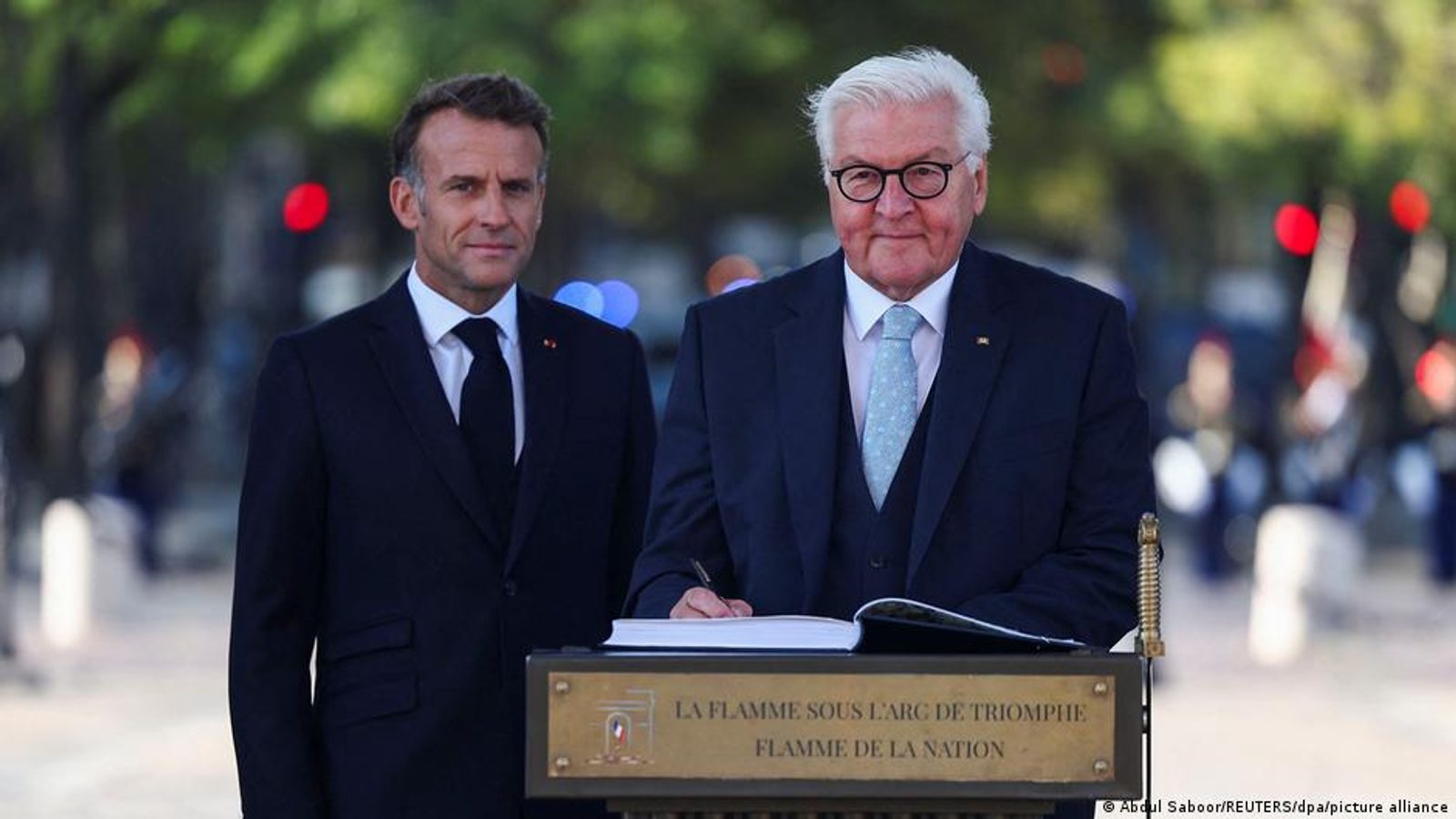
French and German leaders closed a two-day state visit in Paris on October 9–10, 2026 that was heavy on symbolism but light on a concrete joint roadmap for Europe. Ceremonial honours and high‑profile factory and space‑industry visits underscored the partnership, yet visible policy divergences remained on defence programmes, industrial competition and the broader strategic direction of the continent.
Ceremony and street tensions
The visit opened with an exceptional gesture: military honours under the Arc de Triomphe and the playing of the German national anthem in the heart of Paris. At the same time, mass demonstrations by schoolchildren and other protest actions blocked parts of the city, while central streets were closed for security during the high‑level programme.
Leaders staged joint appearances, but there was little room for questions from the press: a joint presser at the Élysée did not allow journalists to ask follow‑up questions. That curtailed opportunities to square differences publicly and to translate symbolism into policy.
The visit took place against a tense domestic backdrop. In Germany the Alternative for Germany (AfD) leads national polls, and in France Emmanuel Macron faces the prospect that either Jean‑Luc Mélenchon on the left or Marine Le Pen on the right could succeed him. Macron warned that online platforms and disinformation "are accelerating doubt about democracy," in remarks delivered in Paris.
Jakob Ross, a specialist in Franco‑German relations, said both presidents lack "a real programme for Germany, France and Europe." He argued that political elites in both capitals have often used twentieth‑century recipes to respond to twenty‑first‑century crises and have been on the defensive since the upheavals of 2022.
Concrete policy disagreements surfaced most clearly on defence. After the collapse of the planned joint fighter programme FCAS in June, attention shifted to the Main Ground Combat System (MGCS) tank project. Conflicting public signals appeared during the visit: the head of the French general staff initially suggested Germany had pulled back from the tank programme, a remark he later said had been poorly phrased.
Germany’s defence minister Boris Pistorius pushed back decisively: "The MGCS project is not finished, it is not dead and no one has stopped it. On the contrary, it is a key project of French‑German cooperation in the field of land systems," he said, stressing that digital information processing, unmanned systems and automation remain central to the programme.
Visits to ArianeGroup sites near Bordeaux and meetings with space‑industry start‑ups highlighted another shared interest: closer industrial cooperation in space and strategic technologies. Macron has long floated a "European dimension" to France’s nuclear deterrent and proposed a strategic dialogue on the role of French nuclear forces in European security as early as 2020 — an idea that has attracted renewed attention amid signs of reduced U.S. engagement in Europe.
Despite the ceremonial warmth, there were few signs the visit produced a fresh Franco‑German agenda. With both presidents expected to leave office in 2027 after roughly ten years in power, the task of building a shared vision will fall to their successors — a transition that now looks increasingly urgent.
Photo: press material from the event