Mark Carney proposes an 'associated' partnership with the EU
Carney will present a vision for deeper Canada–EU cooperation on defence, infrastructure and trade during a 17 September 2026 speech in Strasbourg.
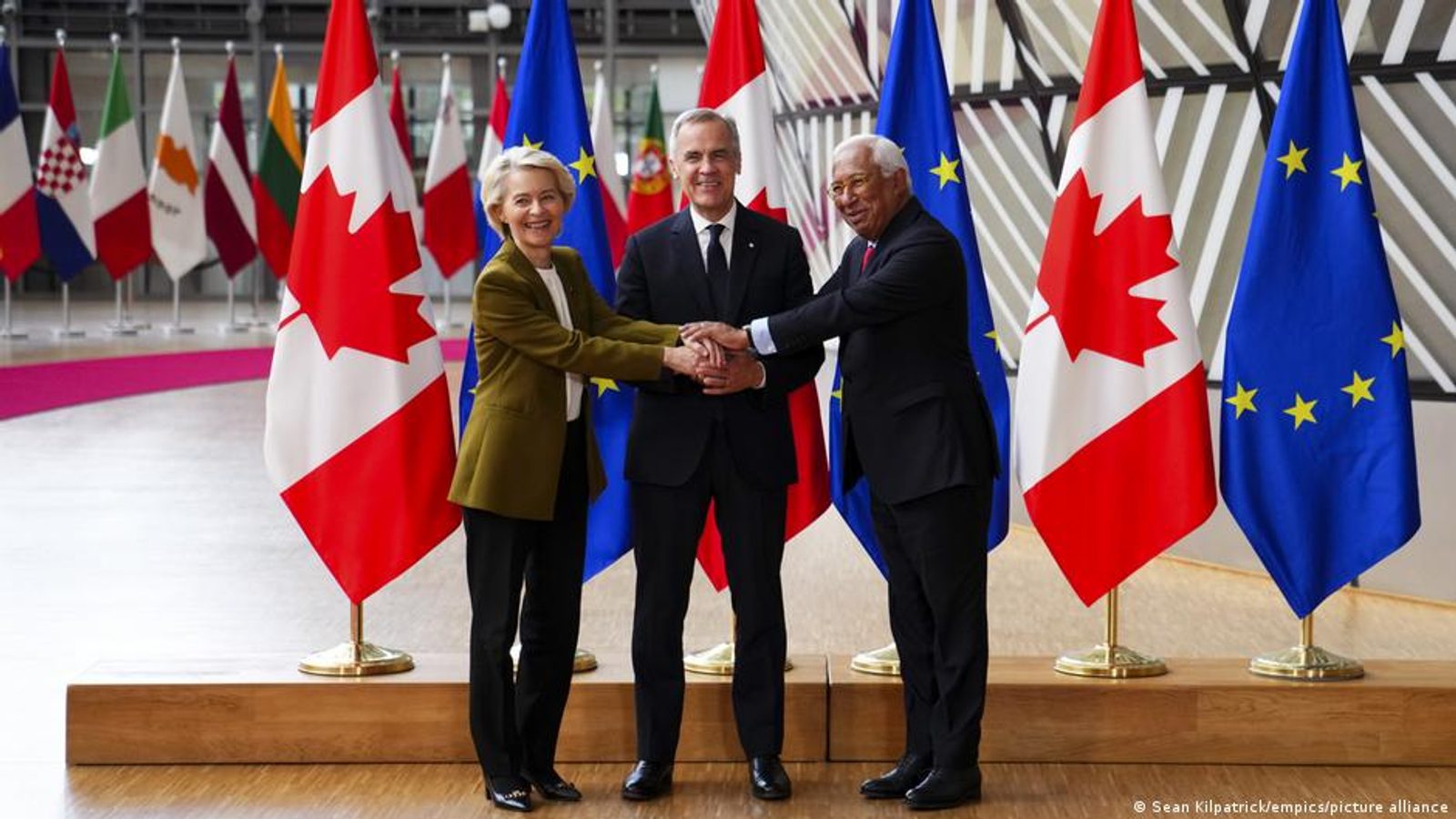
Canadian Prime Minister Mark Carney arrived in Europe with a bold proposal: to forge what he calls "a unique union" with the European Union, without Ottawa seeking full EU membership. The idea — sketched in recent media commentary and to be expanded during a speech in Strasbourg — has already opened debate on what deeper cooperation between Canada and the EU might look like.
Carney is due to set out the concept in the European Parliament on Thursday, 17 September 2026. He also attended European Commission President Ursula von der Leyen's State of the Union address on Wednesday, 16 September 2026 as an honored guest.
Forms of closer ties and the limits of "association"
The EU already maintains a spectrum of relationships with non-member states: free trade deals that lower tariffs, association agreements that can include political and regulatory links, and arrangements that give access to the single market, as with Iceland, Liechtenstein and Norway. Von der Leyen has said the EU wants Canada to become an "associated member" of the Union; such association agreements exist with countries including Turkey, Israel and Ukraine and can—but do not necessarily—lead toward full membership.
Economist Patrick Leblon of the University of Ottawa warns that the word "association" carries problems. He considers it unlikely that Canada would adopt EU law wholesale or join the single market and customs union—moves that would imply accepting common external tariffs. Instead, Leblon believes Carney is probably envisioning a tailored alliance with stepped-up cooperation, especially on economic security and defence.
Security experts echo that assessment. "In a way, for a long time we took the American security umbrella for granted," Leblon told reporters. Anand Sunder of the European Council on Foreign Relations says roughly 70 percent of current Canadian defence spending flows to the United States, and that Carney wants to reduce that dependence by joining European defence projects—getting "more for the same money." Canada has already joined the EU's SAFE programme (SAFE, "Security Action for Europe"), which can mobilise up to €150 billion in loans for joint procurement of military equipment.
Under SAFE rules, no more than 35 percent of component value may originate from countries outside the EU, the European Economic Area or Ukraine. Canada joined SAFE by paying a contribution, which grants Canadian firms better access than third countries normally have. Still, Sunder notes significant obstacles remain if Canadian companies are to produce and bid together with European partners: the central question is how far the EU is prepared to relax its own procurement and sourcing rules—decisions that would also affect other non-EU partners such as the United Kingdom and Norway.
Defence spending figures underline the potential: Canada currently spends about 2 percent of GDP on defence and, like other NATO members, has committed to increase that to a total of 5 percent of GDP by 2035—3.5 percent for equipment and 1.5 percent for other defence-related areas. Sunder argues the EU would gain from closer ties as well: Canada already allocates more for defence than the smallest 14 EU members combined.
Beyond defence, experts point to collaboration on critical infrastructure and strategic projects: joint satellite management, laying and operating fibre-optic cables across the North Atlantic, and energy supplies—Canada's oil and gas reserves could help diversify Europe's sources. Trade between the two sides is governed by the Comprehensive Economic and Trade Agreement (CETA), provisionally in force since September 2017, which provides near-tariff-free trade and market access rules for industrial, agricultural and service sectors, and lets EU firms bid in Canadian public tenders. Leblon says CETA's potential remains underexploited and that Ottawa should better inform companies about the opportunities while deepening institutional dialogue.
Carney's outreach to Europe follows a high-profile speech earlier this year in Davos where he warned of the "breakdown of the old world order" and urged middle powers to act collectively so they do not end up "on the menu of the great powers." The move also reflects growing unease in Ottawa after rising trade tensions with the United States; while Canada cannot disentangle itself from the United States, policymakers increasingly look for new partners and concrete projects that would translate any future alliance into operational advantages for both Canadians and Europeans.
Lucia Shulten, Brussels correspondent focused on the EU and international relations.
Photo: press material from the event