Friedrich Merz calls for rapid pension reform, flexible hours and deeper economic changes
Chancellor Friedrich Merz demanded swift pension legislation, greater labour-market flexibility and broader economic reforms during Employers' Day in Germany.
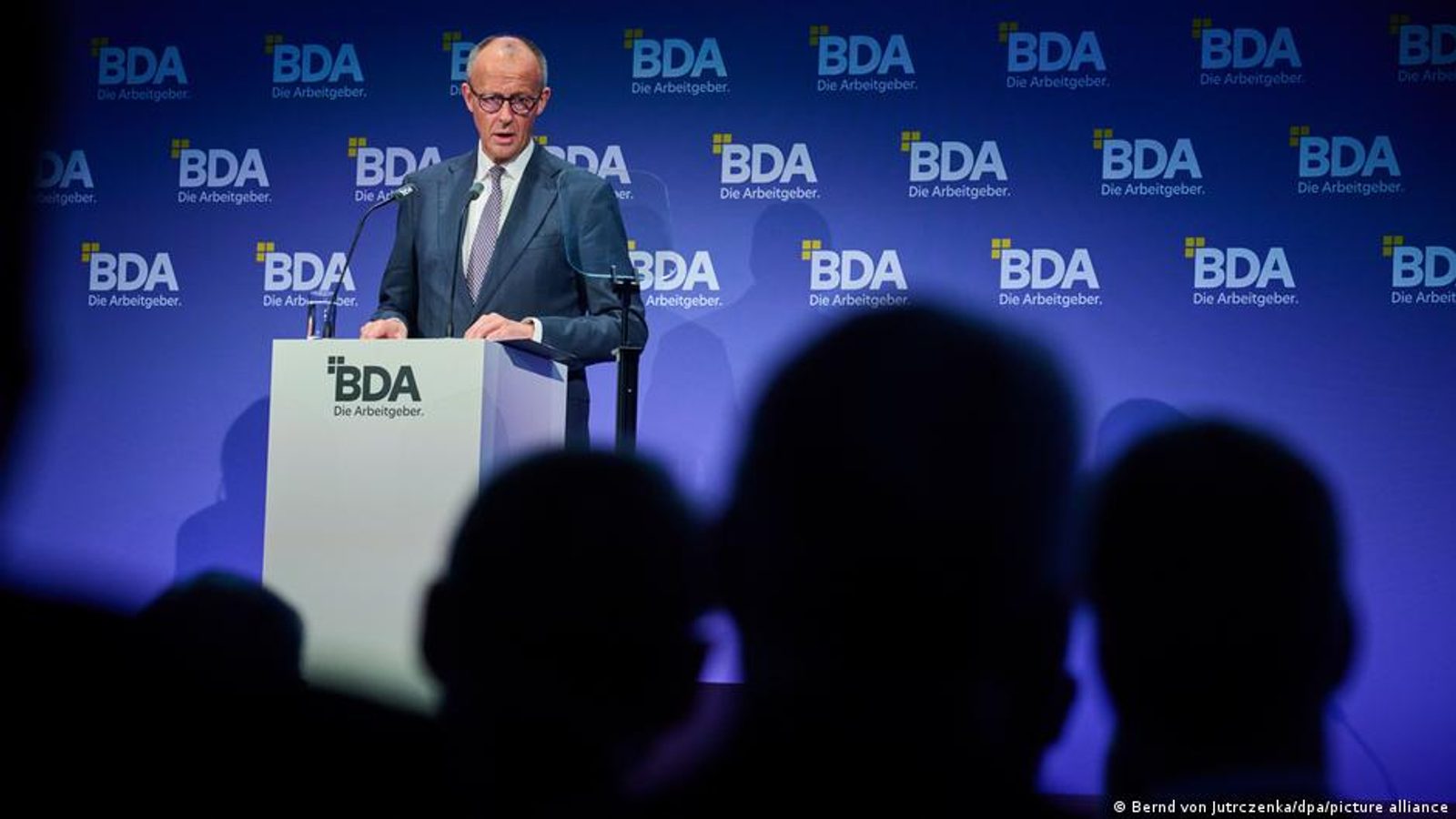
German Chancellor Friedrich Merz on 14 October 2026 urged his coalition to push through a fast-track pension overhaul, introduce more flexible working hours and carry out deeper economic reforms as employers warned about rising costs and weakening competitiveness.
Speaking at the annual Employers' Day hosted by the Confederation of German Employers' Associations (BDA), Merz gave the new labour minister a tight timetable and demanded that proposals agreed within the coalition be ready for cabinet consideration without delay.
Employers press for broad changes
Merz addressed the appointment of Alexander Schweitzer as the new labour minister and said: "Tomorrow he will attend a cabinet meeting for the first time. It usually lasts an hour, and from 11 o'clock he should start work in the ministry and do so so quickly and efficiently that the bills we agreed on will reach the cabinet as soon as possible." He added bluntly: "If that is achieved, then he has done his job."
At the same event Rainer Dulger, president of the BDA, representing about one million companies that employ roughly 30 million people — more than 60 percent of jobs in Germany — urged quicker decisions on a wide reform agenda: less bureaucracy, faster digital administration, sustainable social systems, better education, functioning infrastructure and competitive energy prices. "We do not need new analyses of the situation, but decisions that companies and employees will feel in everyday life," Dulger said.
Both the chancellor and employers put the pension system at the centre of the debate. Merz warned that allowing earlier retirement without a pension reduction "if someone is healthy and able to work, is neither fair nor can our pension system and economy afford it when fewer employees must finance an increasing number of pensioners." He demanded that a draft law based on the expert commission's recommendations — submitted in late June — be fully prepared this year so it can move quickly through the legislative process.
Employers also pressed for a liberalisation of working-time rules, proposing a weekly cap instead of a strict eight-hour daily limit. Merz defended the idea that longer shifts can suit some models, saying: "That shows that working more than eight hours is not exploitation, but can be a good opportunity for companies, and also for the people who work in them." The government proposal to widen fixed-term contracts and make high-earning dismissals easier, he said, forms part of "the most comprehensive reforms in decades" that he is willing to pursue even if they spark political conflict.
Industry data cited at the gathering underline the urgency: German industry lost about 177,000 jobs over the past year, with the automotive, machinery and metal sectors particularly affected. Employers warned that social insurance costs are rising — from every €1,000 in wages, €423 currently goes to insurance funds — and said without reform contribution burdens would grow further.
Merz acknowledged his low approval ratings but framed the trade-offs as necessary. "If I were not in this conflict, my personal ratings in the polls would be better. But I have no intention of becoming the darling of the nation," he said, adding that his aim is "to set this country on the right course and, above all, to reopen a reasonable perspective for the young generation."
Photo: press material from the event