Mickoski: EU should be involved in bilateral dispute with Bulgaria; won’t enter an ‘adventure’ without clear end
Mickoski told MRT1 from New York the EU must hear both sides of the bilateral dispute with Bulgaria and that he will not enter a process that can be repeatedly shifted.
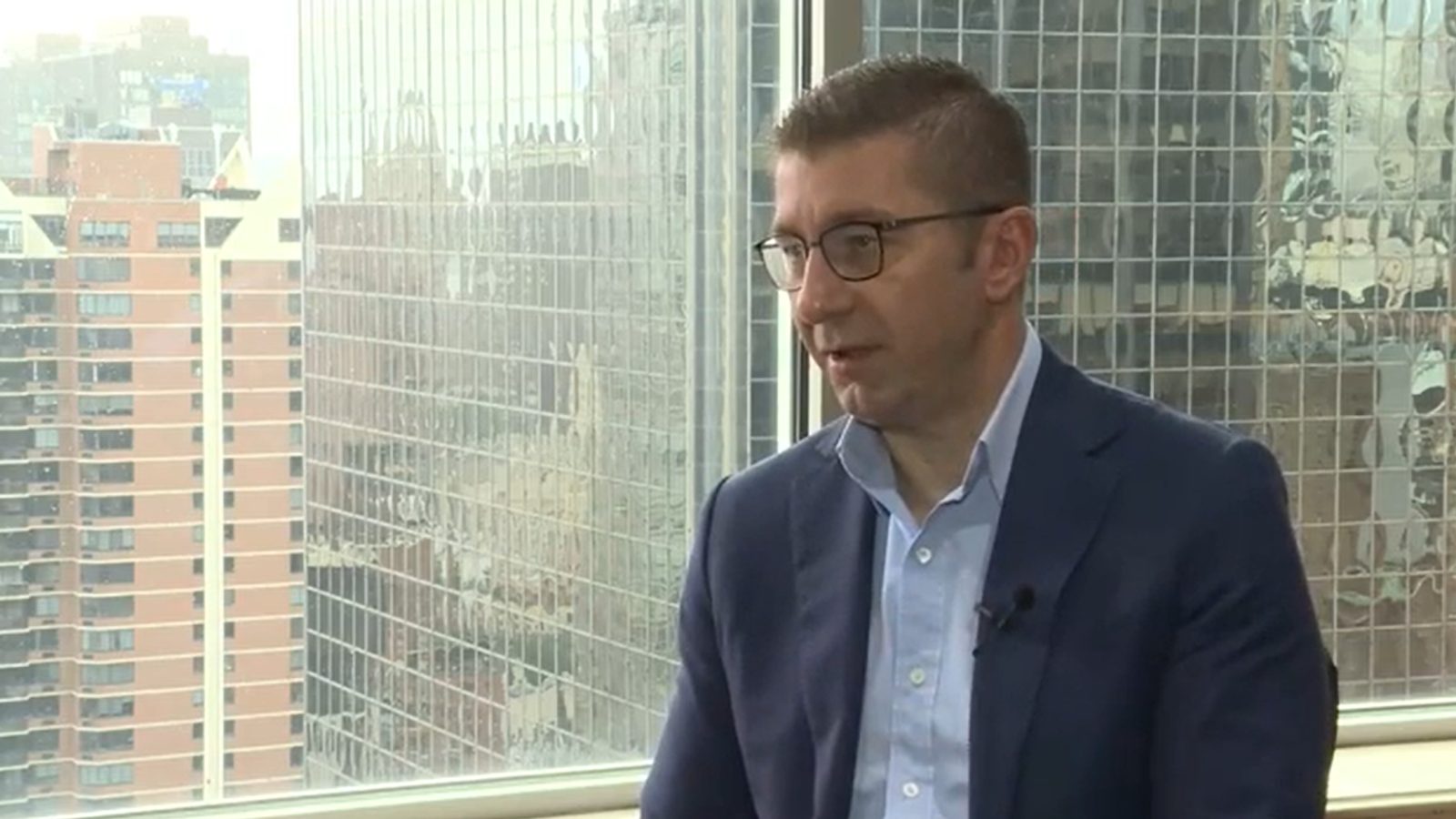
Opposition leader Hristijan Mickoski said the European Union should take part in talks about the bilateral dispute with Bulgaria so Brussels can hear both sides, and warned he will not enter a precarious accession process without assurance an outcome is reachable. Mickoski made the remarks during an interview for MRT1 in New York, part of his visit to the United States.
What Mickoski proposes
“Our idea when we say that the European Union should get involved is so that they hear our arguments and the arguments of the other side. I know what the concern is from official Sofia. They say that if we sit down in the presence of a third partner, that means that we really have a bilateral dispute. And indeed we have a bilateral dispute. We can invent, pretend that we don't, but essentially we really have a bilateral dispute which is now at its beginning. And while it is at the beginning, as I said in my speech yesterday, we must conduct a dialogue and precisely for that reason we need representatives of multilateral organizations, in this case the European Union, to hear the arguments,” Mickoski said.
Mickoski also warned he would not engage in a process that could be endlessly shifted. “We would not want to enter a process that would then continuously shift. Why? Because, I'll be the most open and direct, if we open negotiations tomorrow, each chapter, each cluster will then have to be voted on in national parliaments when it is closed by the member states of the European Union. There is at least 80 times chance that we will again receive new demands. How will that look? Some more radical structure will come out in the Parliament of our eastern neighbour and then these more mainstream politicians will say: 'You know, we must now, because of domestic problems, block them again, you know Russian influence, this kind of influence, we are fighting against that Russian influence, you know you are the bad Russians, we are the good Brussels people' and roughly that is how it will look. I will not enter that process,” he said.
On plans linked to a document that European Commission President Ursula von der Leyen is preparing on unlocking and reorganizing certain Union procedures, Mickoski said that if the EU wants to make progress, announcements must be translated into concrete measures.
At the United Nations General Assembly Mickoski urged that enlargement be governed by clear rules and predictability. “If small states are expected to respect the rules, then the rules must also provide them with predictability. The rule that applies today cannot be different tomorrow just because the balance of power has changed. And an undertaken obligation cannot be a temporary political convenience. It must be a basis on which people can plan their future,” he said.
Photo: Printskrin