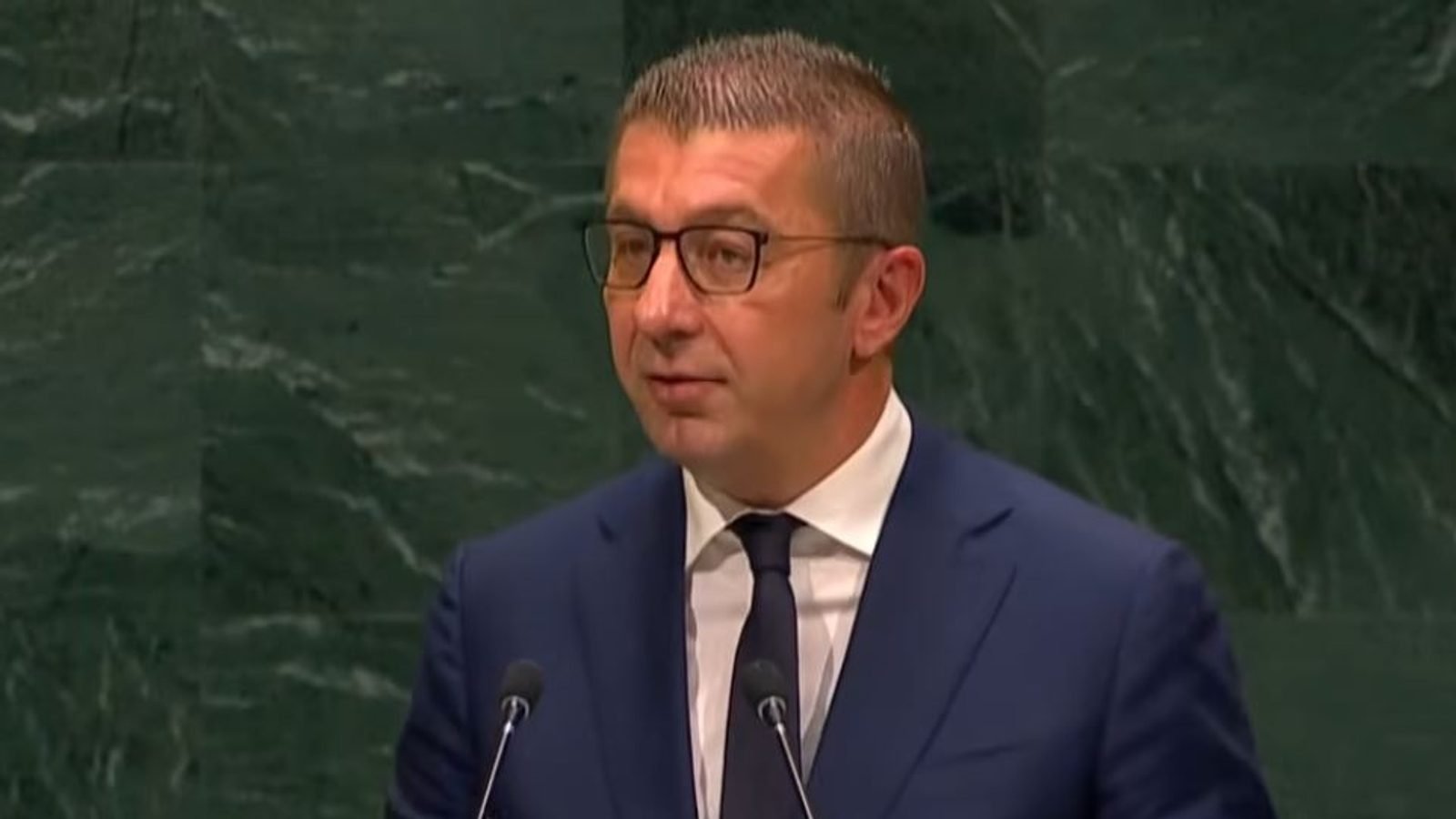
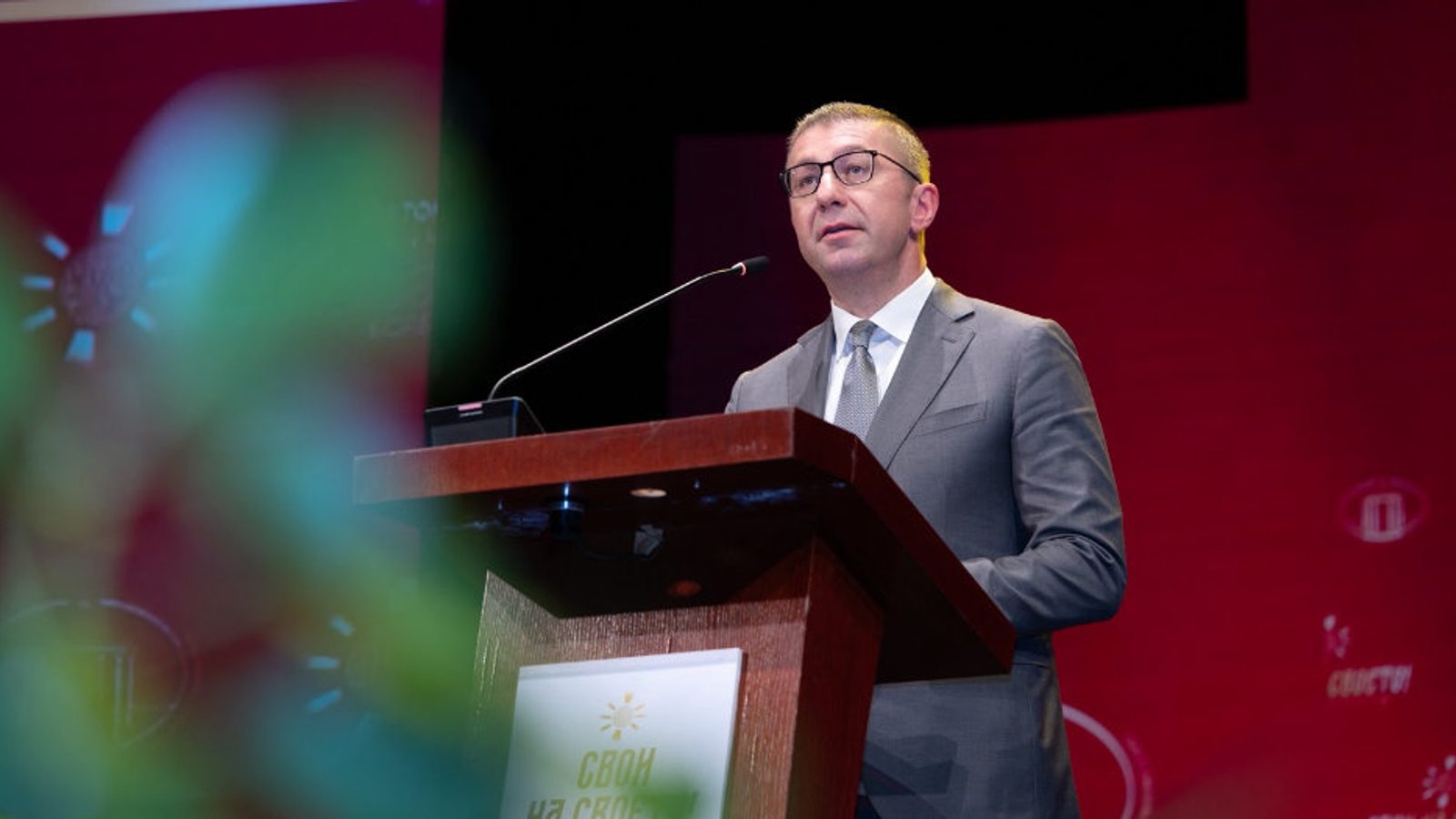
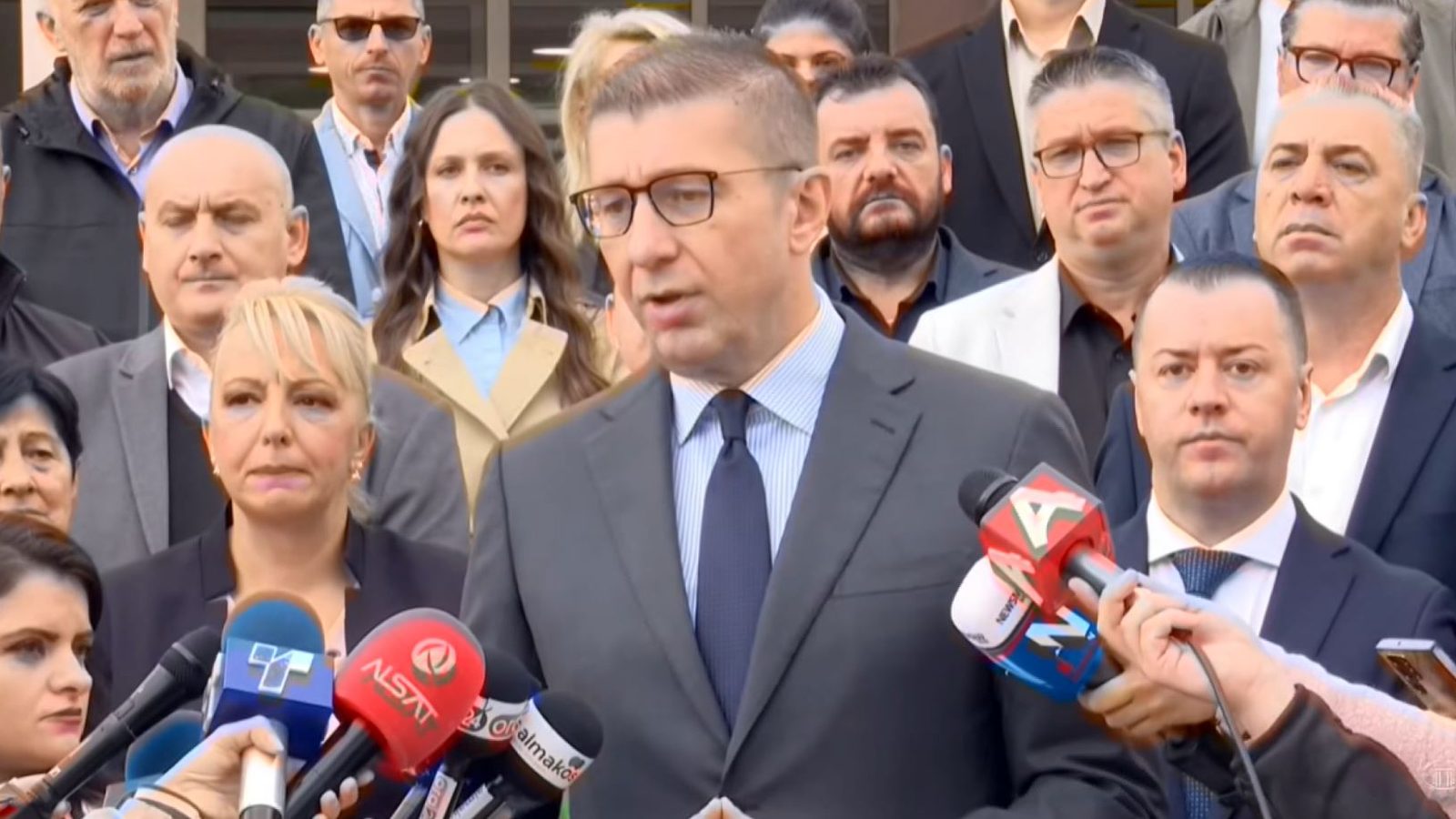
Hristijan Mickoski urges unity, vows to 'clear out the dregs' and sits beside state prosecutor Nenad Saveski
On the 35th anniversary Mickoski called for unity, warned against rewarding the "dregs" and sat beside state prosecutor Nenad Saveski.
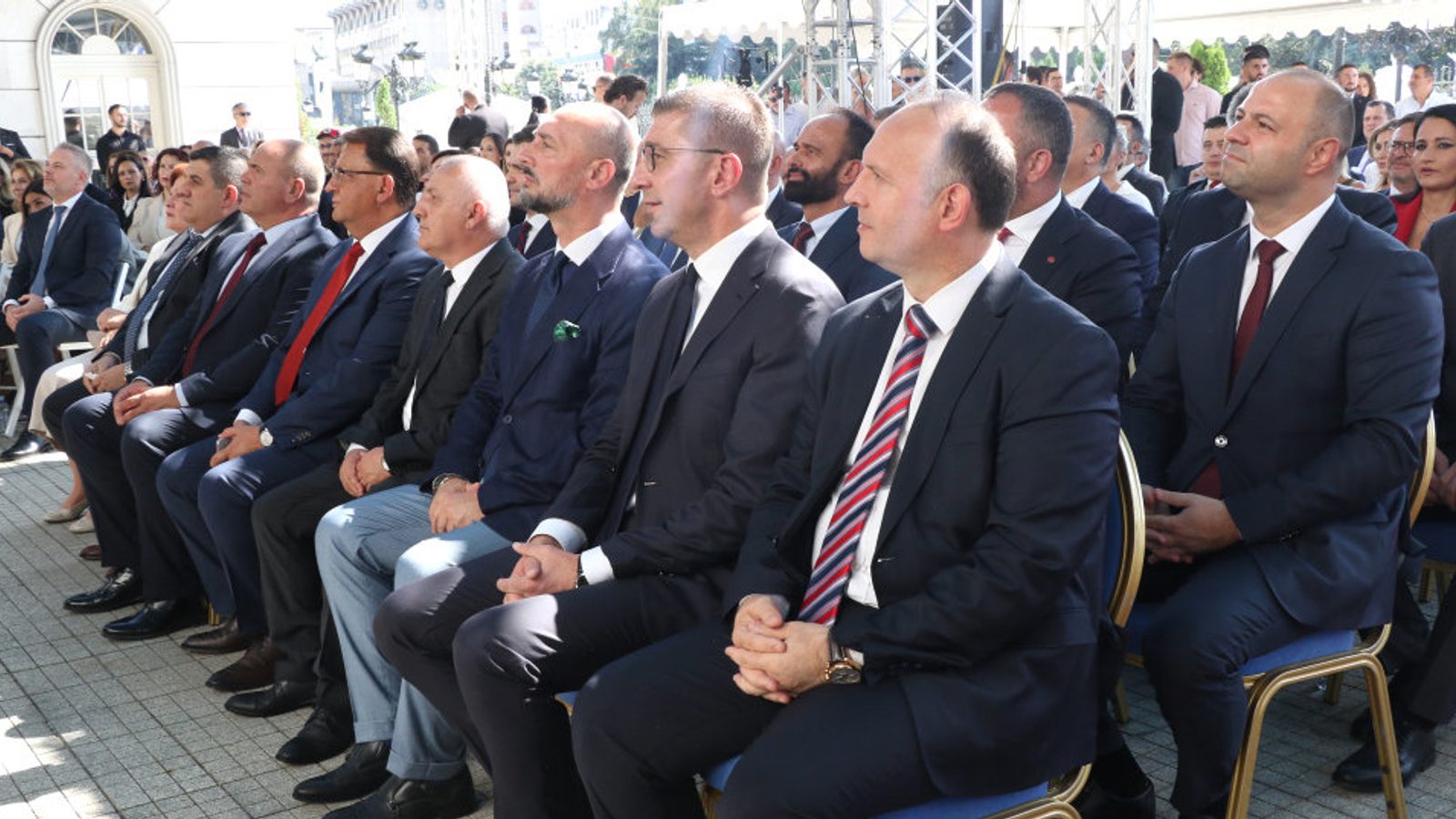
On September 8, 2026, the 35th anniversary of North Macedonia's independence, Prime Minister Hristijan Mickoski addressed a crowd on the Government plateau in Skopje, calling for unity and warning that he would "clear out the dregs." He spoke before prominent members of the VMRO‑DPMNE‑led administration and, at one point, took a seat beside state prosecutor Nenad Saveski.
Key passages from Mickoski's address
“Let us honestly look also at the times when we were up to the historical task and at the times when we were not worthy of the sacrifices and ideals of the generations before us. There were years we lost, opportunities we missed. There were generations that expected more from us, but received less. Painful decisions were made, and heavy concessions were taken. The flag was changed, the constitution, the name. Too many people left because they did not see space in their country to realise what they know and can do; too many honest people watched as those with better connections, with greater political protection or with less conscience passed before them, and the hardworking, quiet and capable people, those on whose shoulders every state actually stands, remained invisible,” Mickoski said.
He reminded listeners that over three and a half decades the country built institutions, established its own monetary and economic system, joined the United Nations and NATO, and survived embargoes, crises and political divisions. He framed those achievements alongside missed chances and difficult choices that, he said, shaped the country's path.
Listing what he called civic duties, Mickoski urged people to love the country without lying to it, to be proud but acknowledge its wounds, to celebrate victories and learn from defeats, and to ask not only what the world has done to the country but also what the country has done to itself.
“Our struggle is to create a country where a child, regardless of where he is born or how much money his parents have, can reach the top through knowledge and effort; a country where a young doctor will not have to leave thousands of kilometres to have a dignified life; a country where a farmer will know his work has value, an entrepreneur that the law will apply equally to everyone, and a worker that his labour is not a cheap item in someone else’s balance sheet,” Mickoski said.
He then issued a central warning about whom the state chooses to reward: “A state, in the end, is exactly the side it chooses to reward. If it rewards the most capable, it will advance. If it rewards the most honest, it will have trust. If it rewards labour, it will create. But if it rewards the dregs, then the dregs will inevitably become the elite. And a state in which the dregs become the elite is a state from which the true elite departs. That is precisely what we must change. Not out of revenge. Not for political settling of scores. But because without establishing basic justice there is no strong state, no functional economy, no trust and no future.”
Mickoski asked for an end to divisions and singled out those he said opposed infrastructure, health and investment projects. “They are against hospitals, against roads, against a new clinical centre, against the infrastructure projects for municipalities we build, against high‑speed rail, against raised wages and pensions. Against data centres, against new investments. If it is said a new government plane is needed, they immediately jump and say you are living in luxury. And they do not count how many lives will be saved because that plane is also for that purpose. That is short‑sighted politics,” he said.
He also cited economic data, saying that in the second quarter of 2026 real GDP grew by 4.3 percent — among the strongest rates in Europe — and noted that the second quarter of the previous year had recorded 3.5 percent growth.
By S. K. Delevska
Photo: SDK.MK)