Trump's National Guard in Washington: visible presence, limited policing
About 4,500 Guard troops now patrol Washington, but court records and incident files show they rarely stop serious crimes and mostly handle minor offenses.
When three police officers arrived late at night outside a Washington nightclub and found a man stomping on a young woman on the sidewalk, they intervened and arrested the attacker. In the officers' report, however, Officer Xavier Jimenez recorded an odd detail: about 15 members of the National Guard were patrolling nearby but none moved to stop the assault.
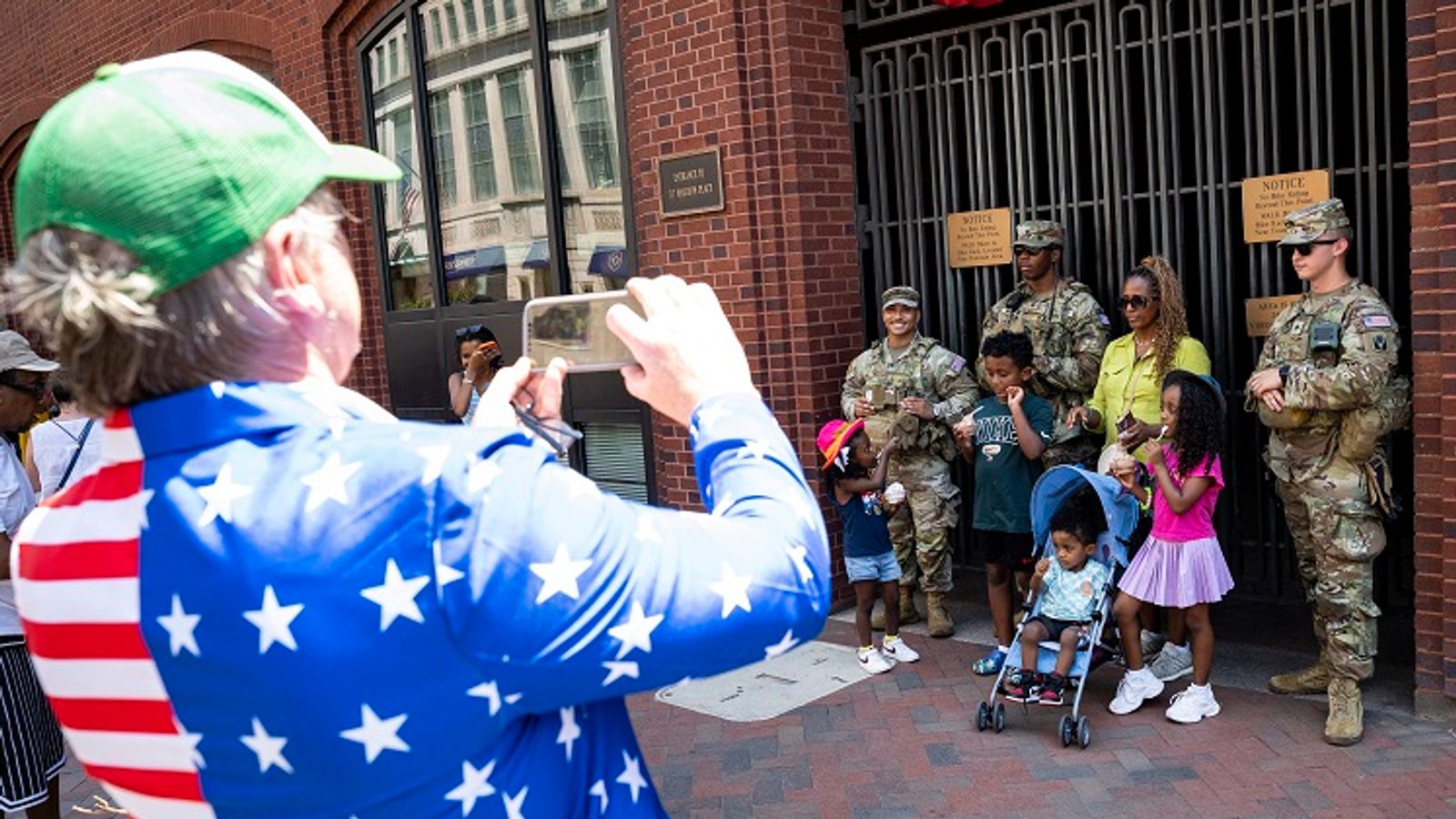
The episode highlights the limited, largely visible role played by the National Guard troops that President Donald Trump ordered into the U.S. capital as part of his campaign against crime. About 4,500 guards are now in Washington, compared with roughly 3,200 police officers. They patrol monuments, Metro stations, tourist areas and the baseball stadium, but a review of court records and interviews shows they seldom intervene to prevent more serious crimes.
Since they were deployed last August the Guard has been mentioned in only about 1.3 percent of criminal cases filed in the Superior Court of the District of Columbia, where most local criminal prosecutions are handled. Analysts found 217 cases in which the police mentioned the National Guard: in 62 incidents the guards themselves detained suspects, most commonly for store thefts or unpaid Metro rides; in 43 cases they assisted police in arrests; and in 35 they were merely witnesses. In many other files the guards were victims — attacked or threatened while on duty.
Everyday interventions, limited authority
Many of the Guard's interventions have involved minor offenses: pursuing someone who took two slices of pizza and left two dollars, stopping a man who threw a rock at a bus, or detaining a suspect accused of stealing two packages of dried meat worth about seven dollars. In one case six guards detained a woman who drank a bottled soft drink without paying. Although the troops were temporarily deputized as federal marshals, their policing powers are constrained: they can hold a suspect but must call police for a formal arrest. The Pentagon describes their activities as "presence patrols"—a demonstration of force intended to deter, not to carry out law enforcement.
The deployment has been expensive. The administration previously notified Congress that the operation cost about $1.65 million per day, even before the number of troops was doubled over the summer. By comparison, the daily police budget for Washington was about $1.5 million. The plan is for troops to remain in the city through the end of President Trump's term in 2029, with an estimated total cost of $1.4 billion.
Critics point to several troubling incidents. Guards found Keon Jones after he had been stabbed following a brawl near restaurants and hotels; they called emergency services but initially believed he was merely intoxicated. Jones died in hospital two hours later. Guards have themselves been targeted: files show 62 cases in which people were charged with pushing, striking or threatening guards, and nine people charged with spitting on them. Last year two guards from West Virginia were shot near the White House; one died.
Studies and court records show the Guard is most visible in wealthier, safer parts of the city. There is scant evidence of Guard involvement in neighborhoods that accounted for about 82 percent of the 859 murders registered in Washington over the past five years. The White House says the deployment has reduced crime and improved quality of life; homicide counts have fallen for a third consecutive year, a trend that also appears in cities without military deployments. Overall reported violent crime this year is roughly 4 percent higher, and a study by the nonpartisan Niskanen Center concluded the Guard contributed to fewer car thefts but had no measurable effect on violent crime.
Former National Guard deputy commander General Randy Manner has warned that troops are not trained for routine police work and that the deployment is costlier than hiring additional officers. Supporters argue that the mere presence of the Guard deters potential offenders. So far, the evidence indicates their role remains largely symbolic and focused on smaller offenses rather than the city's most dangerous crimes.
Photo: EPA/GRAEME SLOAN