8,844 work permits last year, but North Macedonia faces a much larger worker shortfall
Agency figures show a sharp rise in foreign arrivals, but employers and officials say the country will need many more workers to sustain growth.
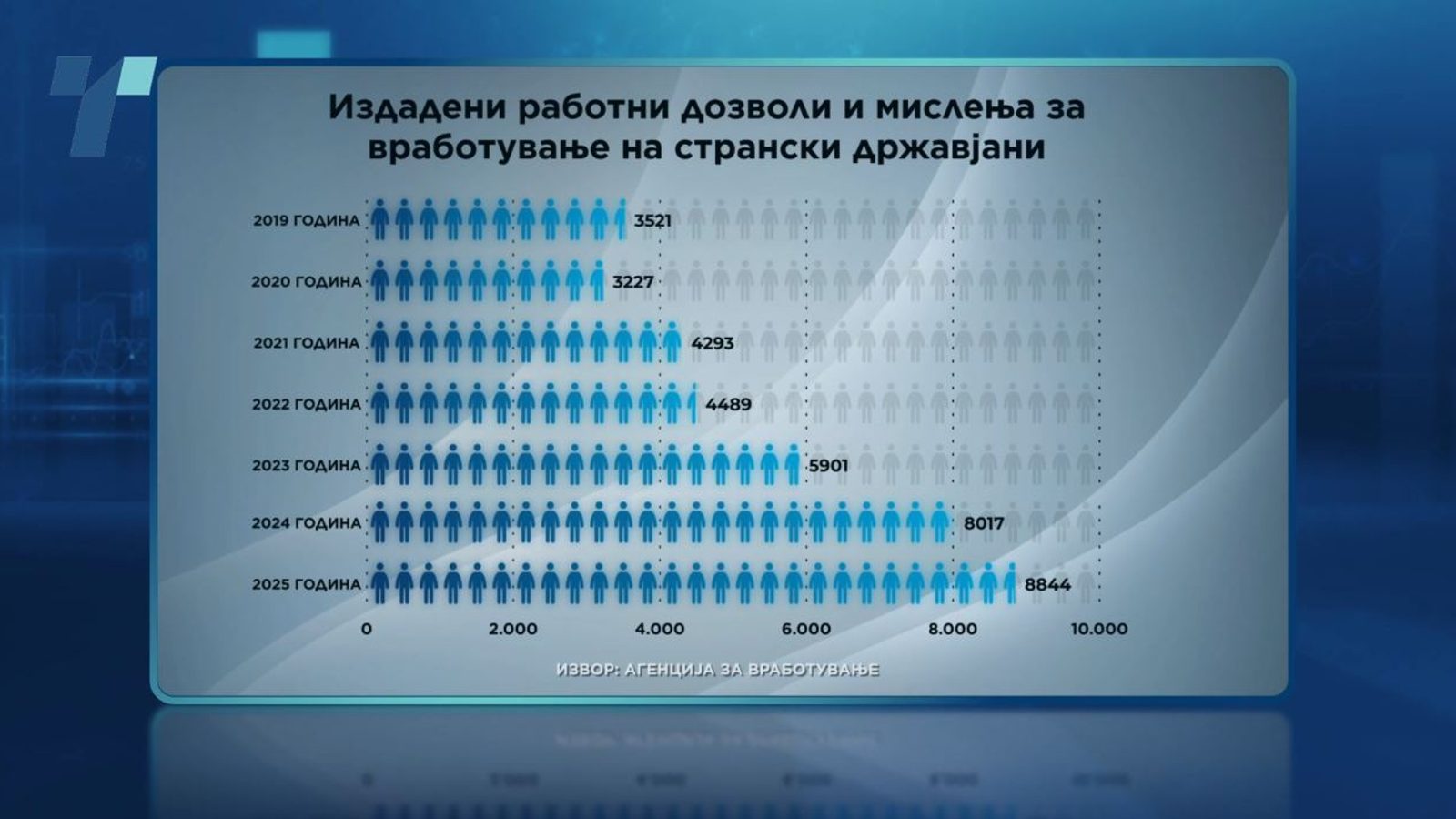
More than 34,000 foreign nationals have come to work in North Macedonia over the past five years, while the Agency for Employment last year issued 8,844 work permits and employment opinions for foreign citizens — roughly two and a half times the number recorded in the pre-pandemic year 2019, when about 3,500 foreigners arrived.
The business community repeatedly points to a persistent shortage of workers, a problem that firms here say is shared by economies across the globe.
Private sector seen as part of the solution
“I think we have room because I personally believe that we have an excessive number of people in the public administration. And I am convinced, I have daily contacts with people from there, they are wonderful people who are largely professionals, who want to enter the private sector. If you ask me, a certain number of 40,000 people who could come into the private sector with some assistance for the companies that would take them, I think that pressure will be reduced at least for the next 2-3 years because I am convinced that now the private sector is more attractive than the public sector,” says Darko Velkov of Vrabotuvanje.com.
The Government has warned that, because of youth emigration and demographic trends, by 2030 the country will need to import some 50,000 foreign workers each year to sustain economic growth. Employment intermediaries offer similar forecasts.
“The fact is that 9,000 people is very small. For the economy in Macedonia in my view about 40,000, 50,000, maybe even 60,000 people who would work are needed who are missing at the moment. That way companies will probably be able to advance,” Velkov adds.
Most of the imported labour in North Macedonia consists of general workers. Between 2019 and 2026 the largest number of work permits were issued to foreigners employed in construction, the processing industry, trade and hospitality.
Photo: press material from the event