Nagasaki marks 81st anniversary of US atomic bombing
Ceremony at Nagasaki Peace Park attended by representatives from more than 90 countries; Mayor Shiro Suzuki condemns growing support for nuclear armament.
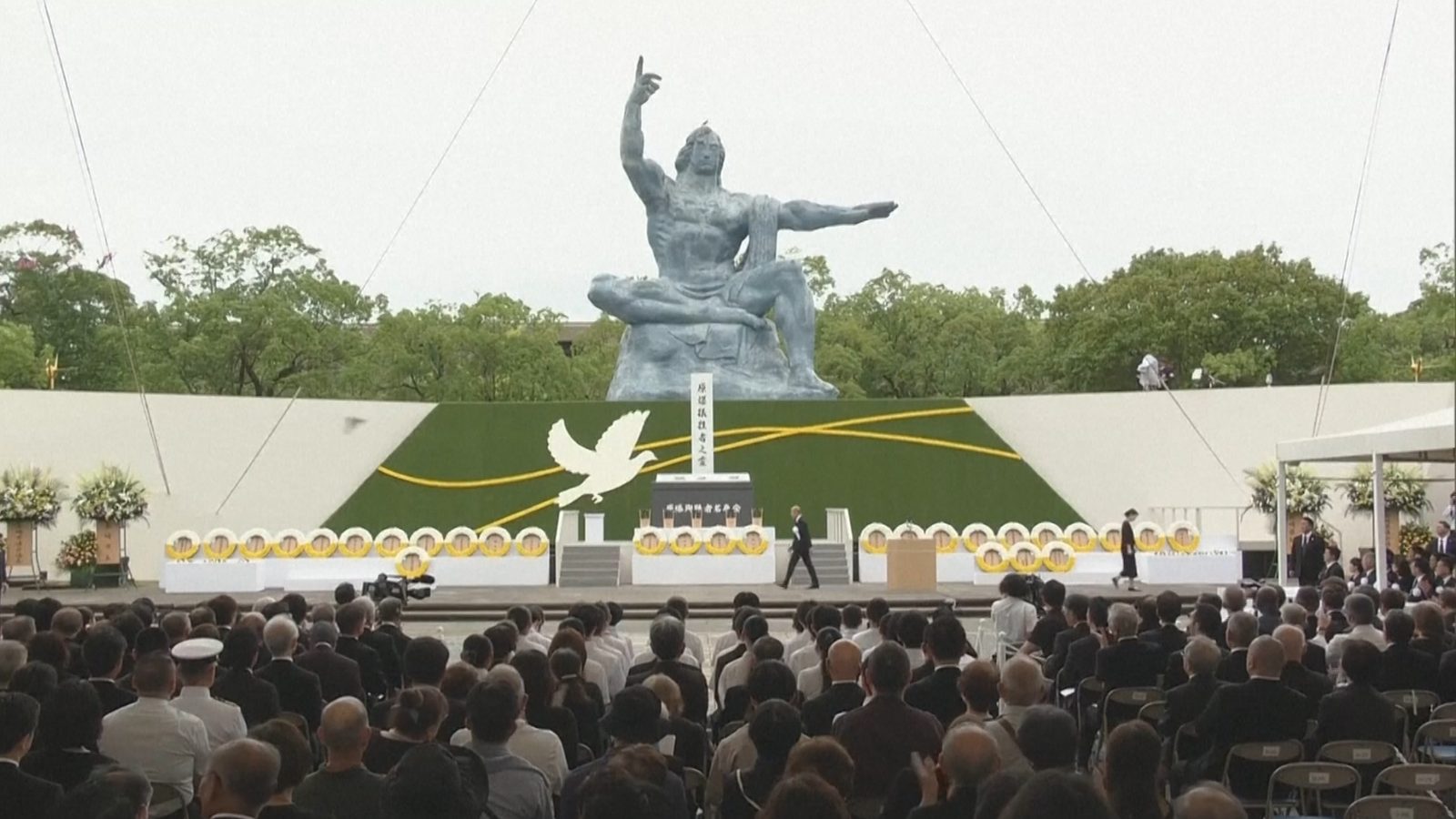
Nagasaki marked the 81st anniversary of the atomic bombing on Sunday with a ceremony at Nagasaki Peace Park attended by representatives from more than 90 countries. Mayor Shiro Suzuki used the event to denounce what he described as growing support for nuclear armament.
Commemoration and context
The atomic attack on Nagasaki killed 74,000 people and took place three days after U.S. forces dropped the first atomic bomb on Hiroshima. The two bombings compelled Japan to surrender; the country capitulated on 15 August 1945.
The bombings of Hiroshima and Nagasaki on 6 and 9 August 1945 grew out of years of scientific work in Europe and North America that the source describes as beginning in 1939 and 1941, when the U.S. government launched the Manhattan Project to build atomic weapons.
According to the account given at the memorial, by order of President Truman the first nuclear weapon — a 15-kiloton device containing 60 kilograms of uranium — was dropped on Hiroshima from an altitude of 9,400 metres and detonated at about 600 metres above the ground. The explosion produced a thermal pulse with temperatures up to 5,000 degrees Celsius, a powerful blast at roughly 800 km/h, and fires that destroyed nearly everything within twelve square kilometres.
Immediate fatalities in Hiroshima were estimated between 70,000 and 80,000 people; later deaths from radiation exposure increased the toll to about 140,000. The blast produced a mushroom cloud reportedly reaching 15,250 metres and visible from as far as 560 kilometres away.
On 9 August at 11:02, a second atomic bomb was dropped on Nagasaki; it detonated about 470 metres above the city and was a plutonium device. The explosion killed 74,000 people. In the years that followed the two attacks claimed more than 200,000 lives in total, and survivors faced decades of physical and psychological trauma.
The memorial text also notes that the Soviet Union tested its first atomic bomb in Kazakhstan on 29 August 1949, becoming the world’s second nuclear power.
Photo: press material from the event