Poland unveils Europe’s tallest statue of the Virgin Mary
A 55‑metre Virgin Mary statue near Konotopje, financed by billionaire Roman Karkosik, is due to open on 15 August 2026 amid divided public reaction.
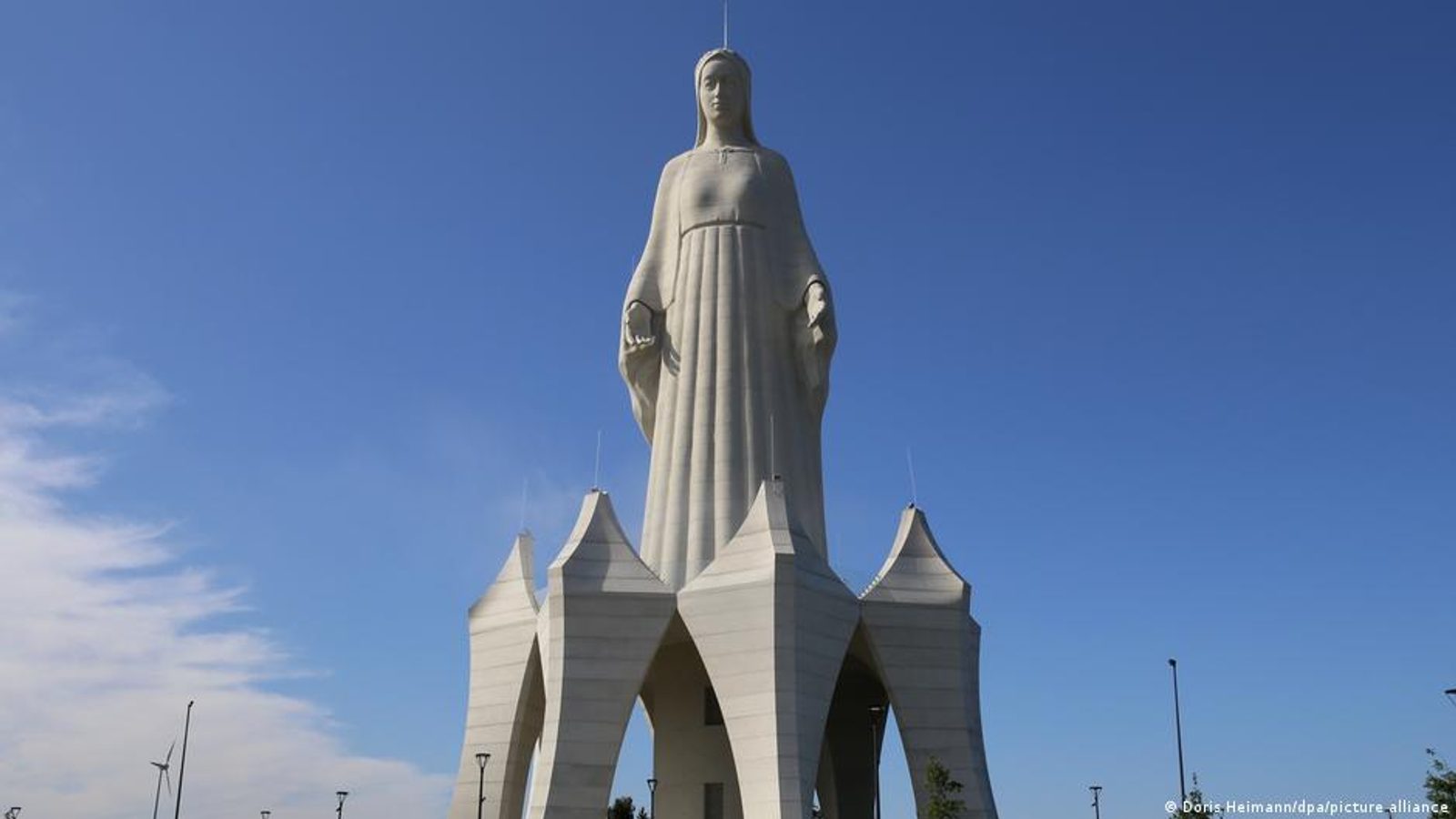
A monumental statue of the Virgin Mary, more than 55 metres tall, has been erected near the tiny village of Konotopje in central Poland, surpassing the height of Rio de Janeiro’s Christ the Redeemer when pedestal and figure are counted.
The white monument consists of a 40.6‑metre figure mounted on a 15‑metre crown‑shaped plinth that is intended to serve as a viewing platform. Its official inauguration is scheduled for Saturday, 15 August 2026 — the Catholic feast of the Assumption — although finishing works and site fencing were still in progress as visitors kept arriving for weeks.
Donor, sculptor and local hopes
The benefactor behind the project is 75‑year‑old Roman Karkosik, a businessman from the neighbouring area who is listed among Poland’s wealthiest individuals. Karkosik, who began his career buying scrap metal and later moved into soft drinks and plastic‑bottle production, reportedly owns an 18th‑century castle in the town of Kikol about two kilometres from Konotopje.
Polish media estimate Karkosik’s fortune at about 1.9 billion zloty (roughly €442 million), and one magazine ranks him 44th among the country’s richest. The family’s brief statement called the statue a "gesture of gratitude." Media reports say the donor built a pilgrimage church in 2011 nearby after recovering from a serious illness; some press accounts put the monument’s cost at around 100 million zloty.
Adam Jakub Matejkowski, the sculptor, said he had long been apprehensive about seeing his design completed. "I was afraid to come to Konotopje and see how my project looks in reality," he admitted, adding that when he finally visited in July he felt reassured: "I opened my eyes and was left petrified. The Virgin opens her arms to embrace us." He also says the statue borrows the gaze of his 11‑year‑old daughter and the gentle features of his wife.
Local authorities hope the monument will stimulate tourism and investment in a region with limited industrial capacity. "This monument is not only a spiritual but also a strategic point for the region. We expect it to attract more investors and tourists, which will have a positive impact on the local economy," said Krzysztof Kowalewski of the Kikol municipal administration. Mayor Renata Golembjewska has already reported record takings in restaurants and hospitality.
Poland is no stranger to grand religious projects: the Licheń basilica, built after 1989, is enormous in scale, and the world’s tallest statue of Jesus stands near Swiebodzin — a 36‑metre figure on a plinth of nearly 17 metres. Yet commentators debate whether monuments can slow the broader trend of secularisation: an IBRIS public‑opinion survey from September 2025 found trust in the Church at 35 percent (down from 58 percent in 2016), and in 2026 the number of newly ordained priests in Poland fell below 200 for the first time since 2000.
Public reaction to the Konotopje project is split. One critical comment carried in Newsweek called it: "A nightmare. A big zero. Instead of investing this money in useful projects, a huge mountain of concrete has been funded." By contrast a reader quoted by the conservative weekly Sieci said: "This Virgin is beautiful. Hats off. A fantastic accomplishment."
Photo: press material from the event