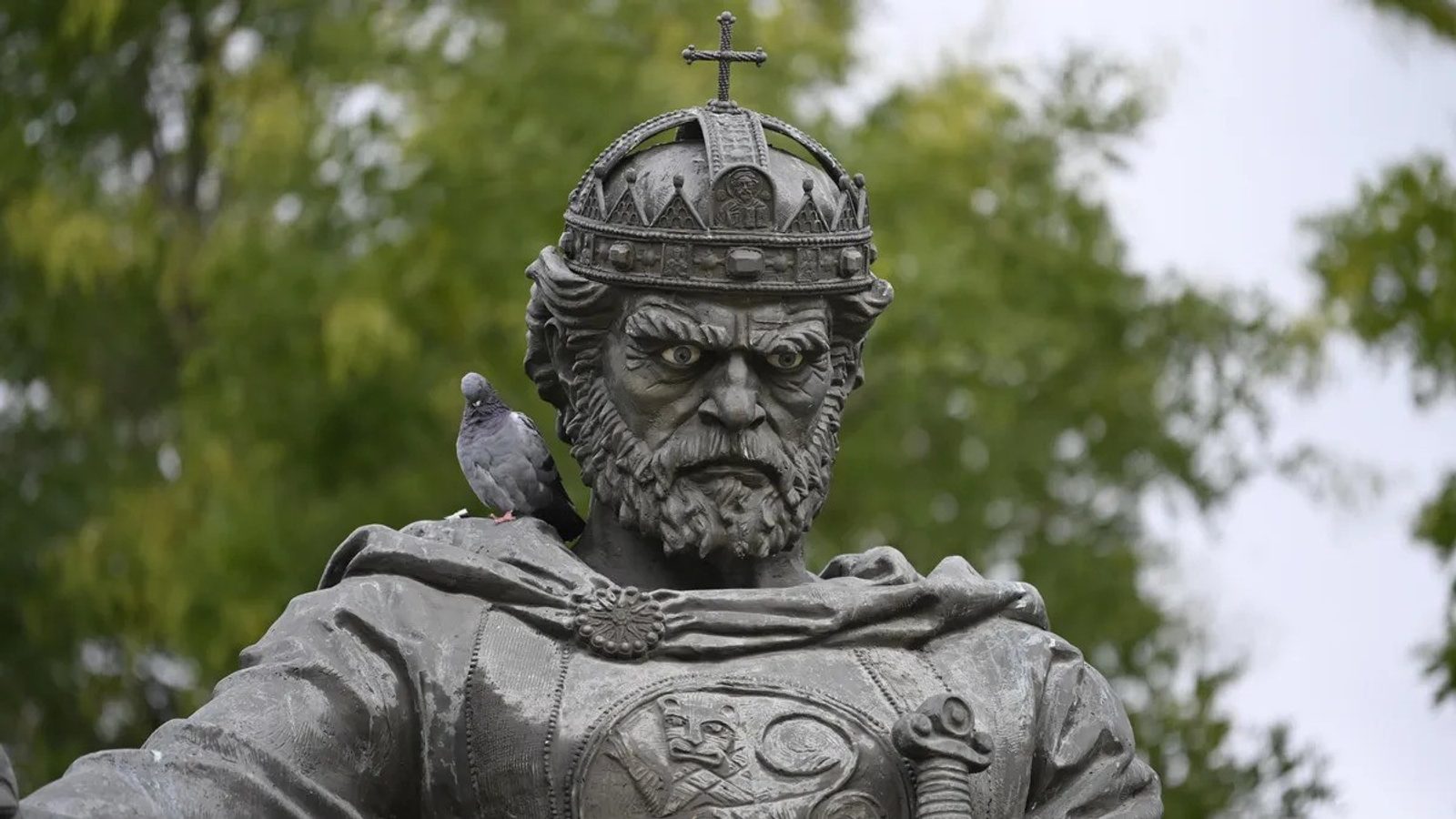
Alleged remains of Tsar Samuil flown to Sofia; Skopje views transfer through Bled Agreement
Bones attributed to Tsar Samuil received in Sofia amid diplomatic exchange; experts note lack of DNA proof and Skopje urges historical context.
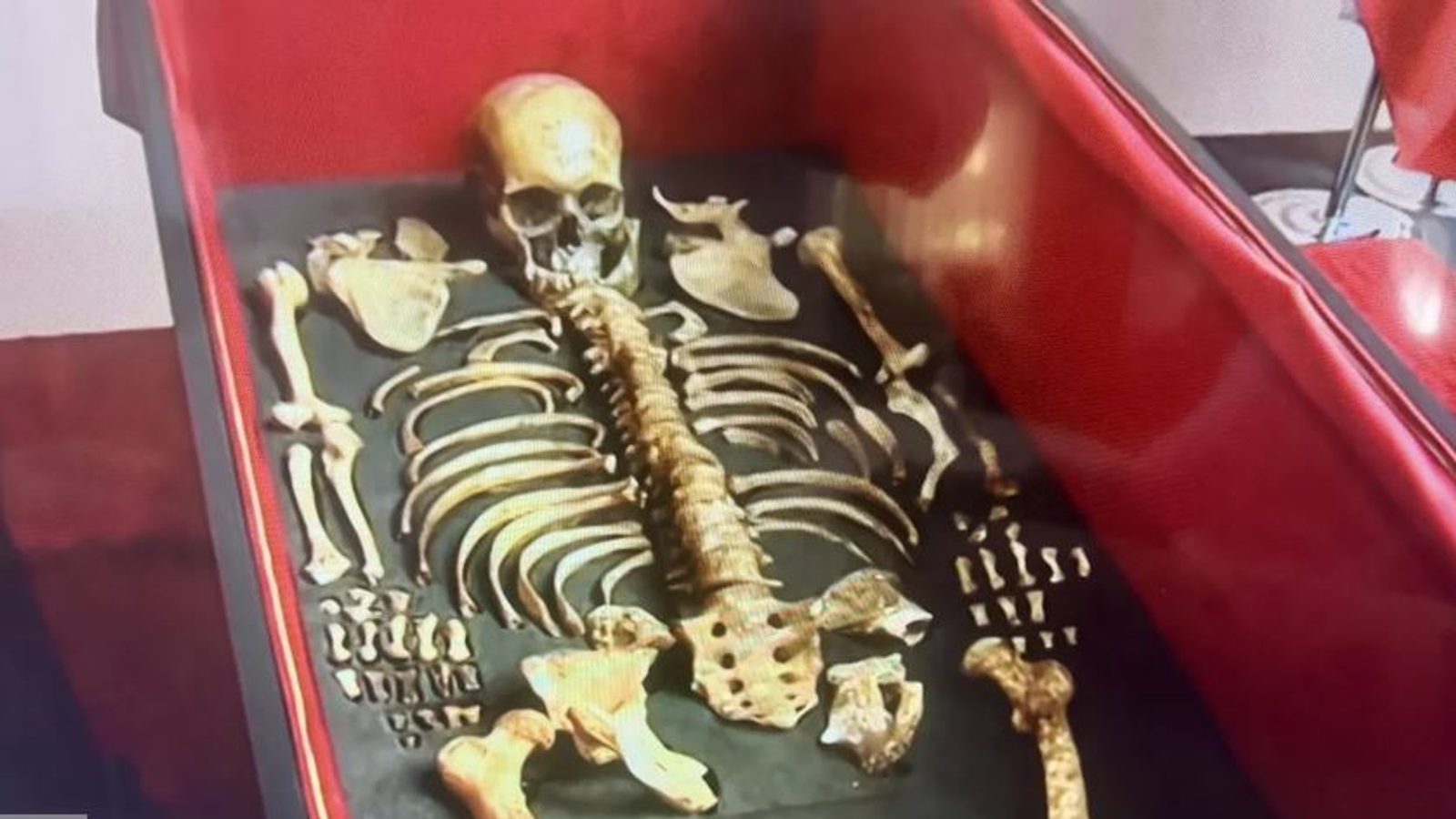
Alleged remains of Tsar Samuil arrived in Sofia today and were received with full state and military honours on the square in front of the Church of St. Sofia, after being flown in on a military plane. The transfer was part of an interstate exchange formalised in Thessaloniki, where culture ministers signed an agreement in the presence of Greek Prime Minister Kyriakos Mitsotakis and Bulgarian President Rumen Radev; Greece also returned 48 church relics taken during World War I.
At the welcome ceremony on Knyaz Aleksandar I Square the bones were placed in the Church of St. Sofia. Mitsotakis stressed that religious relics must not be treated as spoils of war. President Radev said, "If in the past Samuil had divided them, today he is a point of rapprochement between Athens and Sofia."
The skeleton transported to Sofia was found in 1969 by Greek archaeologist Nikolaos Mutsopoulos in the basilica of St. Achillios on a small Prespa islet. Excavators uncovered four sarcophagi; only one contained a preserved skeleton of an elderly man, about 70 years old, with a characteristic fracture of the left arm, wrapped in gold threads and wearing armour. No DNA analysis has ever been performed to confirm whether the remains truly belong to Tsar Samuil.
Bulgarian historian Milko Palangurski, among other experts who reacted to the transfer, warned about the evidentiary gaps. He said, "What is known is that Tsar Samuil and his family are buried on the island of St. Achillios, but no DNA analysis has been carried out to determine with certainty that the bones Bulgaria will receive belong to him." He added that "the whole action is poorly prepared and 'Pandora's box is open.'"
Bulgaria did not send an official invitation to North Macedonia for the ceremony, despite a joint Macedonian–Bulgarian expert commission on Tsar Samuil reaching a harmonised recommendation seven years ago for a joint commemoration. That commission had described Samuil as "a ruler of a large medieval state that the majority of contemporary historical scholarship considers a Bulgarian empire centred on territory of present-day Macedonia," and noted that the state covered a significant part of the Balkans while calling Samuil a symbol of shared history between the two modern countries. The document did not state that "Tsar Samuil was Bulgarian."
In recent official Bulgarian rhetoric, however, the description has moved further: Samuil is being presented as "the Bulgarian Tsar Samuil" whose remains are being returned to "his homeland," and he is referred to as "the great Bulgarian ruler."
Domestic reaction and historical context
The development has been met with cautious responses in Skopje. Asked by journalists about the transfer, Prime Minister Hristijan Mickoski said it should be viewed through the prism of the Bled Agreement. He commented: "I view this in the direction of the Bled Agreement which was reached immediately after the capitulation of fascist Bulgaria, which, I would say, occupied during the Second World War the territory of today's Macedonia. Some call it 'administration' by the politicians, fortunately they are former politicians, that is, former politicians in office, meaning still active in the opposition through councils of the leadership in the opposition, they have their own puppets there and they direct them. As for the transfer of the relics, I would go back several decades when the relics of the Macedonian giant Delchev, as a result of that Bled Agreement, were brought to Skopje. And that is something that should make us as Macedonians proud, because the relics of that giant, who in his time was ahead of his time, symbolize a great deal for Macedonian identity," said Hristijan Mickoski, prime minister.
The Bled Agreement was signed on 1 August 1947 in Bled, Slovenia, by Yugoslav leader Josip Broz Tito and Bulgarian premier Georgi Dimitrov. Under the agreement Bulgaria for the first time recognised a Macedonian minority in Pirin Macedonia and the Macedonian language; the accord envisaged eventual unification of Vardar and Pirin Macedonia and cultural autonomy for the Pirin part, abolished visas and eased border formalities, while Yugoslavia forgave Bulgaria some 25 million dollars in wartime damages. After the 1948 Tito–Stalin split, Sofia renounced the agreement on 1 October 1949.
Photo: press material from the event