Nikoloski in Brussels: implementing reforms and the Growth Plan
Nikoloski said North Macedonia meets reform demands, recorded 4.3% GDP growth in Q2 and seeks a mechanism to open accession talks.
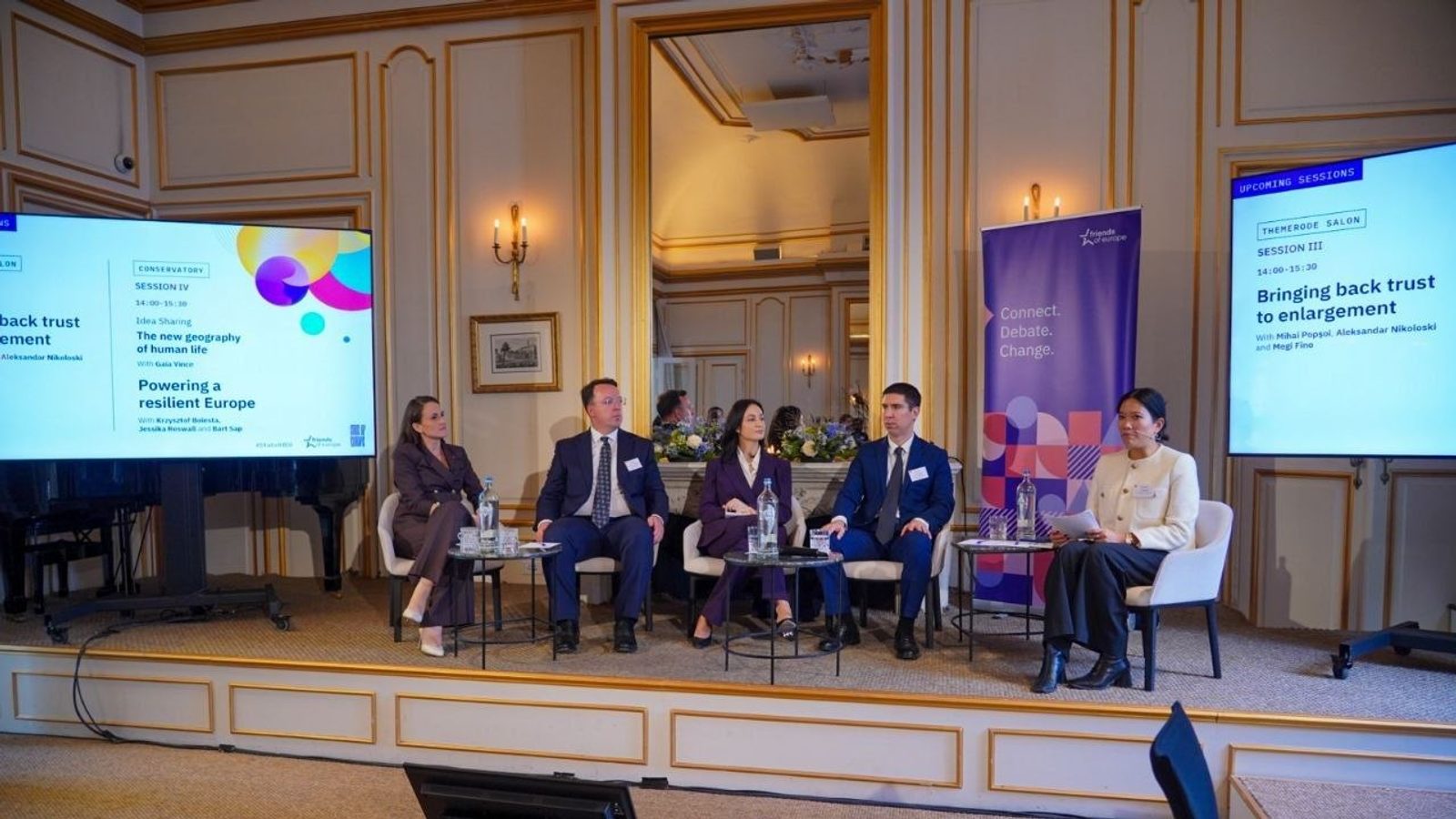
Aleksandar Nikoloski, Deputy Prime Minister and Minister of Transport, told a Brussels panel on EU enlargement that North Macedonia is steadily carrying out reforms and implementing its Growth Plan, highlighting strong recent economic performance. The discussion was organised by the think-tank Friends of Europe, and his office summarised his remarks in a statement.
Reforms, growth and full alignment with EU foreign policy
Speaking about the country’s progress, Nikoloski pointed to robust GDP figures and said North Macedonia has met the demands set by partners. “Macedonia successfully implements reform processes, records the third-largest economic growth in Europe of 4.3 percent in the second quarter, we are fully committed and aligned with the EU's Common Foreign and Security Policy,” he said.
He underlined that the government has delivered on the Growth Plan and on reform requests, and stressed recent gains in stability and cohesion. “Regarding reforms, we are generally doing well. The Growth Plan was mentioned; everything that was asked of us, we did. The economy is literally recording rapid growth. In the second quarter of this year we have GDP growth of 4.3 percent, which is the third highest in Europe. What is very important for my country: we have political, economic, but also inter-ethnic stability and cohesion, something we strived for in the past. When you look at the whole picture, the country is moving in the right direction. We are fully committed and aligned with the European Union's Common Foreign and Security Policy — not 80, not 90, but 100 percent. The only reason why we are not advancing, unfortunately, is this veto from Bulgaria,” Nikoloski said.
Nikoloski also pointed to visible support from EU institutions and senior officials, noting that European Commission President Ursula von der Leyen is scheduled to visit Skopje after trips to Albania, Montenegro and Kosovo. “Now things are definitely changing. Certainly, the situation with Ukraine and Moldova helps the whole enlargement process and this should be used. There is interest in the region. President von der Leyen is coming to Skopje — she has been to Albania, Montenegro, Kosovo and is coming to Macedonia, which is an excellent signal. I hope that a mechanism will be found that the European Commission can use and we will open accession negotiations. The open issues with the neighbors must be resolved one way or another, but I think the atmosphere will be much more relaxed and positive if we start the negotiations,” he said.
On the panel Nikoloski argued that the Western Balkans’ success depends on a joint approach and pointed to regional economic momentum: rising growth, stronger tourism and expanding air traffic that together show growing interest in the region.
Photo: press material from the event