Criminal Code draft: up to 15 years for abuse of office as public hearings begin
Draft code sent to the European Commission; civil society warns of procedural flaws and narrower procurement offence

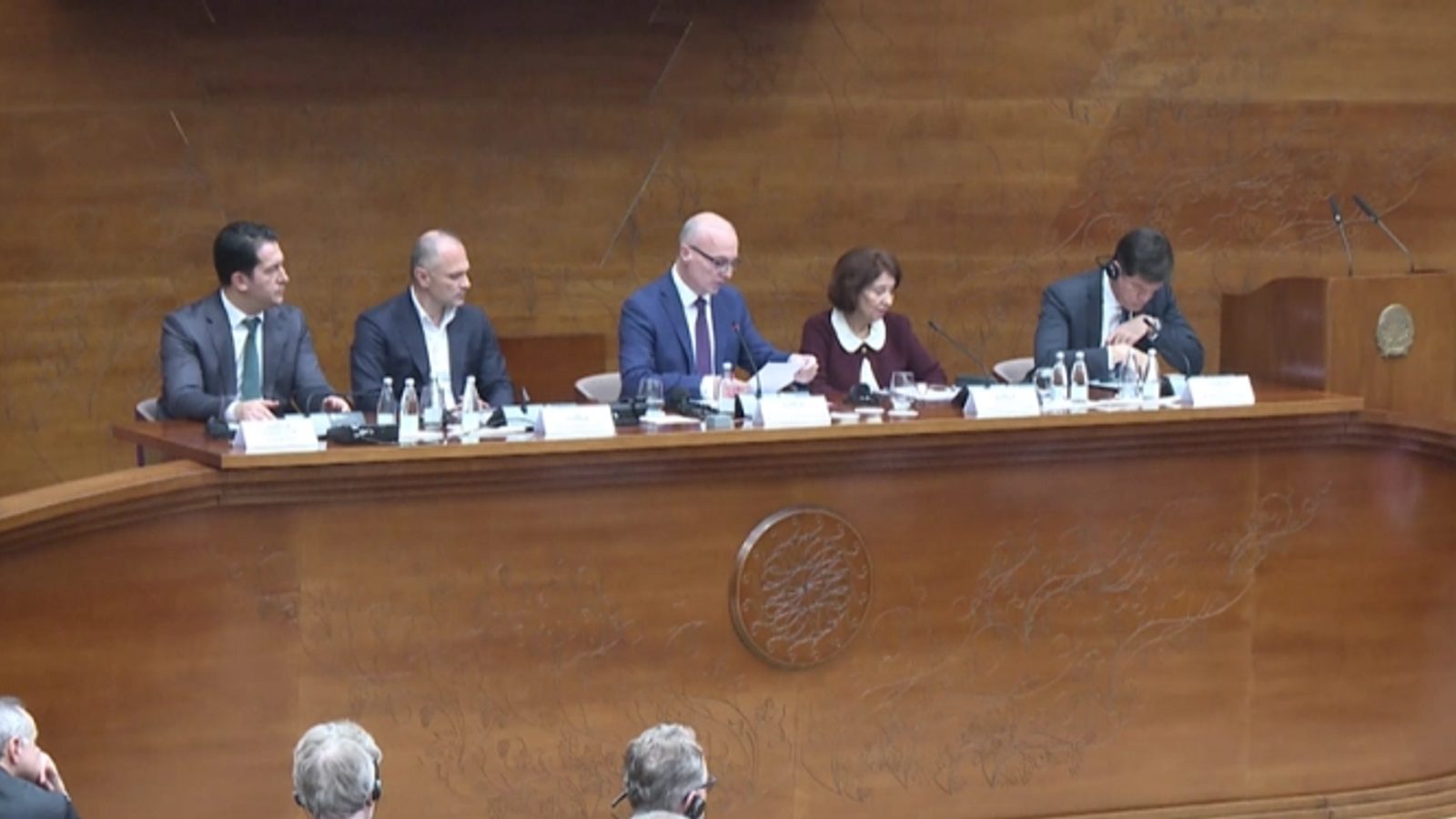
On 25 November 2026 the draft of a completely new Criminal Code — which foresees prison sentences of up to 15 years for abuse of official position and for corruption in public procurement, concessions and public–private partnerships — was presented at the first of four public hearings held at the Macedonian Academy of Sciences and Arts (MANU).
Key changes and disputed points
Minister of Justice Jeton Shasivari said the country is opening an important chapter in judicial reform after nearly three decades, aiming to build a modern, effective and EU‑aligned criminal‑law system that strengthens legal certainty and public trust in the judiciary. He noted the current code was adopted in 1996 and that new forms of organised and financial crime, corruption, public‑sector abuses and cybercrime have emerged since then.
Shasivari listed four central novelties in the draft: codifying offences in a single code; modernising and aligning substantive law with European and international standards; reorganising crimes and penalties by their seriousness; and giving special attention to fighting corruption and crimes related to public funds. He argued these penalties must be enforceable in practice and warned that "even the harshest penalty is meaningless if the system is not able to secure an effective procedure, a fair determination of responsibility and a lawful court decision."
The justice ministry said the drafting process began in 2019 with input from professors, criminal‑law experts, members of the judiciary, the prosecution and other competent institutions. Working versions were published on ENER, and the draft — together with correspondence tables in Macedonian and English — has been sent to the European Commission, which is expected to deliver opinions, comments and recommendations within a maximum of four weeks. Under the Reform Agenda the final deadline to adopt the new Criminal Code is December 2026.
Academician Vlado Kambovski, who opened the session and welcomed foreign embassy representatives, said the hearing in Skopje will be followed by a series of debates across appeal jurisdictions and stressed tight deadlines. He explained that after adoption and publication in the Official Gazette a preparation period (vacatio legis) of six months to one year will follow; for major laws this usually lasts one year — for example until 1 January 2028 — during which the Criminal Procedure Code and other regulations must be aligned.
Kambovski also said the limitation period for the gravest forms of abuse of official duty is proposed at 20 years and that recommendations are being examined to link time limits for holders of the highest state offices to the end of their mandates, to start the limitation period for environmental crimes from the day damage is discovered, and to include terrorism among offences that do not prescribe. On confiscation he warned the system must be completed and signalled the need to address seizure of assets of unknown origin when there are grounds to suspect acquisition through organised criminal activity.
Civil‑society representatives raised a number of substantive and procedural concerns. Darko Avramovski, executive director of the Coalition "All for Fair Trial", said the sector was given too little time to analyse a voluminous, entirely new code and criticised the process as slow to provide information and then ending in a sprint demanding comments in weeks. He also warned that subsidiary application for abuse of official position is unclear, that certain public‑administration officials remain outside some offences, and that penalties for the basic form have been significantly reduced — creating the risk that police officers or ministry employees cannot be criminally prosecuted for failures to act.
Sabina Fakić, programme director at the Centre for Civic Communications, highlighted that over €1.5 billion a year — roughly a quarter of the state budget — is spent on public procurement, making the sector highly vulnerable to corruption. She argued the proposed article on procurement abuses fell short of platform organisations' expectations because it contains a closed list of four acts and does not leave room to sanction other violations of the Public Procurement Law. "We believe the article that applied before the 2023 amendments had greater potential to sanction corruption," she said, noting past prosecutions and convictions under the older provision.
Civil organisations together with the Platform and "Blueprint" proposed thematic consultations on specific parts of the code. The ministry and the academic organisers said this first hearing marks the start of intensified consultations in the coming weeks.
Photo: press material from the event