North Macedonia sends draft Criminal Code to European Commission after three decades
Ministry of Justice delivered draft Criminal Code and Criminal Procedure Law — the Code includes 33 EU directives; procedure law aligned with 25 directives.
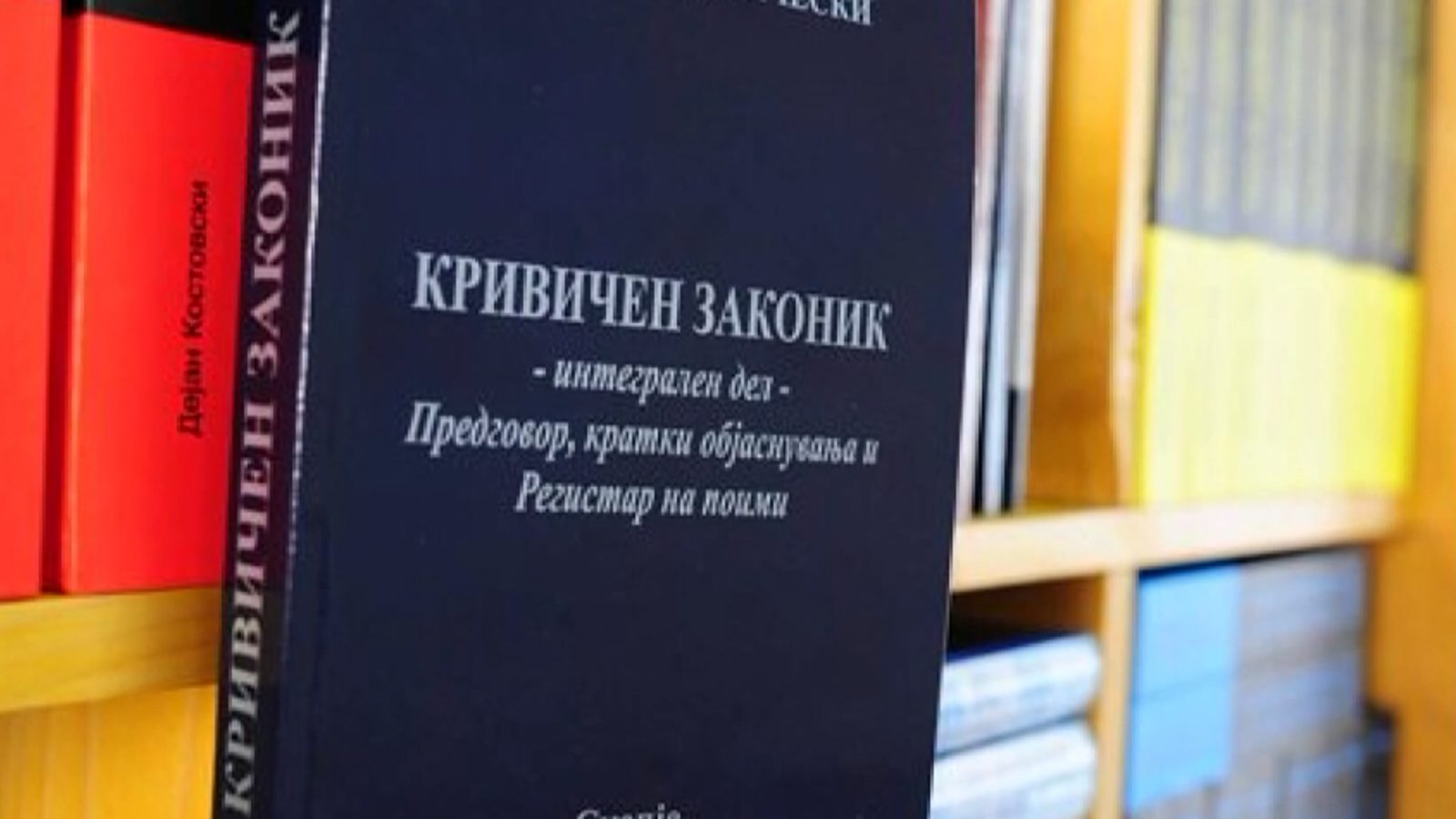
The Ministry of Justice has submitted the draft Criminal Code and the draft Law on Criminal Procedure to the European Commission for an opinion, marking the next step in a comprehensive reform aimed at aligning the country's penal legislation with European standards. The Ministry says the new Criminal Code is being prepared after three decades and—together with the updated criminal procedure law—should strengthen the fight against crime and corruption, ensure fairer court proceedings, better victim protection and greater legal certainty for citizens.
“The essence of the reform is not only in enacting new laws, but in their implementation and the results that citizens should feel. The goal is to create a legal framework that will enable effective investigations, fair judicial proceedings, equal application of the law and accountability without exceptions,” the Ministry of Justice said.
Work on the new Criminal Code began in 2019. A working group led by academician Vlado Kambovski carried out broad consultations between 2020 and 2026 with representatives of the judiciary, academia, relevant institutions and civil society. The proposed text integrates 33 relevant European Union directives and, during consultations, more than 50 opinions and suggestions were reviewed.
Parallel text for procedure and international support
“At the same time, work was also being done on the new Law on Criminal Procedure. The expert working group led by Prof. Dr. Gordana Lazetić, composed of 25 members, completed the preparation of the text in October 2026. The proposal provides for alignment with 25 relevant European directives and standards,” the Ministry added.
Among the key measures foreseen in the two drafts are stronger provisions for confiscation, expanded capacity for financial investigations, clearer rules on electronic evidence, sharpened special investigative measures, enhanced victim protection, and possibilities for holding hearings and presenting evidence remotely.
The next stage is the European Commission's legal opinion on both drafts. The Ministry underlines that adopting new texts is only the first step: implementation and visible results for citizens remain the ultimate test of the reform.
Photo: press material from the event