UN: North Macedonia may fall below 1 million inhabitants by 2100
UN medium projections and national forecasts point to steep long-term population losses driven by low fertility and emigration.
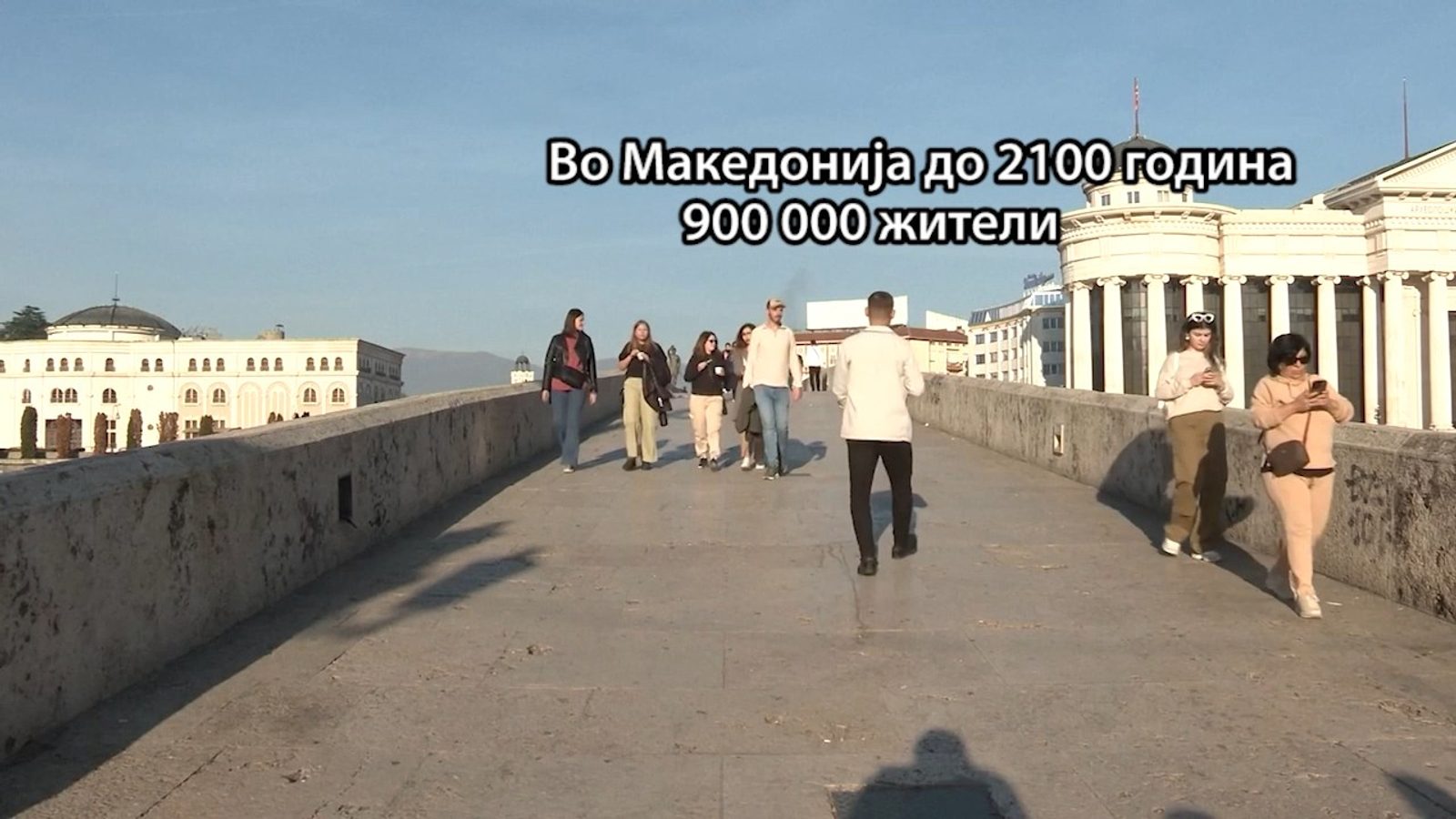
United Nations projections warn that North Macedonia’s population could fall below one million people by the year 2100 if current demographic trends persist.
The UN’s medium-variant forecast estimates the country will have about 1.52 million inhabitants by 2050, and that by 2100 the population could shrink by some 52 percent, leaving between roughly 868,000 and 943,000 residents.
The State Statistical Office offers a nearer-term projection that is also bleak: under present trends the population would decline by about 30–35 percent by 2070, from a starting point of 1.83 million to roughly 1.2–1.3 million people.
Demographic drivers and current structure
Authorities and demographic analysts point to two main causes behind the decline: a sustained fall in fertility rates and intensive emigration of young families. Those processes together reduce the number of births and accelerate the loss of working-age citizens.
Despite the long-term forecasts, current Eurostat data show North Macedonia still has a slightly larger share of working-age people (ages 20–64) than the EU average — 59.5% compared with 58.3%. Nevertheless, the international and national projections both indicate a steep demographic drop over coming decades.
With the projected decline, North Macedonia ranks among the fastest-depopulating countries in Europe — fourth after Ukraine, Albania and Bosnia and Herzegovina — a shift with consequences for the labour market, social services and long-term economic planning.
Photo: press material from the event