Mecca pact seeks deterrence — Saudi Arabia, Turkey and Pakistan unite to blunt Iran and Israel
Analysts say the Mecca defence pact signed by Saudi Arabia, Turkey and Pakistan aims to deter regional dominance by Iran and Israel rather than trigger automatic military intervention.
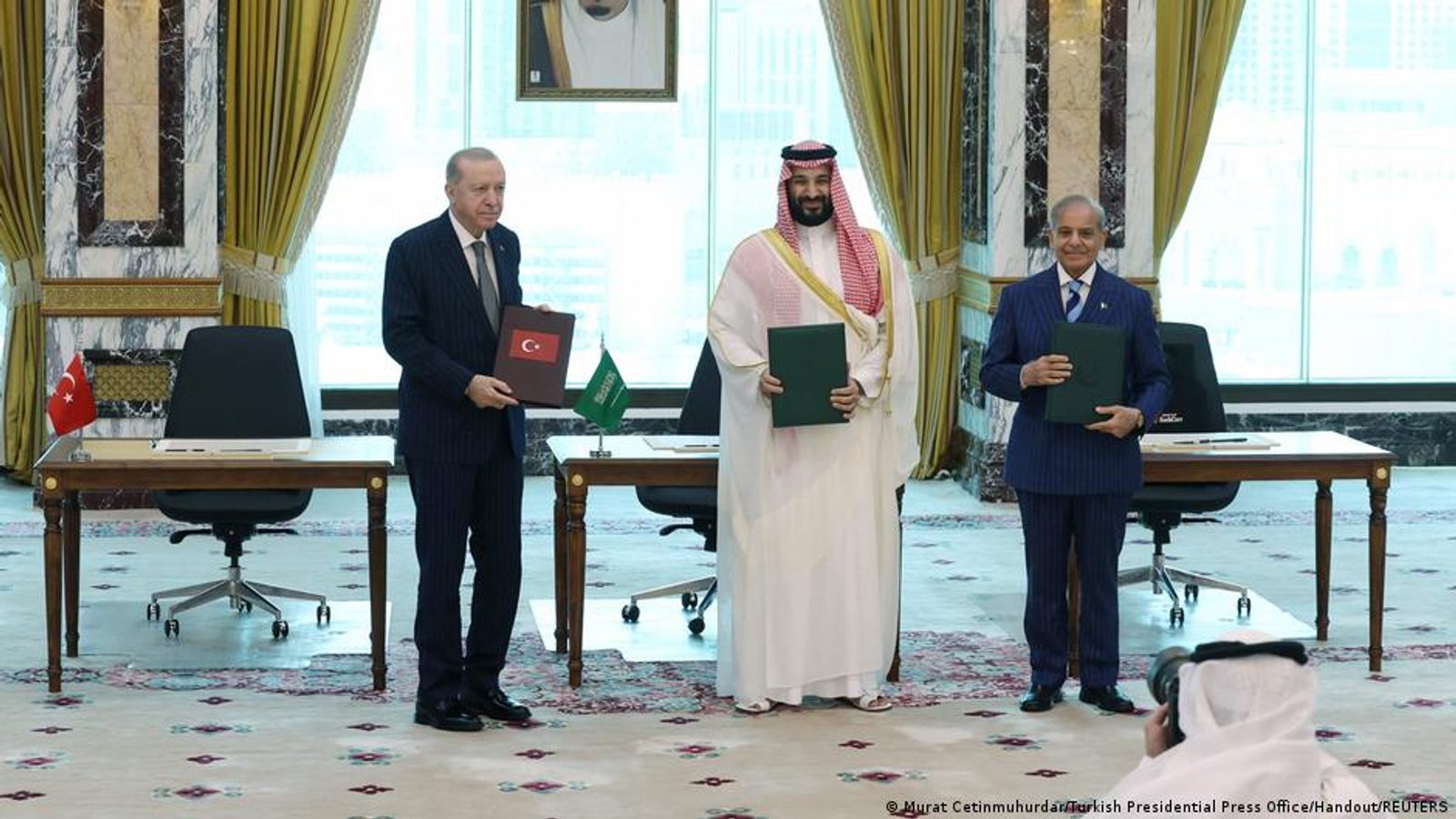
Saudi Arabia, Turkey and Pakistan signed a defence pact in Mecca on August 7, 2026, a tripartite agreement officials say is intended to bolster collective deterrence in a volatile Middle East. Analysts argue the initiative is primarily aimed at preventing regional domination by Iran and Israel rather than committing members to automatic military intervention.
The Mecca agreement — described by its drafters as aimed at "strengthening collective deterrence against any act of aggression" — was formalised in a ceremony attended by Crown Prince Mohammed bin Salman, President Recep Tayyip Erdogan and Prime Minister Shehbaz Sharif. Pakistan’s foreign ministry said on August 7 that an attack on one member would be considered an attack on all, language that has prompted comparisons with NATO.
What the pact actually sets out to do
Despite the rhetoric, analysts and recent events suggest the new arrangement is likely to function first and foremost as a flexible deterrent rather than an automatic mutual-defence pact. When Houthi forces struck Saudi oil facilities over the weekend, neither Turkey nor Pakistan moved to militarily defend Riyadh — a response observers say underlines the limits of immediate collective action.
"If you look at the signatories to the agreement, you will see that Saudi Arabia is at the center of this conflict. But Turkey and Pakistan are also there, and they at the same time have relations with both Iran and the United States of America. In my view, that represents an additional layer of deterrence for Saudi Arabia," said Danya Tafer, executive director of the Gulf International Forum in Washington. "I think Saudi Arabia is moving toward a multilayered approach to deter regional threats as they emerge."
Kamran Bokhari, a senior fellow at the Council for Middle East Policy in Washington, said the pact will probably unfold in phases, with the short-term objective to secure a "stabilised region" rather than to trigger immediate military responses across borders.
Longer-term ambitions disclosed by analysts focus on defence cooperation beyond battlefield commitments: technology transfers, joint investment and industrial collaboration. "The three states complement each other in an extremely good way," said Andreas Krieg, a lecturer in security studies at King’s College London. "Turkey has the technologies and manufacturing capacities, but it needs markets and investment. Pakistan has manpower, military institutions and nuclear deterrence, but it needs finance and industrial capacity."
Officials have stressed the pact is defensive in character and open to neighbouring countries that want to join. Egypt has been frequently mentioned as a potential partner, although Cairo must weigh its other alliances, including ties with the United Arab Emirates, which have so far not led Abu Dhabi to join the initiative.
Some analysts frame the Mecca Pact as an attempt to create a third regional axis capable of preventing any single power from imposing a monopoly on the Middle East. "This is about preventing hegemony," wrote Khalid al-Jaber, director of the Middle East Global Affairs Council in Doha, adding that reduced American influence "could lead to a regional order in which the rules are dictated by only two powers: Israel and Iran."
Reactions in Tehran and Jerusalem were mixed. Iran’s foreign minister Abbas Araghchi posted on X: "When Muslims stand together, we can face any challenge that comes from malicious external actors." Some Iranian commentators saw an opening for pragmatic engagement, while others warned Riyadh would not necessarily be safer without strong U.S. backing. In Israel, analysts said the pact complicates prospects for normalisation with Riyadh and deepens rivalry with Ankara.
Photo: press material from the event