Strumica Classica marks five years: from Dabilje to international stages
The festival, founded by professor and oboist Vasil Atanasov, has grown into a meeting place for international artists and young Macedonian talents.
Strumica Classica International Festival celebrates its fifth edition this year, but its roots run much deeper — back to the village of Dabilje and to the life of professor and oboist Vasil Atanasov. Raised in a household where music was a way of living rather than a profession, Atanasov first heard melodies at home from his mother and brothers and from the local musical traditions that passed between generations.
From hometown beginnings to a festival with an international reach
After more than five decades of performing, teaching and shaping new generations of musicians, Atanasov returned to his native region with a clear purpose: to share his experience and make classical music accessible to a wider audience. That intent gave birth five years ago to the Strumica Classica International Festival.
Built around the idea that classical music should be approachable and that Strumica could become a meeting point for different schools, generations and cultures, the festival has steadily gained recognition. Over its editions it has presented leading domestic and foreign artists, chamber ensembles and young talents, bringing fresh energy and new audiences to the city.
Performances at the festival serve two purposes: they connect listeners with artists, and they demystify classical music, making it feel immediate, understandable and alive. The festival also deliberately cultivates an audience that learns to listen, to recognize musical colours and to enjoy varied repertoire.
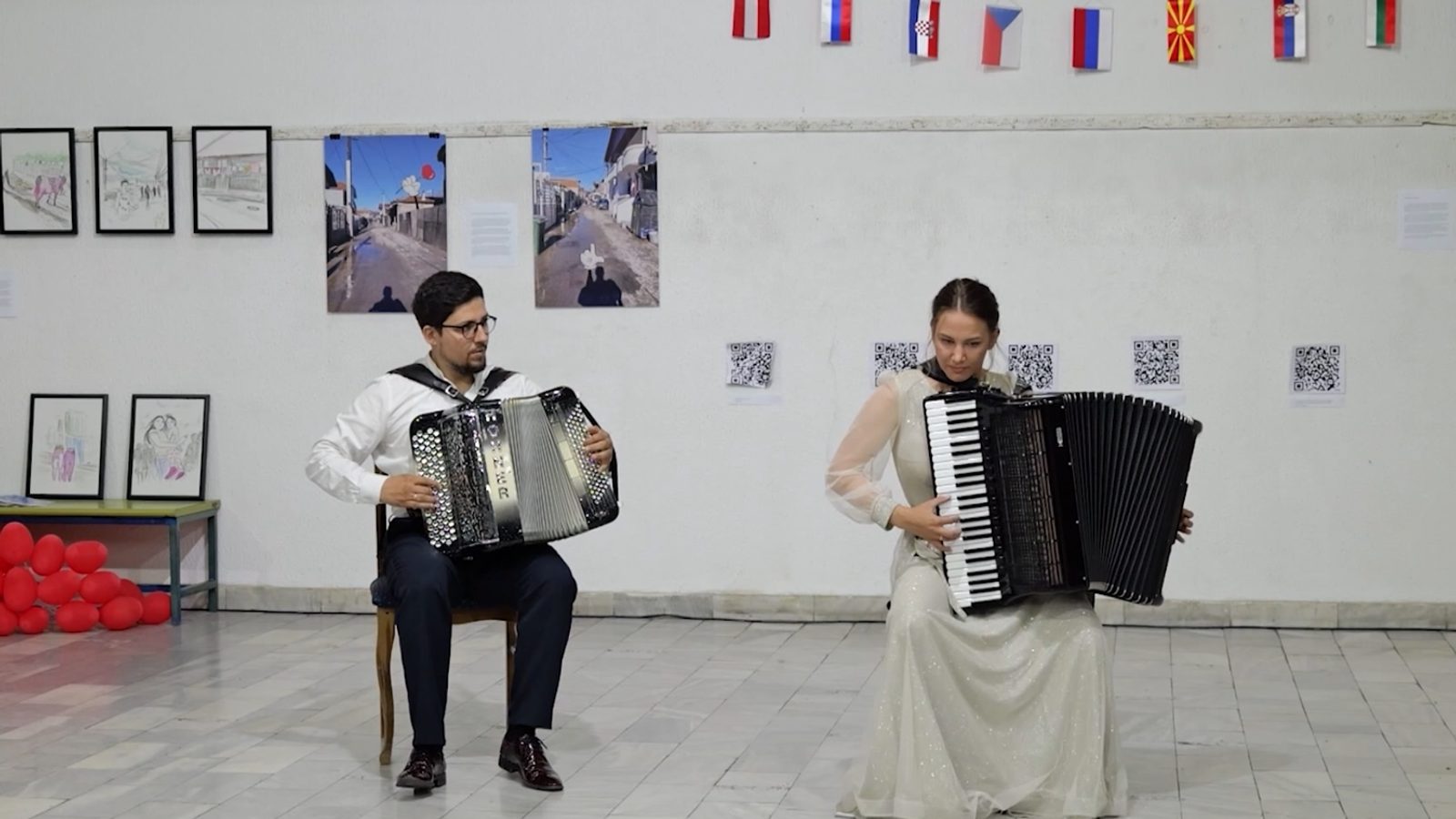
International exchange is a central element: musicians from several countries have appeared on Strumica stages. This year’s programme includes the artistic duo Ana and Aleksandar Kolovski, whose collaboration began on tour and now continues across European stages. Their repertoire shows how the accordion has moved beyond traditional associations to claim a place in chamber and symphonic contexts; its sound can be gentle, powerful and richly orchestral.
For many young Macedonian performers the festival is more than a concert series: it is a rare chance to meet role models without leaving the country, to hear different interpretations, to learn and to realize that art has no borders. In this sense Strumica Classica functions as a classroom without walls, where experience is transmitted directly from stage to stage and from performance to performance.
Five years is a short time in the life of a festival, yet the organisers say it has been enough to build a tradition, earn public trust and reestablish Strumica as a city that lives and breathes music. When a passion that began at home is shared with the world, every new edition becomes both a return to roots and an opening for the next generations of Macedonian artists.
Photo: press material from the event