Fires surround Athens — new blaze breaks out on Kefalonia, flames spread toward Megara
Strong winds are stoking fires around Athens while villages on Kefalonia are being evacuated and firefighters intensify efforts.
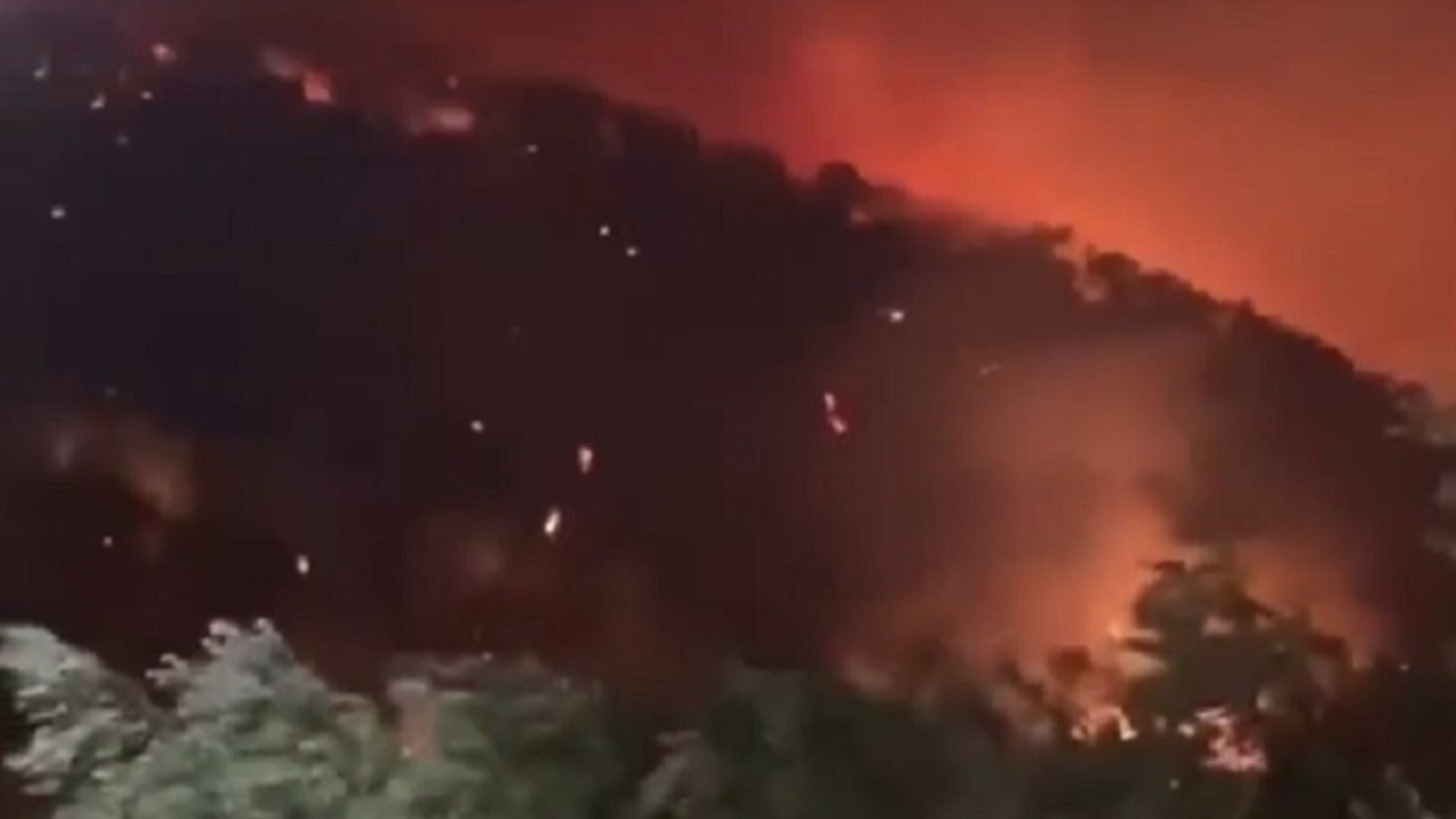
Strong and unpredictable winds are fanning the fires in Greece, where a large blaze west of Athens continues to spread while a new hotspot broke out on the western island of Kefalonia, forcing settlements to be evacuated by sea.
The fire around Porto Germeno — a coastal site on the Gulf of Corinth, about 70 kilometres west of Athens — is moving toward the town of Megara. Around 500 firefighters with 134 fire-fighting vehicles are operating on site, and eight firefighting aircraft joined the operation in the morning. Two teams of 23 firefighters each with four vehicles from abroad also arrived to assist.
Evacuations on Kefalonia and high alert
On Kefalonia, the blaze near the village of Pastra ordered the evacuation of Pastra, Kremidi, Markopoulo, Katelio, Kato Katelio, Chionata, Tiramona and Mavrata; 31 firefighters and seven fire engines are battling the flames on the island. Smaller fires are active in other parts of the country as well.
For the area around Athens and for the island of Evia, authorities declared a fire danger of category 4 on a scale of five, warning that prolonged drought and high temperatures have made vegetation extremely dry and easily ignitable.
Two people were arrested on suspicion of negligently causing the fire west of Athens; criminal charges are expected against them. At the same time, authorities reported that three firefighters lost their lives last week while fighting fires in Crete and the southern part of the Peloponnese.
In western Europe the situation improved in several places: in south-west France a large fire was brought under control and around 198,000 residents were allowed to return to their homes after evacuation. The local prefecture said that one of the blazes spread by ten square kilometres in six hours, "faster than a horse at full gallop," but that fire stopped spreading overnight and remained active, with around 2,500 people still unable to return.
The European climate service Copernicus warns that Europe is warming more than twice as fast as the global average since the 1980s, and that higher temperatures and prolonged droughts are drying vegetation, causing fires to spread faster and burn with greater intensity.
Photo: Printscreen /