Carriers from the Western Balkans will wait until September 1 — Brussels outcome will determine protests
At the regional meeting in Skopje carriers demanded strict application of the 90/180 rule and set a September 1 deadline for the Brussels meeting; the issue affects about 17,000 drivers domestically and 100,000 in the region.
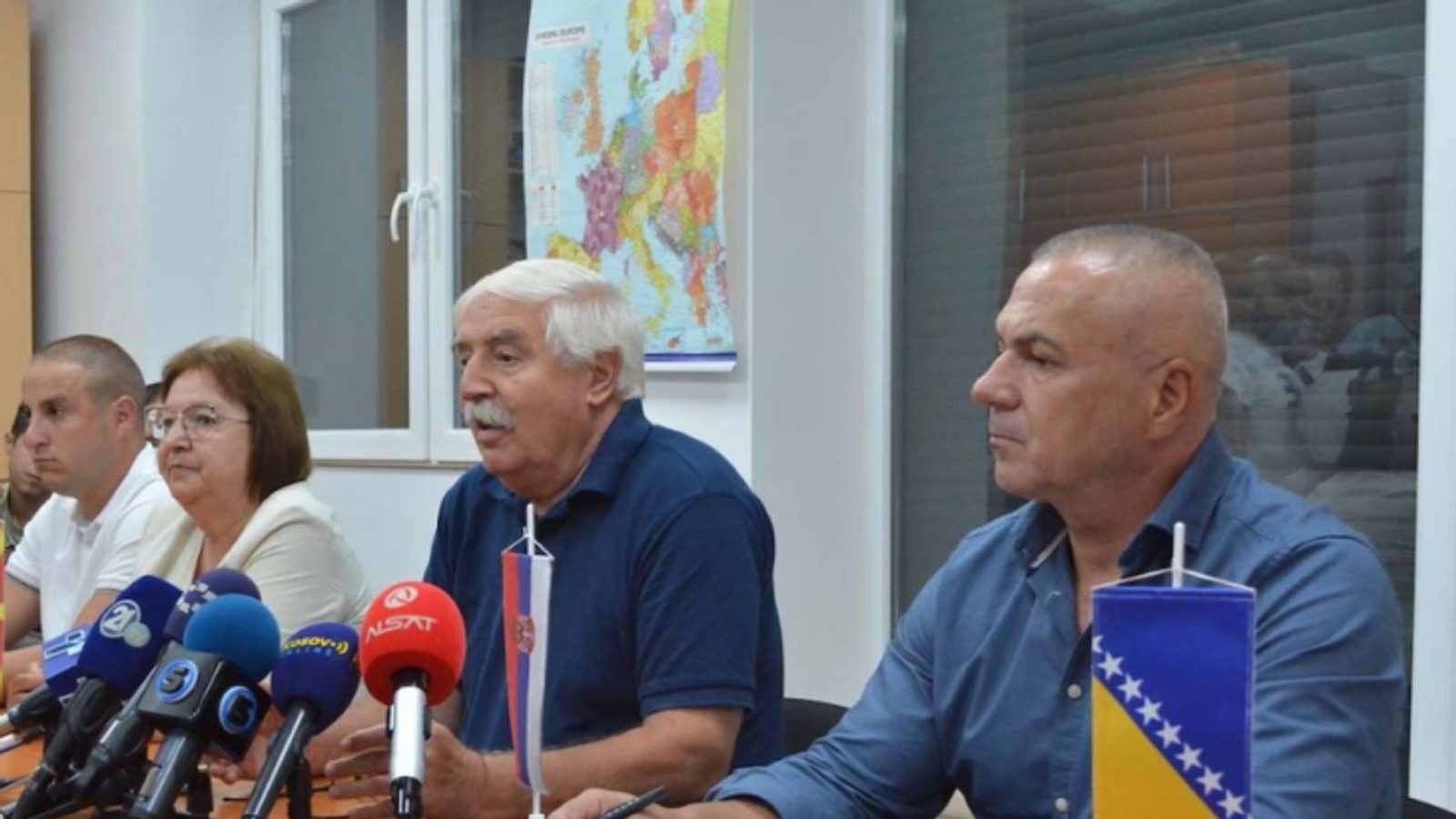
Associations of carriers from the Western Balkans agreed to wait until September 1, when a high-level meeting with representatives of the European Commission is scheduled in Brussels. The outcome of that meeting will determine whether they will move to protests over the limited stay of professional drivers in Schengen-area countries.
At the regional meeting in Skopje today the associations coordinated their positions on the application of the rule of 90 days in a period of 180 days and demanded clear and predictable mechanisms that will apply to professional drivers.
Demand for a precise deadline and an unchanged agreement
Biljana Muratovska, general secretary of the Association of Carriers "Makam-Trans", stressed that carriers do not want confrontation, but will react if forced. "We will be patient, we will try to create schemes for drivers' movement. Now is the holiday season, however what follows from September onward will be very tragic if we do not find a solution. We do not want to harm anyone, neither the European Union nor our countries, and least of all ourselves, the carriers, but if we are forced, we will organize protests with which we will once again remind everyone that there is a problem that must be solved," Muratovska said.
From Serbia, Nedjo Mandic emphasized that decisions on potential protests are being taken in the countries and at the level of management boards. He underlined that carriers do not want protests because of the impact on society: "We sincerely hope and wish that it will not happen," Mandic said, but warned that they will be forced to take to the streets if no solution is found.
The associations clearly stated that they are not seeking a change to the agreement on stays in the Schengen area, but demand strict compliance with the 90/180 rule — "the minute to be a minute, the hour to be an hour" — and requested a precise deadline for when the issue will be resolved. Mandic pointed out that a serious problem already exists because around 50 percent of drivers refuse to drive due to uncertainty at border crossings.
According to estimates, the problem concerns about 17,000 professional drivers in the country and approximately 100,000 in the Western Balkan countries. Macedonian drivers and drivers from Serbia, Montenegro and Bosnia and Herzegovina have faced difficulties since the end of last year, after the introduction of the Entry/Exit System (EES), under which carriers from the Western Balkans are registered as tourists and can stay in EU countries for a maximum of 90 days in a period of 180 days.
Transport Minister Aleksandar Nikoloski said in July that the country is resolving these issues through bilateral negotiations with EU states, because, according to him, the topic is being abused for political purposes. He added that agreements that partly solve the problems have been reached with Croatia, Switzerland and Romania, and that solutions from talks with Slovenia, Austria and Germany are in the final stage.
Photo: press material from the event