Lenche Ristoska: Acquittal in Talir 2 not due to lack of evidence but to court's legal interpretation
The former prosecutor says the acquittal follows a legal interpretation without statutory backing and could enable state-funded firms to return value to parties.
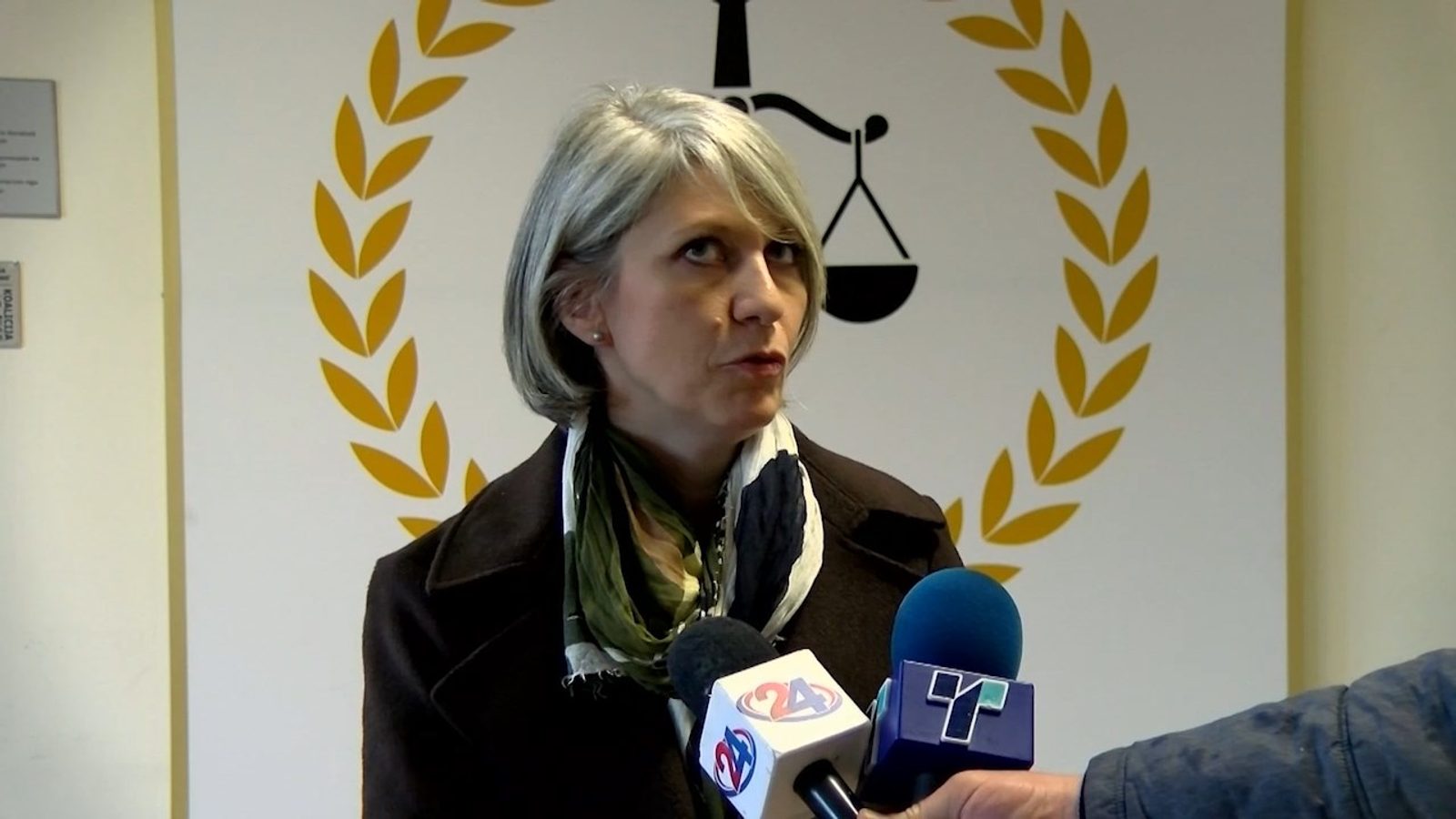
Former state prosecutor Lenche Ristoska sharply criticized the Appellate Court's final ruling in the “Talir 2” case, saying the acquittal was not due to lack of evidence but to a legal interpretation that, in her view, has no statutory basis.
Ristoska: court stretched the meaning of "public service"
Ristoska, who led the investigation into the construction of VMRO‑DPMNE’s headquarters for seven and a half years, warned that the court’s reasoning opens the door for private companies that earn from the state to repay political parties with money or assets.
"For the Appellate Court the fact is not disputed that the company Beton received state money and that it built the party headquarters and paid money to VMRO‑DPMNE. What the Appellate Court disputes is the meaning of the term 'public service' and how, as a decisive legal criterion, it constructs a definition expressed in a single descriptive sentence that has an encyclopedic tone and for which no legal support is cited in Macedonian legislation. This is a very sweeping explanation for such an important and serious question, with long-term consequences regarding political and high-level corruption and the misuse of budget funds."
Ristoska emphasized the core point: the law should prevent state money, channelled through private companies, from ending up with political parties. She noted that at the time more than 75 percent of Beton’s revenues came from the state, yet the Appellate Court concluded that the company’s construction work for the state could not be considered a "public service."
"The Appellate Court's position that the construction of buildings and structures owned by the state does not constitute the provision of a public service is disputable. Even if we follow the ad hoc definition of the Appellate Court, at the very least it is debatable how building structures, roads, bridges, dams, stadiums, kindergartens and schools — all part of Beton’s portfolio — do not contribute to maintaining the welfare of every citizen and do not help in the development of society as a whole."
Ristoska represented the Talir 2 case until near the end of the trial. Six months before the ruling, the new state prosecutor Nenad Saveski withdrew the authorizations that had allowed her to lead the Talir investigations, and Ristoska said she no longer had grounds to continue. On April 2 she submitted her resignation, saying she "no longer sees room to work according to my professional principles." A few months later the Basic Criminal Court acquitted the case’s first‑accused, former prime minister Nikola Gruevski, and on August 26 the Appellate Court confirmed the acquittal.
Photo: press material from the event