US seeks to include European delegations in Ukraine peace negotiations
Washington argues that a coordinated European delegation and legally binding security guarantees are the missing link to revive negotiations with Russia.
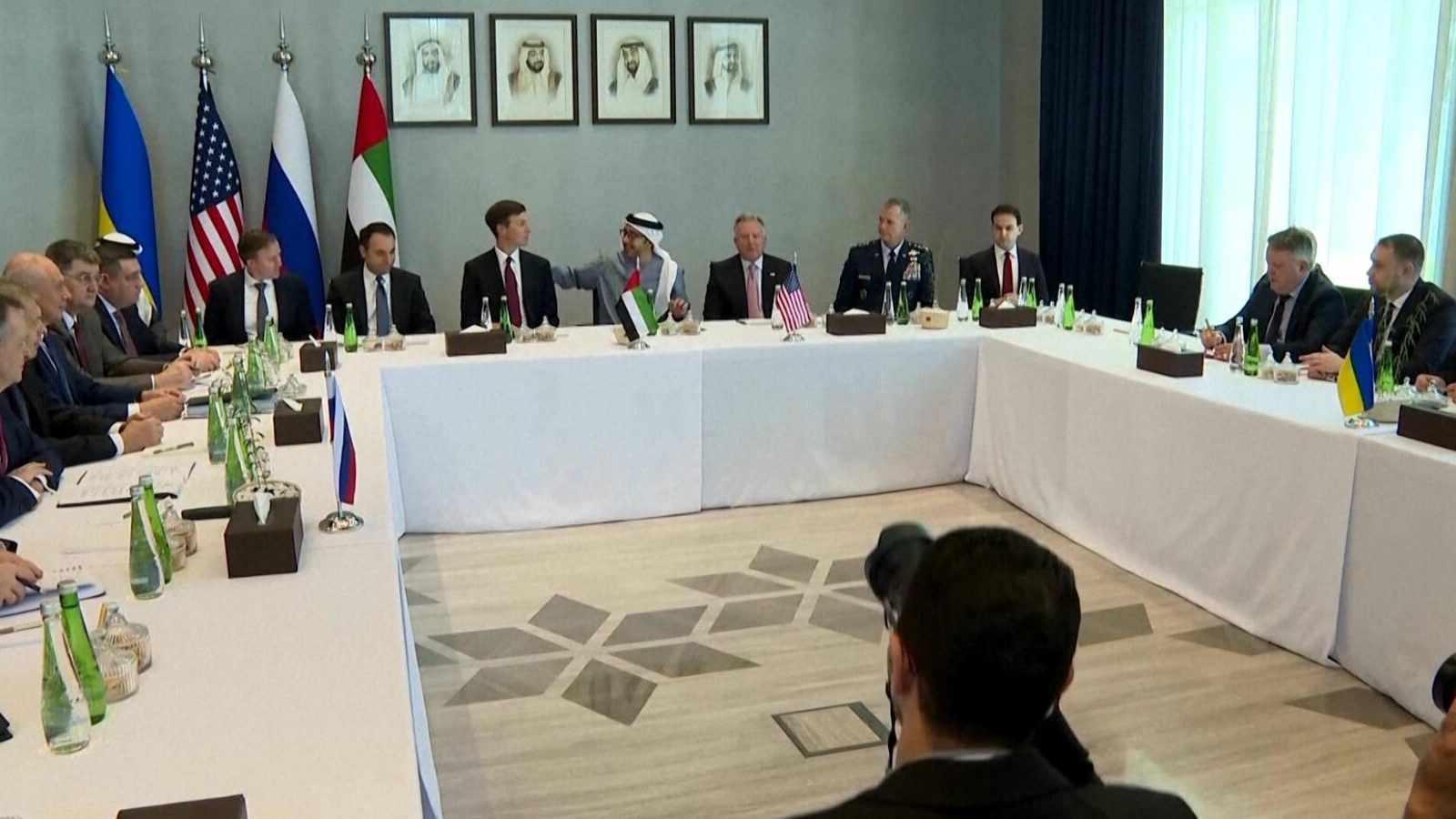
Nearly five years after the full-scale invasion, U.S. negotiators are intensifying efforts to bring European states formally into talks aimed at ending the war in Ukraine. Washington’s move reflects a judgment that European participation is now the key ingredient to attract Moscow’s attention and produce a credible negotiating framework.
American push, European representation
“Diplomatic efforts continue actively and we hope they will not be in vain. Our team is working as constructively as possible. We need a dignified end to the war and security guarantees for Ukraine. The American team is also actively involved,” President Volodymyr Zelensky said, summarizing Kyiv’s view of the current diplomatic drive.
U.S. officials argue that Russia wants to discuss a new European security architecture after concluding that existing arrangements — namely NATO and its European component — have failed to align with Moscow’s ambitions. German Chancellor Friedrich Merz warned bluntly that “Russia wants to talk about issues around the European security architecture. We do not have to talk about that; it already exists — namely NATO and the European part of NATO. We, as Europeans here in Dublin, agree that Moscow — and only Moscow — is the one that destroyed the existing Helsinki security order.”
At the same time U.S. officials have cautioned European partners that certain Ukrainian military actions deep inside Russian territory have not produced the strategic results Washington expected. “This is the American assessment despite frontline reports that Russia is on the defensive and pressed in several regions,” the U.S. delegation told allies, and Elbridge Colby, the U.S. deputy secretary of defense, added sharply: “Although public discourse focuses on spectacular deep strikes designed to inflict pain on the Russian population, our assessment is that such strikes are not effective in bringing the war to an end, nor do they contribute to slowing Russian advances on the front.”
Still, with talks restarting — the first round in Abu Dhabi after more than eight months — senior U.S. negotiators close to former President Donald Trump persuaded Washington that European agreement is the crucial link for a viable peace process. Jared Kushner, after briefing Zelensky alongside Steve Witkoff, said: “I think cooperation with Europe, at least on the Ukrainian and American side, is pretty solid. We have told President Putin and his team directly many times that the only way to end this is if they also participate. And I think they are ready for that.”
European capitals, weary from the human and material costs of the war, insist any talks must be accompanied by an immediate and sustainable ceasefire and by strong security guarantees for Kyiv. As Ursula von der Leyen and other leaders argued, parameters for a future security architecture cannot be meaningfully discussed until a durable ceasefire is in place. At the same time Brussels has chosen a collective format to represent the EU: an E5 delegation together with the Commission, the European Council and a NATO representative, a configuration that — according to EU spokesperson Paula Pinho — will concentrate on legally binding security guarantees and a post-conflict package for prosperity.
That compromise resolves a fractious debate inside the Union about who should speak for Europe at the table. Kyiv and Washington had urged a single European voice, but Brussels’ standard multilateral delegation won the day and will travel to Berlin as part of the Coalition of the Willing to continue coordination ahead of talks with Moscow.
Photo: press material from the event