Restoration of the Alikara house in Veles halted because there is no structural engineer
Work stopped more than a year ago after scaffolding was removed; the National Conservator Center blames a shortage of specialists and expects external consultants to finish paperwork by late Sept–early Oct 2026.
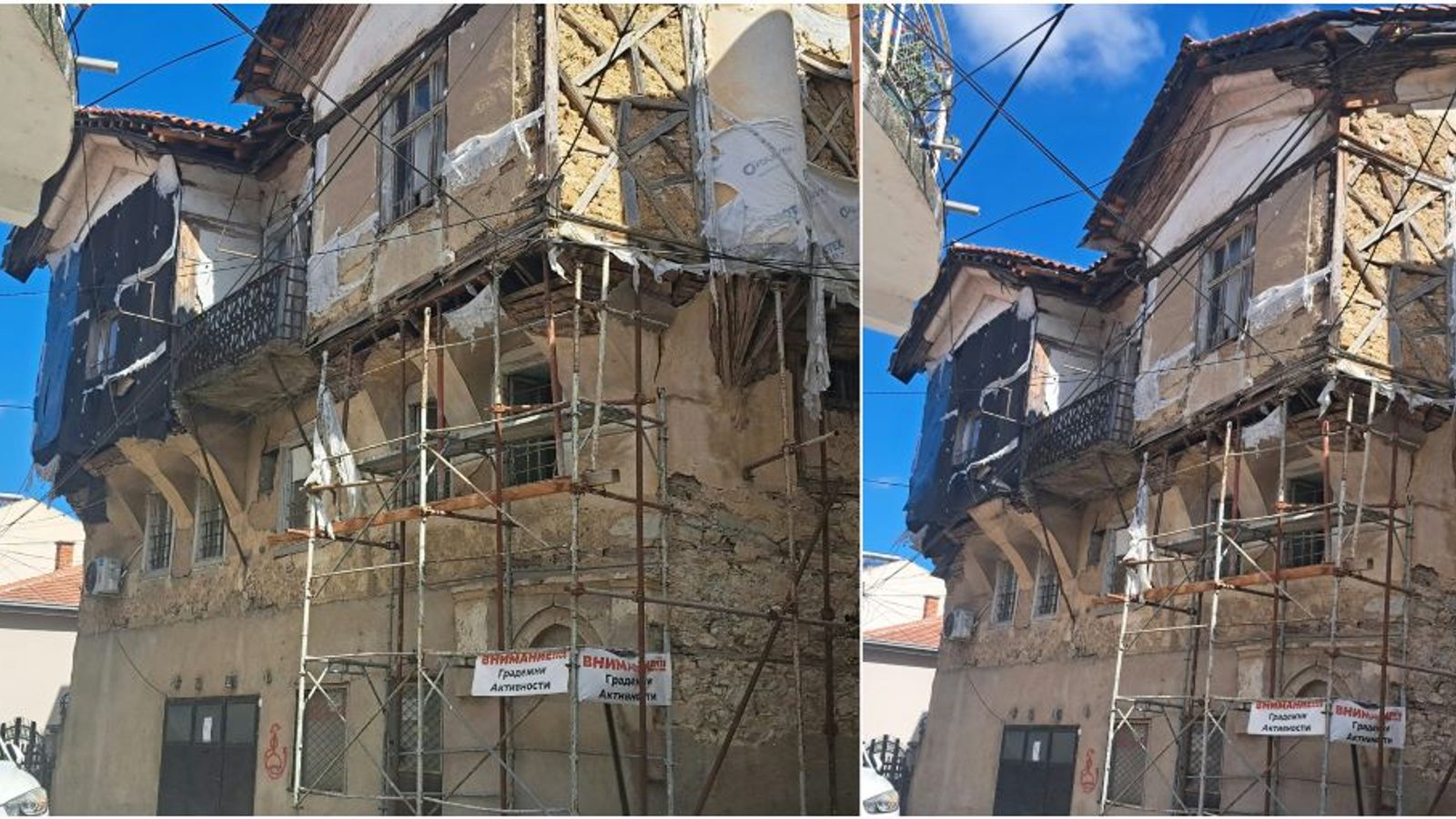
The Alikara house in Veles remains without the promised restoration work a year after scaffolding was removed and the project was stopped. Interior repairs, a repaired roof and strengthened walls were carried out earlier, and scaffolding that had stood for two years was taken down — but the reconstruction has not resumed.
The owner, Pane Apasiev, who lived in the house with his wife, died this summer before seeing the renewal. While alive he repeatedly complained about delays; Pane Apasiev said: "While we were financially strong, we sought permission to repair, we did not get it, then the state promised for years and nothing happened." His son, Dimitar Apasiev, is a member of parliament and leader of the party Levica.
Historically, the Alikara house is an example of Veles’s older architecture. According to written records, it was built in the mid-19th century as a bey’s house, later bought by the gardener Alikara and then by the Apasiev family. It stands close to the old town area known as Varnalijte, whose traditional houses are also in poor condition; one of those burned in December 2019 and a promised reconstruction has not materialized seven years on.
Works stalled because of shortage of qualified staff
Funding has been approved but the physical work is not proceeding. Last year the Ministry of Culture approved 4 million denars (about €65,000) for the repair. In 2024 authorities allocated 1.2 million denars (about €20,000), but no restoration took place that year.
The National Conservator Center (NCC) says the pause is "exclusively due to an alarming lack of qualified staff in the protection of cultural heritage, especially in immovable cultural heritage and buildings by purpose." In a written reply Aleksandar Jordanovski, director of the NCC, explained the technical reasons and the staffing shortfall:
"Namely, for this specific building, during the execution of conservation-restoration works in 2025, it was found that the Basic Project must be supplemented with constructive-static elements, which were not visible during the initial design. The last structural engineer at the National Conservator Center, specialized for objects of cultural-historical importance, retired about ten years ago. In 2018 the National Conservator Center hired a structural engineer, but to this day has shown no capability for the appropriate highly responsible position. Since then, the institution has filled this gap with external collaborators, who are, likewise, an extremely scarce cadre. After the suspension of works on the object during 2025 by the conservation supervision, the national institution requested assistance from external collaborators of the appropriate profile, but because of their overload due to their small number in the country, the obligation in relation to the subject object will be completed by the end of September, or the beginning of October 2026, after which the Center will be able to continue its obligations toward this object in accordance with the norms provided in the Law on Protection of Cultural Heritage," Jordanovski wrote.
Jordanovski also said he had raised the staffing problem immediately after taking office in July 2025, and that during a recent visit by Minister of Culture Sedat Sulejmani the issue was placed among the ministry’s priorities.
Aside from the Alikara house, the houses around Varnalijte remain unrestored. Three surviving traditional houses are in poor condition and their owners are unable to carry out repairs because the buildings are protected as cultural heritage.
Photo: SDK.MK)