North Korea Profits from the War: Kim Lights Up Pyongyang with Russian Billions
Analysts say Russia pays North Korea for munitions and soldiers; the revenues are used for new buildings, hospitals and tourist complexes.
North Korea is recording a sharp economic revival as revenues linked to military cooperation with Russia flow into Pyongyang and finance new apartment blocks, infrastructure and coastal tourist developments.
Satellite images and observations show a visible increase in lit areas and modern construction in Pyongyang since April 2020: the lit area in the city center has more than doubled and the intensity of illumination is three times greater, while new high-rises and commercial buildings are rising.
At the Eighth Congress of the Workers' Party in 2021, leader Kim Jong Un announced the construction of 50,000 new apartments in the capital; the plan has already materialized in neighborhoods such as Hwasong, where two 40-story residential towers were completed, designed to resemble the Hwasong intercontinental missile.
The money comes from the battlefield
Analysts link the government inflow mainly to profitable military business with Moscow. According to a March report by the South Korean Institute for National Security Strategy, North Korea earned between $7.7 billion and $14.4 billion through the sale of munitions to Moscow and by sending soldiers. Bloomberg Economics estimates that military support for Russia in the 2022–2025 period brought in more than $14 billion in revenues.
An additional nearly $8 billion arrived through trade with China, renting North Korean labor abroad, export activities and internet crime. One of the largest thefts attributed to North Korean hackers was the attack on the crypto platform Bybit in February 2025, in which $1.5 billion in ether was stolen. For comparison, North Korea's gross domestic product in the previous year was about $27 billion.
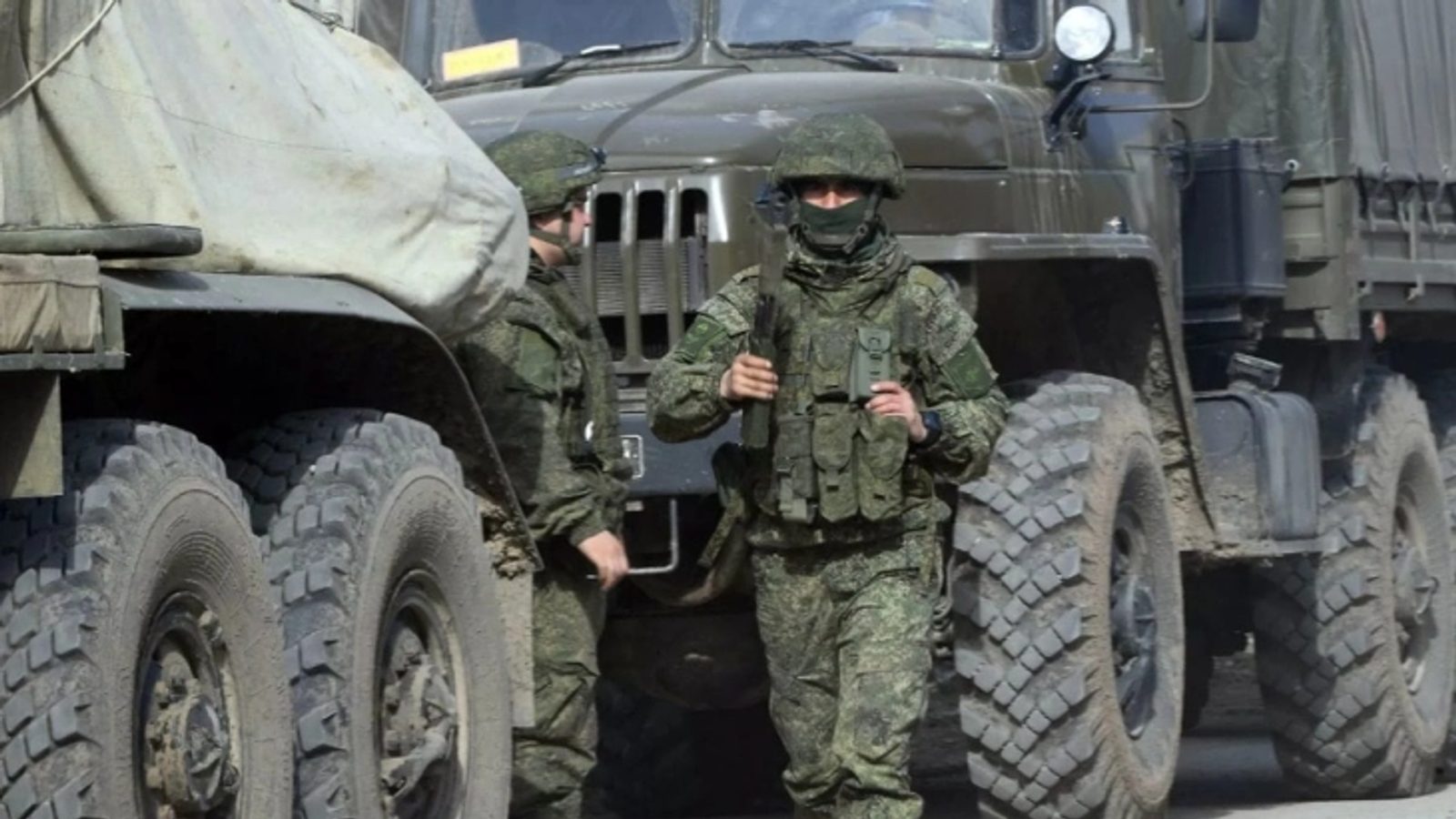
Estimates from Ukraine and other open sources indicate that North Korea in 2024 and 2025 supplied large shares of the ammunition used by Russian forces and delivered self-propelled artillery systems, multiple rocket launchers and ballistic missiles. According to those estimates, between 16,000 and 22,000 North Korean soldiers have already assisted Russia, and a rocket unit of 90 soldiers with six launch frames and up to 120 rockets is planned to be sent. President of Ukraine Volodymyr Zelensky said that Kim intends to deploy an additional 30,000 to 50,000 soldiers.
It is direct income: according to the South Korean Institute for National Security Strategy report, North Korea receives $2,800 a month for each soldier, $3,000 for each officer and between $6,000 and $10,000 for each killed servicemember.
The reasons for this change are visible both in the political weight and the military power of the leader: through the exchange with Moscow, Pyongyang receives crude oil, oil derivatives, grain and military equipment, including air defense systems and technologies for drones, missiles and submarines. After a weakening during the pandemic, when Kim admitted that "almost all economic sectors lagged behind expectations," only a few years later he declared: "Everything has fundamentally changed."
However, the growth is not universal: beyond Pyongyang, the population still faces rising food prices and a weakening national currency, and many factories do not have stable supplies of electricity, spare parts and raw materials. In spring 2024 the regime presented a "20x10" plan for regional development aimed at building modern factories in 20 cities or districts each year; however, expert Andrei Lankov of Kookmin University in Seoul warns that much of the projects will fail: "The reason is that the factories not only lack adequate infrastructure, but the mechanisms for supplying electricity, spare parts and raw materials are neglected" and "Unlike the economic growth in North Korea in the mid-2010s, the current growth is not the result of internal economic reforms, but exclusively of an international fortunate circumstance."
Photo: press material from the event