Silvija Mitevska: Changing the power culture is key to stopping gender-based violence in sport
Mitevska says formal rules are not enough — institutions must change informal power relations and protect athletes.
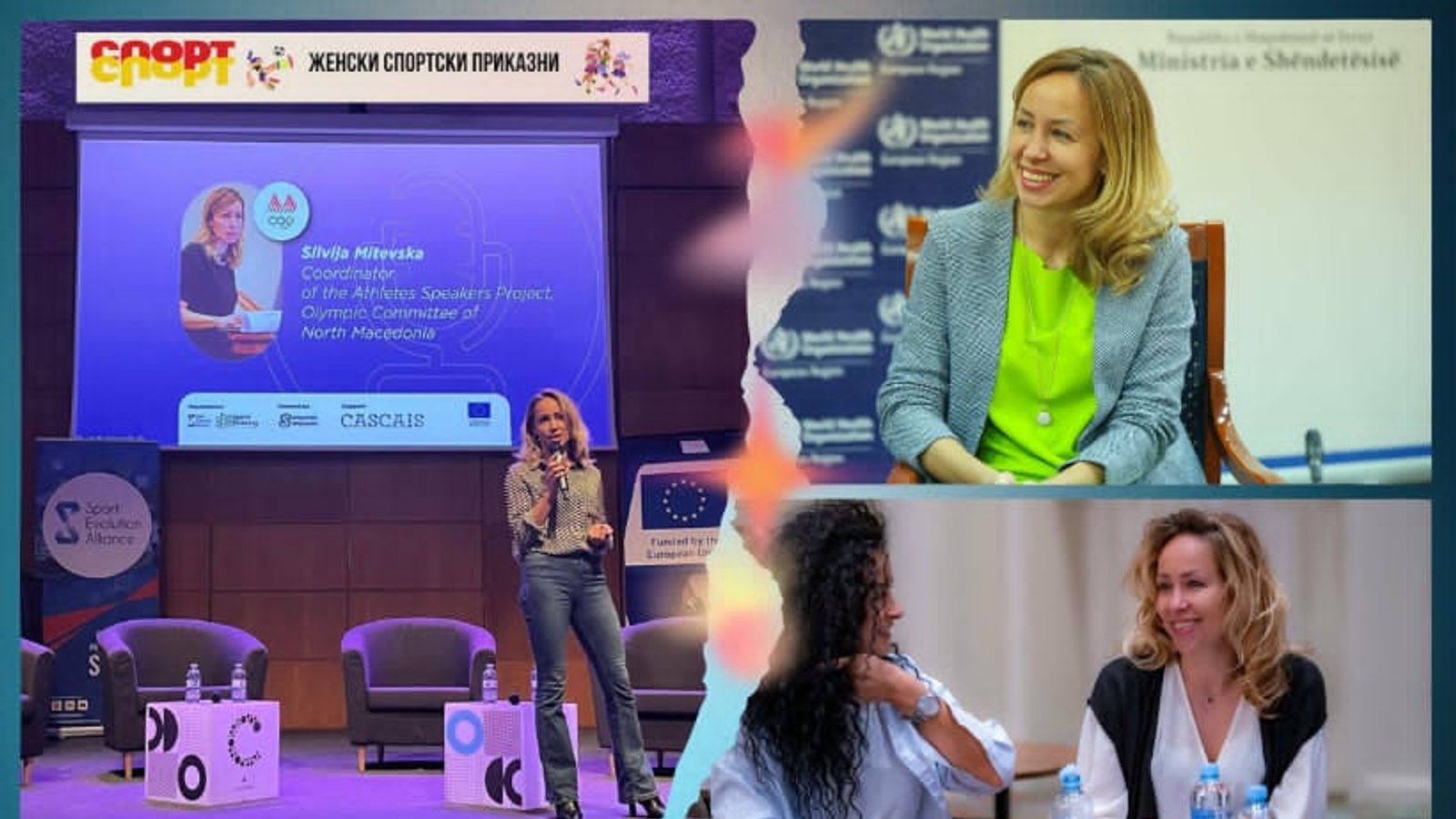
Silvija Mitevska, an expert in sports diplomacy and director of Sport Social Solutions, says tackling gender-based violence in sport requires changing the underlying culture of power, not only adopting rules on paper.
In the second part of a conversation for the project "Women's Sports Stories," Mitevska explained that gender-based violence against women in sport appears in multiple forms — physical, psychological, economic, sexual and digital — and is sustained by unequal distributions of authority and access within sporting environments.
Power, norms and institutional response
"When we talk about gender-based violence in sport, it's important to ask why it happens and what conditions allow it to appear and persist. At the root is the uneven distribution of power. When one person has disproportionately greater power, and another has fewer possibilities to resist, to speak or to influence, space is created for that power to be abused," Mitevska said.
She warned that formal rules alone are insufficient. Institutions may have statutes that guarantee equality on paper, but if informal norms protect powerful figures, discourage women from speaking or minimize their experiences, then the formal safeguards remain ineffective. Mitevska argued that prevention must change both formal procedures and the informal culture where decisions and influence are exercised.
The published analysis prepared by Bojana Jovanovska and Silvija Mitevska highlights awareness gaps and weak protection mechanisms. Key findings include:
- The Law on Sport contains no provisions on gender equality nor mechanisms for reporting and protection.
- 34.8% of respondents say harassment of female athletes is frequent, while 52.2% say it is rare.
- The most common forms of harassment are insulting and humiliating remarks (61.9%) and aggressive, threatening shouting (35.4%), often coming from fans, coaches or teammates during competitions.
- Reports were most often made to a coach or another club official; only 7.7% were submitted to a designated safeguarding officer, and many federations still have not appointed trained protection officers.
- Reasons for not reporting included: not considering the incident serious (61.4%), not believing anything would change (51.8%), and lack of trust in institutions (20.5%).
- 67% of respondents do not know whether federations have appointed a protection officer or mechanism; only 13.9% are aware such an officer exists.
- 48% of federations participated in training, while 44% did not.
"We should not view women only as victims. A woman can be exposed to violence while also having the capacity to act, to resist, to seek help, to speak and to try to change the conditions in which the violence occurred. But we must not shift the responsibility for change onto her alone," Mitevska said, stressing that institutional reaction is crucial when women speak up.
The project acknowledged cooperation from the Handball Federation of Macedonia and the Basketball Federation of Macedonia, and thanked partners Neptune and Triglav Life Insurance AD Skopje for support in implementing "Women's Sports Stories."
Photo: press material from the event