Slava candle: how to light, extinguish and keep it
Customs for lighting, extinguishing and storing the family slava candle — from 50–60 cm candles to using wine to put out the flame.
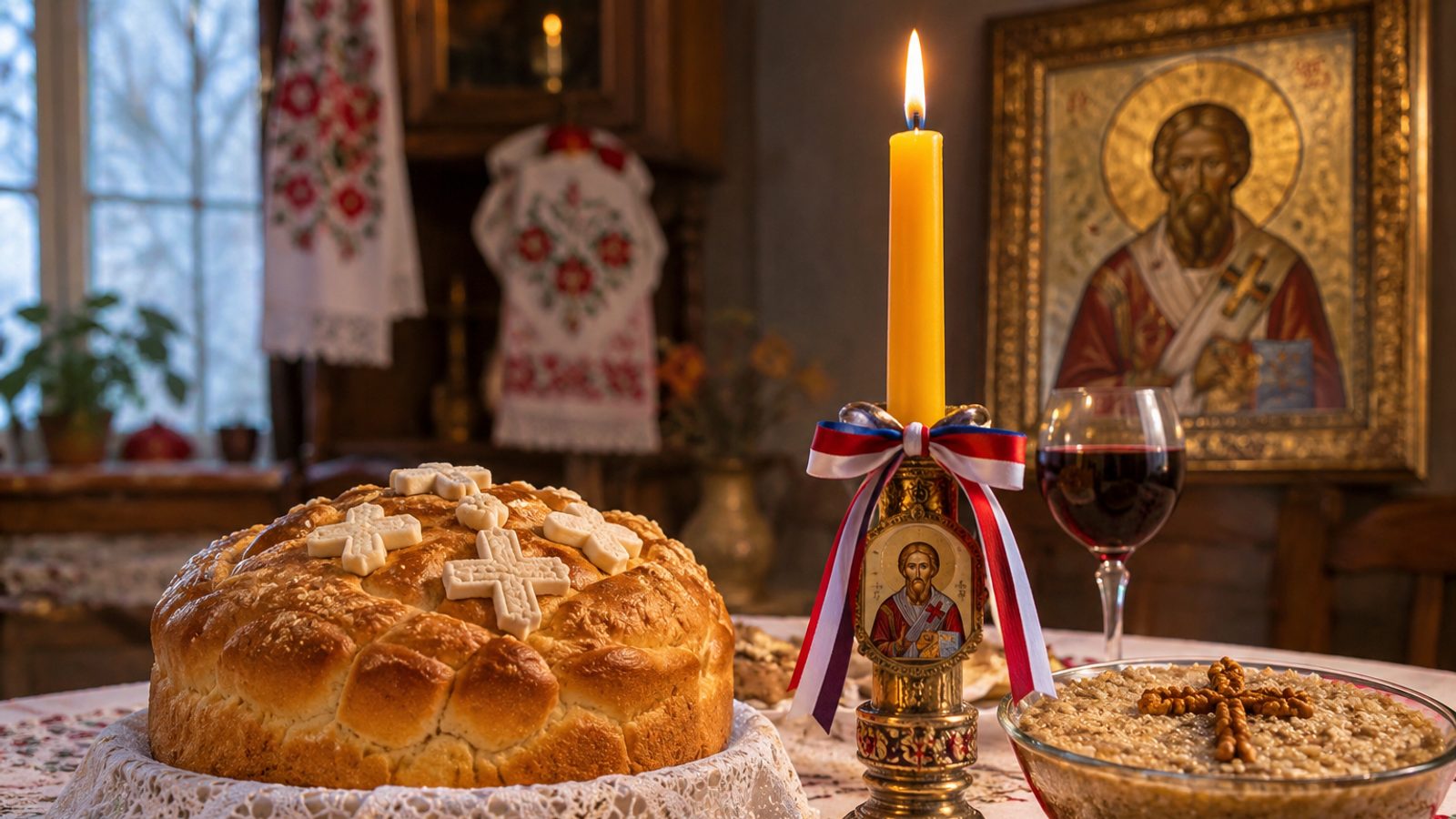
The slava candle holds a central place in Orthodox family celebrations, functioning as a visible symbol of the feast's faith and communal memory. Beyond its decorative role on the table, the candle is meant to represent the light of Christ, divine love and the guiding force of faith in daily life.
How it looks and where it stands
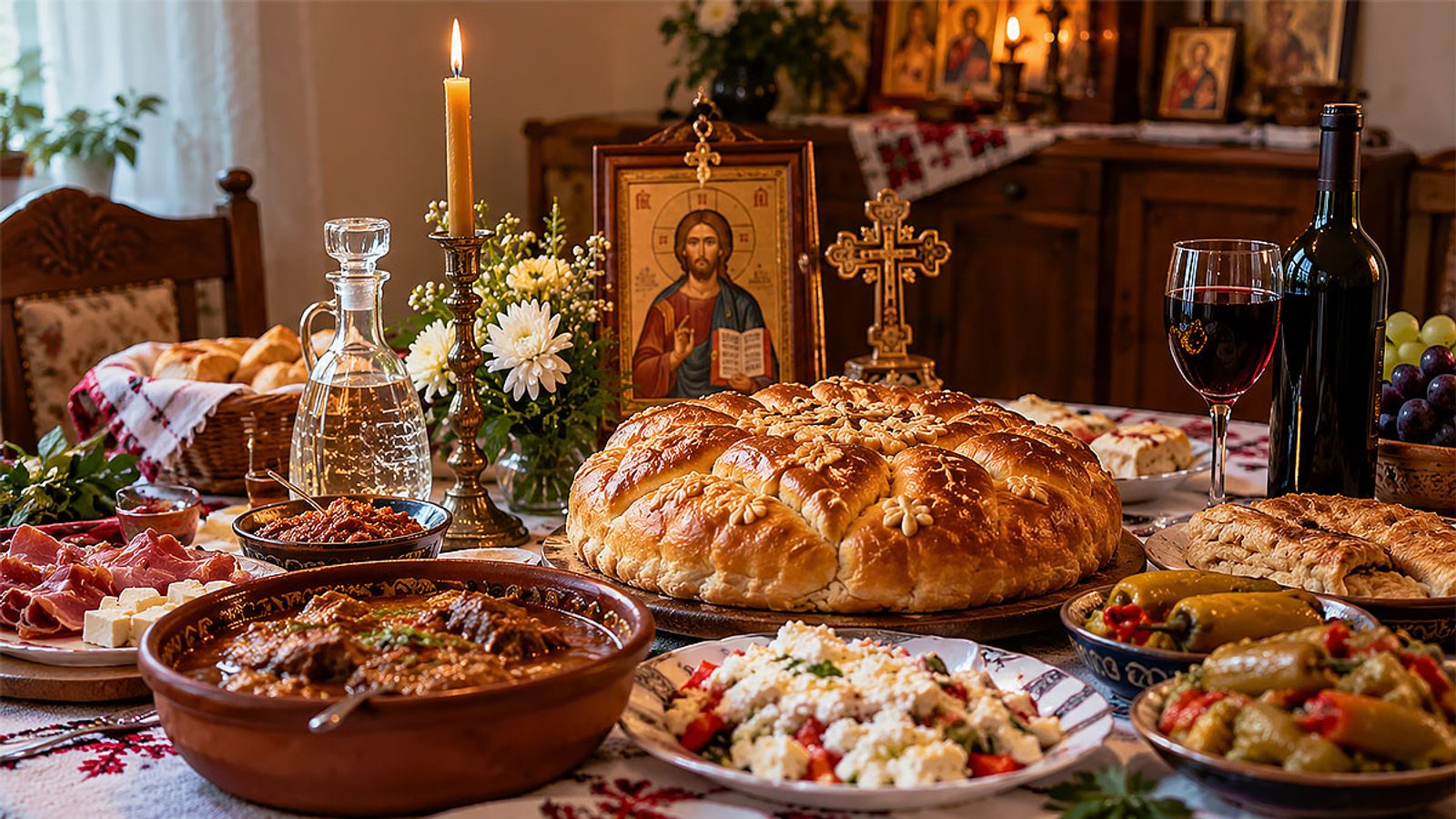
In many households the family chooses a larger candle for the slava, commonly 50 to 60 centimetres in height. It is set in a special holder that is often adorned with ribbons, religious motifs or an icon of the celebrated saint, and placed in the middle of the festive table beside the slava cake and the bowl of wheat.
Lighting the candle is a deliberate act. It is usually done on the day of the celebration and in some families is performed exactly at noon. The host makes the sign of the cross, says a prayer and kisses the candle before igniting it, expressing respect for the patron saint and the holiday. During the day the candle typically remains lit while the household receives guests, but it should never be left burning unattended.
There are traditional rules about how to put the candle out. In certain regions people avoid blowing it out and instead extinguish the flame with wine: after crossing himself, the host pours a few drops of wine over the wick using a small spoon so the flame dies down. Another custom uses a small piece of the slava cake crust soaked in wine to smother the flame; in some families that piece is kept together with the remainder of the candle in a special place until the next slava.
Leftover candle that did not burn completely need not be discarded. It can be reused during family prayers or when a priest comes to bless the home and the water before Easter. If part of the candle remains until the following year, some families take it to church and have it lit during a service, viewing this as a way to preserve the object’s religious purpose.
Folk beliefs have also grown around the slava candle — for example, the direction of the smoke after the flame goes out: smoke rising straight up has been interpreted as a sign of peace and well‑being, while smoke that drifts or curls was once read as an omen of illness or misfortune. These interpretations are local superstitions rather than elements of Orthodox teaching: smoke patterns simply reflect air currents and room conditions.
Clergy regularly remind worshippers that the essence of the slava is spiritual — the common prayer, thankfulness and family unity — and not strict ritualism or fear of omens. Alongside tradition, basic fire safety remains essential whenever a large candle is lit indoors.
Photo: press material from the event