EU‑funded project supplies ambulances, AEDs and ECGs to Southeast North Macedonia
The Cross‑border “Safe for the Heart” project provided emergency vehicles, 24 defibrillators and six ECG devices as part of a €1,217,000 programme.
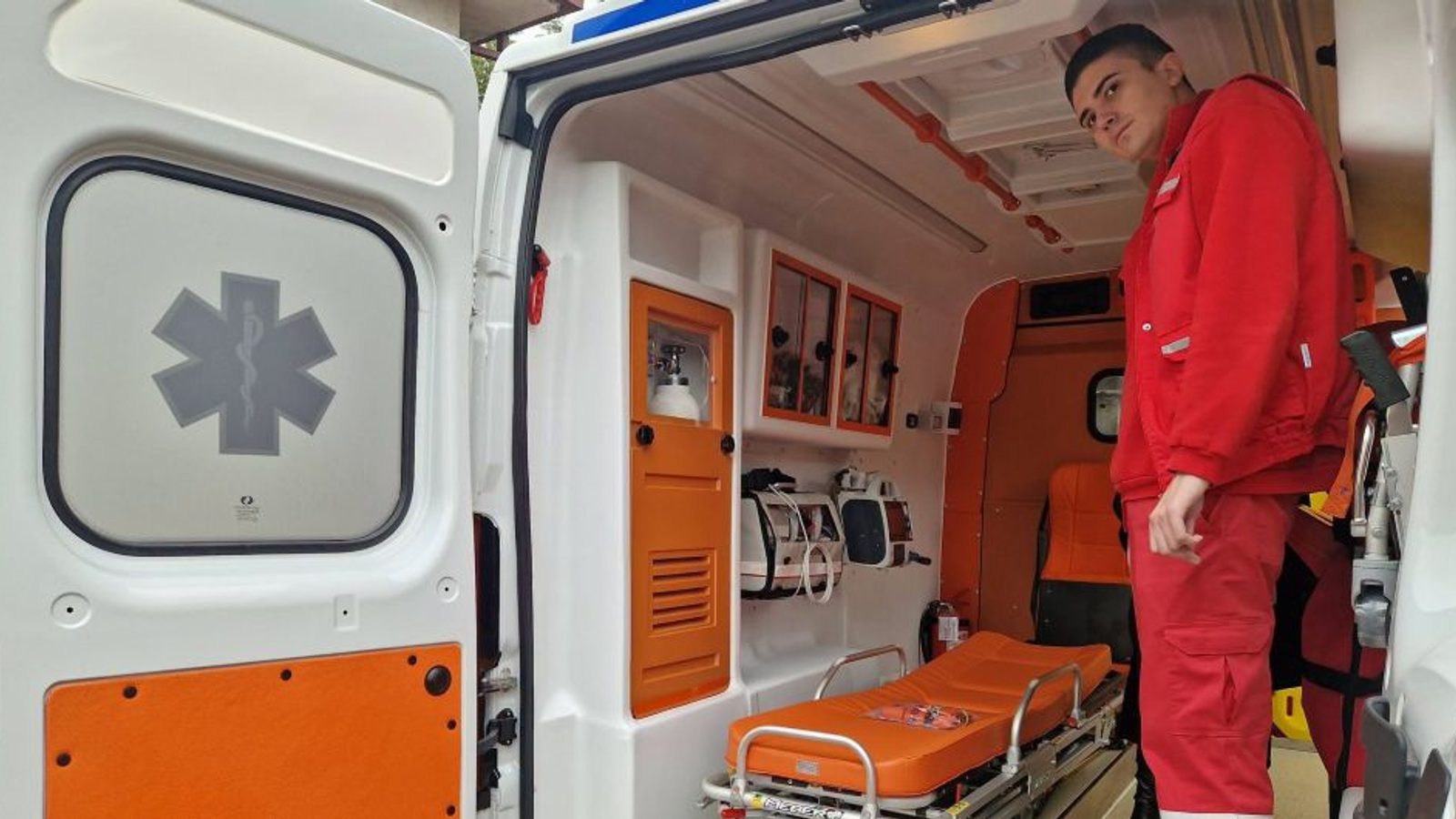
The European Union‑funded Cross‑border “Safe for the Heart” project supplied four ambulances, 24 automatic and semi‑automatic defibrillators and six ECG devices to health services in the Southeast region of North Macedonia. The total programme is worth €1,217,000, of which the EU awarded €973,000; on the Macedonian side about half a million euros were spent.
Ambulances were handed over to the emergency medical services in Strumica, Gevgelija, Radovish and Valandovo. Defibrillators and ECG machines were also placed in the municipalities of Vasilevo, Bosilovo, Bogdanci and Konche, as well as at the Bogorodica and Dojran border crossings with Greece and at Novo Selo on the border with Bulgaria.
Equipment and training combined to speed emergency response
“The project aims to improve emergency medical care and strengthen health capacities in the cross‑border region. It should contribute to creating a safer and more resilient cross‑border community with improved capacity for timely and effective response to cardiac and other medical emergencies. When we speak about emergency medical care, every second matters and a timely reaction can save a human life. This equipment improves capacities and enables faster access in emergency medical cases in the Southeast,” said Jovan Kocev, director of the Center for Development of the Southeast Planning Region.
Health Centre Strumica — which covers four municipalities, about 70 settlements and roughly 100,000 residents — received one ambulance equipped for emergency response for the Strumica emergency service and the dispersed unit in Novo Selo, four automatic AED defibrillators that can be used by non‑medical personnel, two semi‑automatic defibrillators and two ECG devices.
“Our health workers attended training here and at AHEPA General Hospital in Thessaloniki, where they acquired additional knowledge and skills to recognise and act appropriately in urgent, life‑threatening conditions, including resuscitation techniques. So, besides the equipment, we gained trained staff — all aimed at providing better quality healthcare. Special emphasis was put on placing defibrillators in higher‑traffic locations, which the region previously lacked,” said Kiril Manchev, director of Health Centre Strumica.
Alongside healthcare professionals, the project’s trainings included citizens and employees of public institutions; some participants also learnt techniques for timely control of major bleeding. Two people from the municipality of Bosilovo took part. “I welcome the project, because an automatic defibrillator will be placed in the municipal building in Bosilovo, where we will also have trained staff to recognise and provide first aid and resuscitation. The goal is to intervene on time and save lives. That network of defibrillators needs to expand,” said Risto Manchev, mayor of Bosilovo.
In the next phase, a trainers’ workshop will certify 25 people from the Southeast who will be authorised to teach others how to use automatic defibrillators in institutions, large workplaces, border crossings, sports halls and stadiums. After the project concludes, training equipment will be handed over to the Red Cross in Strumica.
The Cross‑border “Safe for the Heart” initiative is implemented on the Macedonian side by the Center for Development of the Southeast Planning Region, and on the Greek side by AHEPA General Hospital in Thessaloniki together with the Association for Emergency Pre‑hospital Care of Greece.
V. Trajkov
Photo: SDK.MK)