Parliament advances draft law to screen foreign direct investments
The Assembly approved further reading of a bill that creates a national FDI screening mechanism, sets a 10%/€50,000 threshold and assigns the Ministry of Foreign Affairs and Foreign Trade to coordinate checks.
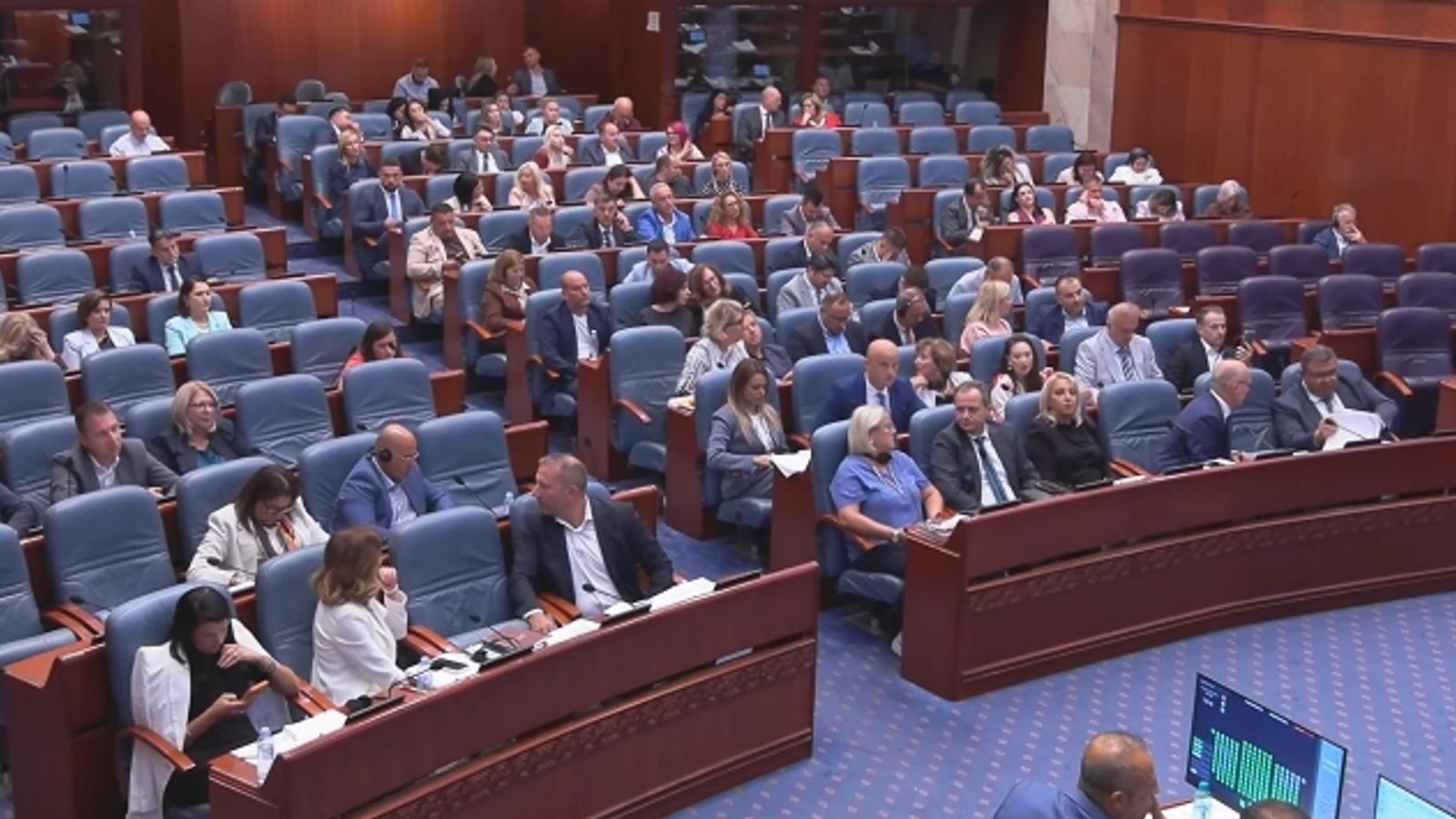
During its 121st plenary session this afternoon, the Assembly finished debate on a draft law to require notification and screening of foreign direct investments; the proposal was approved for further reading with 81 votes in favor. The bill sets out a procedure for notifying and assessing foreign direct investments (FDI) aimed at protecting national security, public order and strategic national interests. The session is scheduled to continue tomorrow at 14:00.
Key rules, thresholds and responsible bodies
The draft would establish a national screening mechanism for FDI that applies to strictly defined critical and sensitive sectors when there are serious indications that an investment could have a negative effect on national security, public order or strategic interests. Under the proposal, a foreign direct investment would require a prior positive or conditionally positive decision by the Government if it involves acquiring at least 10% of share capital and/or voting rights, and the acquisition amount equals or exceeds €50,000 in a company, sector or critical infrastructure listed under Article 8.
Because there is currently no separate law or subordinate act in the country that defines critical infrastructure sectors, the draft grants the Government — on the proposal of the Ministry of Defence — the legal authority to designate the sectors and types of critical infrastructure for the purposes of this law.
The draft proposes that the competent authority for notification and screening be the Ministry of Foreign Affairs and Foreign Trade, which would conduct consultations with relevant bodies — including the Ministry of Defence, the Ministry of the Interior, the Ministry of Finance, the Ministry of Economy and Labour, the Agency for National Security, the National Bank of the Republic of North Macedonia, the Ministry of Energy, Mining and Mineral Resources, the Commission for Protection of Competition and others — and then submit a recommendation to the Government on whether a given investment should be allowed, allowed with conditions or rejected. Investors would be entitled to file an administrative dispute before the competent court in accordance with the Law on Administrative Disputes.
Prime Minister Dimitar Kovachevski (SDSM) told MPs his party supports establishing a screening system but plans to table amendments to improve the bill. He warned the text as drafted creates "a mechanism that is too broad, too centralized, with too much discretion of the executive and with insufficient guarantees for legal and institutional security."
Antonio Milososki (VMRO-DPMNE) noted the law defines when an investment is subject to review, who must notify it, which institution conducts the procedure and which other bodies take part in the assessment, while the final decision is taken by the Government. "Therefore I believe that in the law it is entirely correct, because it has the largest amount of data both from inside the country and from foreign states, that the Ministry of Foreign Affairs and Foreign Trade is foreseen as a contact point, but it is not correct that this institution will independently decide or assess investments that may have a strategic risk to national security," he said.
MPs also approved consenting to the Statute of the Regulatory Commission for Energy, Water Services and Waste Management. Earlier in the same plenary, Arljinda Hasani Sinani was appointed as a Vice Governor of the National Bank. Parliament voted to start the process to amend the Law on Financial Support for Investments and approved the need to adopt 45 other amendments enacted under an accelerated procedure to align with the Law on High Officials.
Under the proposed amendment to the Investment Support Law — explained by MP Zhan Drvoshhanov — the deadline for signing investment contracts would be extended to 4 September, contract annexes could be concluded until 11 September (instead of 31 July), and state aid disbursements would be payable until 23 October (instead of 31 August). The draft must now pass the relevant parliamentary committees before returning to the plenary.
Parliament also voted to ratify: the Convention for the Bureau of the European Conference of Civil Aviation; a Protocol between the Government of North Macedonia and the Government of Lithuania on implementing the Agreement on the Return of Persons Staying without Authorization; a cooperation agreement on defence between North Macedonia and Slovenia; and a defence cooperation agreement with the Portuguese Republic. A number of laws were approved for expedited changes to harmonize with the Law on High Officials — including amendments to the laws on pension and disability insurance, compulsory oil reserves, the Geological Survey, the Deposit Insurance Fund, state statistics, the Customs Administration, public procurement, metrology, commodity reserves, founding an Agency for Foreign Investments and Export Promotion, the State Market Inspectorate, the Public Revenue Office, industrial property, protection from ionising radiation, technological-industrial development zones, medicines and medical devices, the Central Registry, health insurance, founding an Agency for Agricultural Development Support, food safety, urban planning, founding an Agency for Financial Support in Agriculture and Rural Development, the registry of compulsory social insurance, classified information, the State Inspectorate for Local Self-Government, expertise, the cadastre, management of confiscated property, even distribution of regional development, professional training of administrative officials, crisis management, protection and rescue, safety in the railway system, administrative inspection, archival material and activity, plant health, administrative staff, the environment, inspection oversight, the State Inspectorate for Agriculture, use of the Macedonian language, labour inspection, enforcement of sanctions and inland navigation.
Photo: press material from the event