Dispute at the Medical Chamber: The president's mandate expired — differing interpretations over why no new election has been held
The president's mandate expired on 1 July 2026; parts of the Chamber speak of obstruction and Statute breaches, while the president says the problem is repeated lack of quorum.
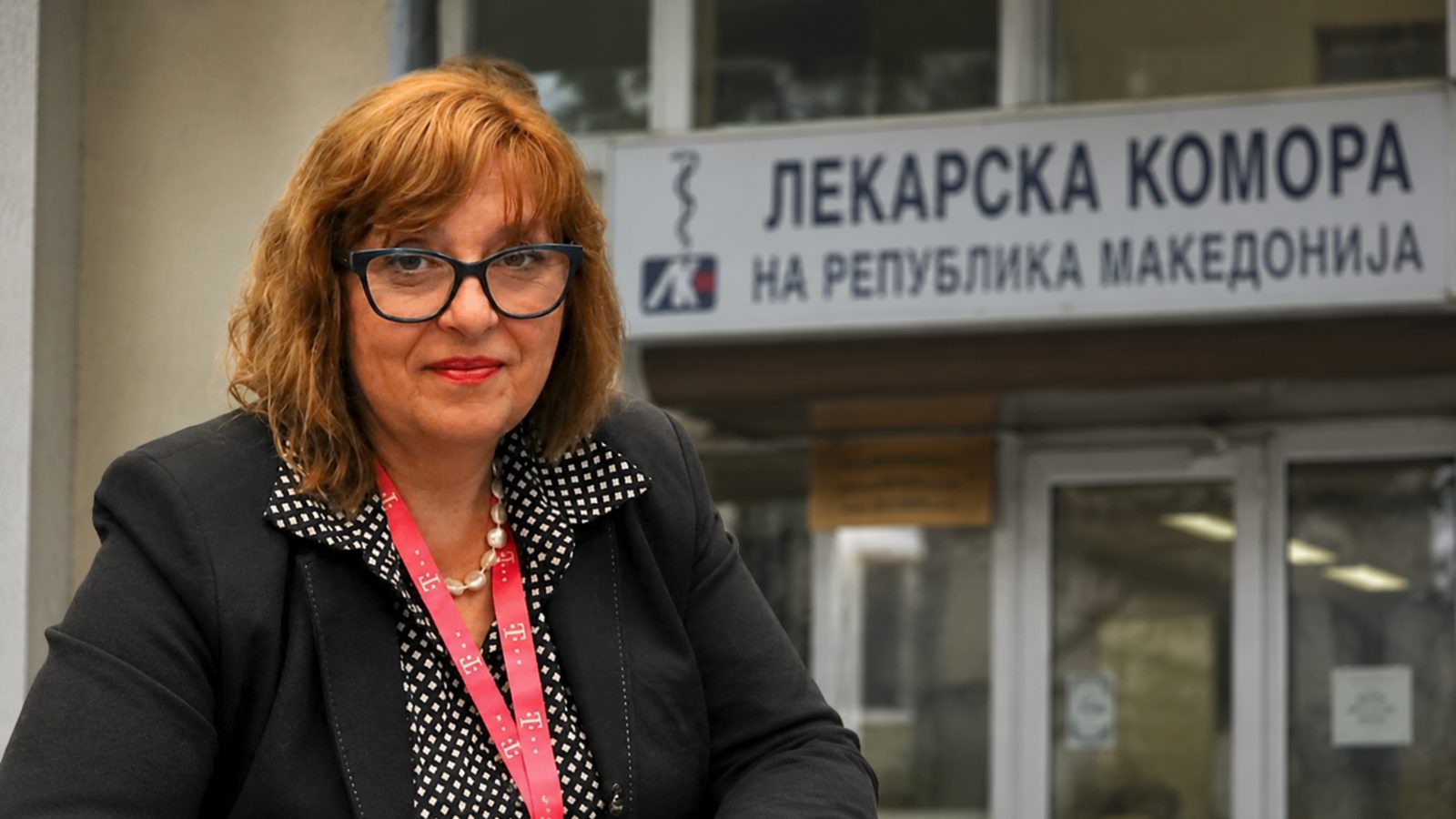
On 1 July 2026 the mandate of the president of the Medical Chamber of Macedonia, Professor Dr. Kalina Grivcheva Stardelova, expired, after which turmoil arose within the Chamber because a new leadership has still not been elected.
A group of delegates accuses the bodies of obstructing the election process, claims that the president should not sign licenses with an expired mandate, and says they informed that they had attended meetings with Minister of Health Sasho Klekovski and requested inspection oversight. Stardelova, however, categorically rejects the accusations and says the reason is the threefold failure to reach quorum at the scheduled sessions, and that it is not intentional delay.
Three attempts at the Assembly without quorum
According to Stardelova's explanations, on 30 April 2026 an Assembly session was scheduled to consider the acts needed for the election process — among them a new election rulebook and amendments to the Statute. Despite invitations being delivered on time, only eight delegates confirmed attendance, so the session could not proceed.
The second attempt on 21 May 2026 also ended without quorum — only 10 delegates attended. On 12 June 2026 a third attempt was made in the amphitheater of the Institute of Forensic Medicine; 35 delegates were physically present, but the statutory minimum for fully valid decision-making is 40, so that session could not make valid decisions either. Afterwards, those present were offered additional dates of 17 or 18 June 2026, but those dates were not acceptable to the majority due to previously planned commitments.
Stardelova emphasizes that the expiration of the mandate does not mean the cessation of the Chamber's functioning and that, according to the legal and statutory framework, continuity must be ensured until the election and constitution of the new bodies. She recalled that elections have been postponed before – the elections scheduled for 2016 were organized in 2017, and those from 2021 took place in 2022 due to the COVID-19 pandemic. "We publicly appeal to the delegates to ensure a quorum for the Assembly session scheduled for 2 September 2026 and to actively contribute to the implementation of the election process and the election of the new leadership of the Chamber," she added.
A separate group of delegates, however, claims that for the 2026–2030 mandate period there are serious deviations from the statutory provisions and institutional measures. They say the Assembly should have been scheduled by 1 May 2026 and react that on the agenda for 2 September 2026 is placed the "Decision on the election of the Central Election Commission (CEC) and municipal election commissions, as well as the Decision on determination of electoral units", which, according to them, is "direct intervention in the Statute without a statutory decision." "This is a violation of the Statute and arbitrariness," the delegates say.
The President of the Assembly, Visar Mucha, responded to the dissatisfied that the Assembly and the bodies will continue to work to prevent the "paralysis" of the Chamber. The dispute will most likely continue until the delegates secure a quorum for the September gathering or legal and administrative mechanisms are applied to resolve the deadlock.
Photo: press material from the event