Serbia before the vote: can Vučić’s campaign stop the students?
Aleksandar Vučić has signalled October elections while a student movement leads field mobilisation and polls show it ahead of SNS.
Serbia entered an overt election campaign after President Aleksandar Vučić announced that parliamentary elections will be held on either 18 or 25 October; the exact date is to be confirmed in the coming days. Vučić has for weeks been acting as if campaigning is already underway — touring the country, promising locals solutions and pledging new roads, bridges and water systems.
Students, polls and the danger of fragmented opposition
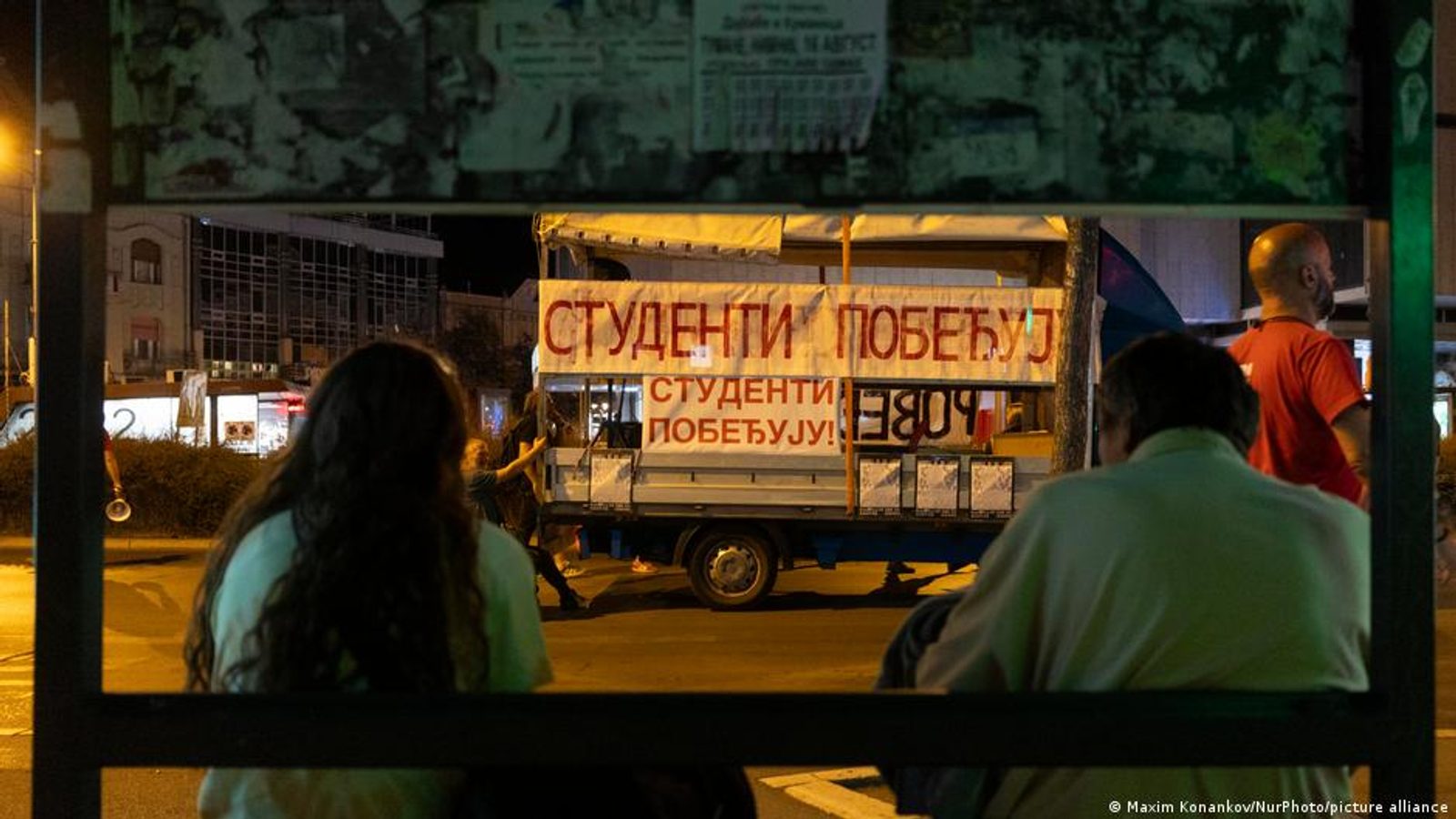
The student movement that has been blockading key sites for roughly a year and a half is now mobilising for the vote, running field activities across Serbia and calling on citizens to visit their stands and learn the movement’s next steps. "Get acquainted with some of the programme guidelines," they wrote on their Instagram profile.
Political scientist Aleksandar Ivković argues that a clear intensification of activity points to October elections. "Vučić previously carried out similar activities, such as tours around Serbia and meetings with citizens, even when elections were not near. But their intensification in recent weeks shows they are part of the campaign for the upcoming elections. The tours are primarily aimed at citizens who previously voted for SNS and for Vučić, and the goal is for them to vote for them again," Ivković said.
Ethnographer Ivan Đorđević describes the campaign as a staged spectacle intended to maintain ratings and shrink room for likely manipulation, but warns it does not hide Vučić’s limits as a communicator: "The problem is that Vučić does not feel comfortable in that circus caravan. Obviously he does it because professionals told him he must. And these staged and edited 'dialogues' with citizens show that he is no longer capable of anything other than a monologue, at least when it comes to domestic politics. He lacks charisma, he cannot communicate, and despite all the efforts in controlled conditions to create the impression of dialogue, it all looks extremely strained. That's why I'm not sure that it brings the desired results in terms of ratings," Đorđević assessed.
Historian Dragan Popović judges that Vučić may well resign his office before the campaign — a manoeuvre that "loses him nothing" because his mandate is ending soon and would allow him to claim he is campaigning without a public post, addressing a common criticism from the opposition and international observers. "He will probably resign, because he loses nothing by doing so. His mandate is ending soon anyway. Additionally, he will be able to claim that he enters the campaign without a public office, which was one of the main objections of the opposition and observers," Popović said.
Polling from the Centre for Research, Transparency and Accountability (CRTA) in June found the Student List at 44.9 percent, SNS at 35.7 percent and the Socialist Party of Serbia (SPS) at 3.8 percent; CRTA reported that other actors on their own do not pass the electoral threshold. Ivković notes that students have run a more active field campaign this summer than any opposition party, and that when student candidates become known and start visiting towns across the country, their media visibility could rise quickly — provided they move fast given the expected October timeline.
Experts warn that if the anti-Vučić opposition runs fragmented on identity or ideological lines, vote splitting could favour the incumbent. Popović and Đorđević both stress that restoring a minimum culture of political debate must be a priority for any force that hopes to win: without it, they say, Serbia risks returning to the situation it seeks to escape.
Photo: press material from the event