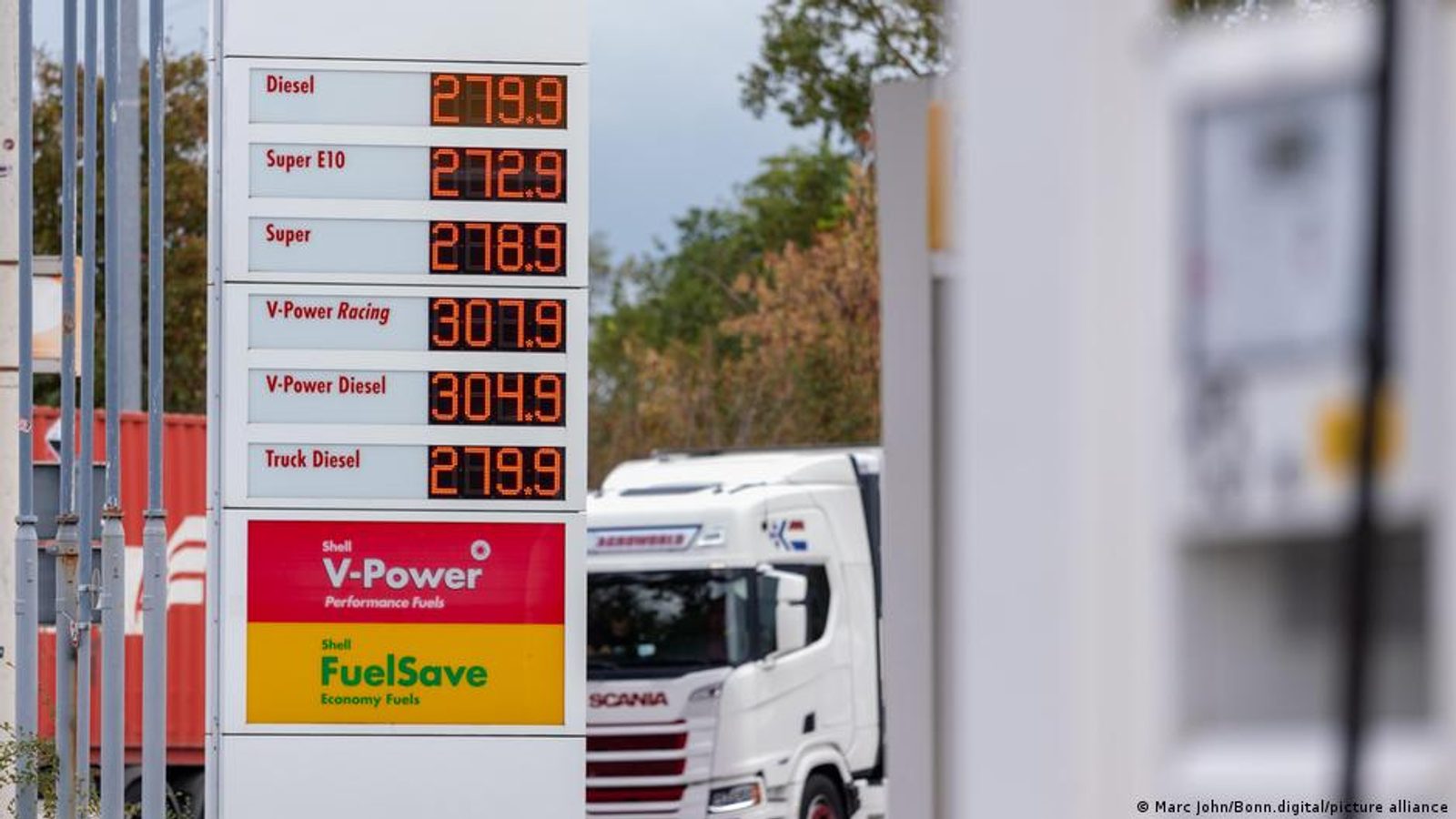
Drought in Europe is pushing up inflation: transport and food costs rise
Dry inland waterways and lower harvests are raising transport and food costs, adding a new channel of inflationary pressure in Europe.
Heatwaves and prolonged drought across Europe are pushing up the cost of moving goods and the price of food, creating fresh upward pressure on inflation, economists warn. Dry riverbeds and lower crop yields are feeding through into higher transport costs, while harvest losses and global price swings lift food bills for consumers.
Shipping on major inland waterways has been hit in particular. "When Rhine ships can carry only part of their usual cargo, transport costs per ton increase significantly," said Torsten Schmit, director for economic analysis at the RWI Institute for Economic Research in Essen. He added that fuel products such as diesel and heavy fuel oil — often transported by water — are becoming more expensive and those higher costs tend to be passed on to consumers.
The Food and Agriculture Organization (FAO) incorporates the effects of climate change, extreme weather and falling yields into its statistics. Since 2020, for example, prices for meat and oilseeds have risen markedly; FAO data show food prices are currently about 30 percent higher than in 2020.
Climate shocks raising the inflation risk
A July 2025 research report, "Climate extremes, sudden spikes in food prices and their wider societal risks," prepared by five European research institutes together with the European Central Bank (ECB), warns that a rise in the frequency of weather extremes will make it harder for central banks to keep price stability. The paper points out that higher prices for commodities in remote producers — for example coffee in Brazil or Vietnam — can transmit into higher inflation in the European Union.
ECB data underline growing differences across the bloc: in June the headline inflation rate ranged from 5.4 percent in Lithuania to 2.0 percent in France, with Germany at 2.4 percent — slightly below the EU average of 2.8 percent. Transport costs were a key driver, recording a 5.3 percent increase.
Monetary policymakers face a dilemma. The ECB last raised its deposit rate on 11 June 2026 by 0.25 percentage points to 2.25 percent. If the drought-related price shocks are temporary, they may not require tighter policy; but if they overlap with other cost pressures and persist, they could force further rate rises. "For monetary policy the key question is whether this is a one-off, temporary cost shock or an effect that piles onto other price drivers," Schmit said. Meanwhile Holger Schulz of the German Savings Banks Association argues firms should rebuild inventories as insurance: "Warehouses, warehouses, warehouses."
Photo: press material from the event