World Bank and IFC reaffirm support for North Macedonia's reform and development priorities
Meetings in Bangkok confirmed cooperation on a 2024–2028 partnership framework worth roughly $700 million and plans for instant payments and private investment.
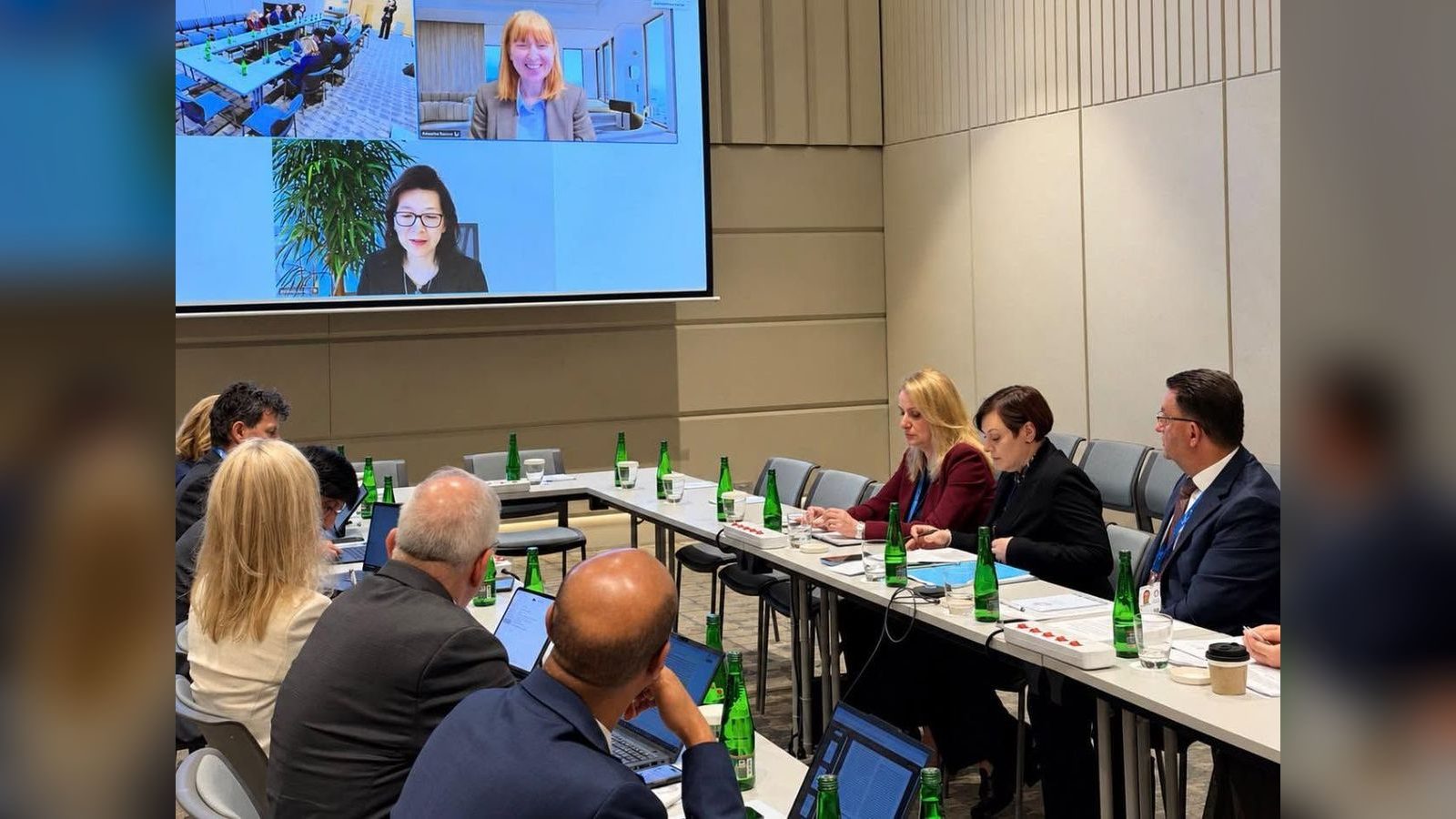
The World Bank and the International Finance Corporation (IFC) confirmed continued support for North Macedonia’s reform agenda and development priorities during meetings held on the sidelines of the World Bank–IMF Annual Meetings in Bangkok, Thailand.
Delegation-led talks and a $700 million partnership framework
The Macedonian delegation was led by Minister of Finance Gordana Dimitrieska-Kochoska and National Bank Governor Trajko Slaveski. In discussions with Antonella Bassani, the World Bank’s Vice President for Europe and Central Asia, and with IFC Vice President Alfonso Garcia Mora and Executive Director Eugene Rugenat, officials reaffirmed ongoing cooperation and explored ways to deepen the partnership.
The parties paid particular attention to implementing the World Bank partnership framework for 2024–2028, which foresees approximately $700 million in financial and technical support to North Macedonia. "In that regard, the emphasis was placed on accelerating project implementation, more efficient use of available funds and achieving concrete results for citizens and the economy," the Ministry of Finance said.
The current portfolio discussed includes infrastructure modernization, public finance improvement, energy efficiency, education, social protection and agriculture. Representatives stressed the IFC’s role in mobilizing private investment, supporting the green transition and raising the competitiveness of the domestic economy.
World Bank officials welcomed the government’s reform commitment and confirmed continued expert and financial backing. Governor Trajko Slaveski highlighted steps taken to integrate the Macedonian financial system into the European payments space, noting one year since accession to the Single Euro Payments Area (SEPA).
Slaveski also outlined the central bank’s priority to establish a national instant payments platform modelled on the European TIPS system. "After the introduction of instant payments on the domestic market, the next step will be regional connection with the payment systems of countries in the region and their integration into the wider European payments space," he said, adding that this will help deepen economic ties.
Photo: press material from the event