Tamara Atanasova: Athletes should be judged by results, effort and discipline — not by gender
Leader of Rabotnicki and North Macedonia international Tamara Atanasova speaks about career choices, equality and the duty to inspire young athletes.
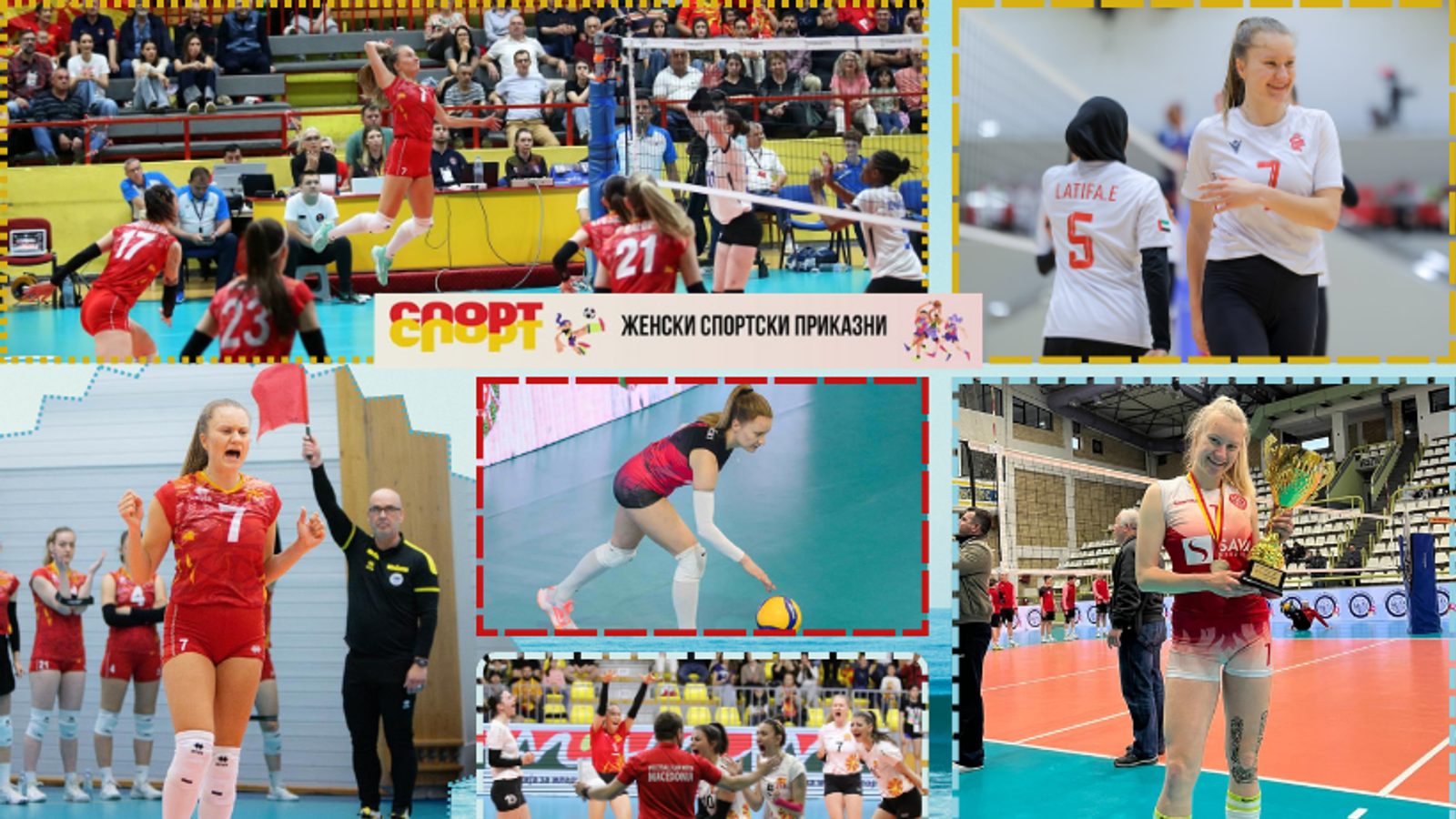
Tamara Atanasova is one of the leaders of North Macedonia’s women’s volleyball scene: a player who grew up in a sporting family, won experience abroad and now wears the shirt of champion club Rabotnicki while working with younger generations.
From first steps at home to a season in Sharjah
Asked what drew her to volleyball, Atanasova recalls the family background that shaped her start. "I come from a sporting family, so it was somehow expected that I would follow that path. The greatest influence on me were my parents, who have always supported me and instilled in me a love for sport. Volleyball was the first sport I started training as a child and from the very beginning I found myself in it. I never felt the need to try something else, because volleyball became more than a sport for me — it became part of my life. Over the years, that love only grew and motivated me every day to work even harder."
Reflecting on her development, she stresses the mental side of the game. "Over the years I realized that volleyball is not only physical preparation and technique, but also character. I learned to be patient, not to get discouraged after a bad match and to draw a lesson from every situation. I wish I had known at the beginning that progress is not always linear — there are ups and downs, but if you are disciplined and persistent, results always come."
Wearing the national jersey, she says, remains a defining moment. "Wearing the national team's jersey is the greatest honor an athlete can have. It's a special feeling, but also a great responsibility, because you know you are fighting not just for yourself but representing the entire country. Whenever I put on the national jersey, I feel enormous pride and extra motivation to give my best on the court. If I have to single out one appearance that will stay with me forever, it's the victory over Luxembourg in front of the home crowd. That was the senior women's national team's first victory after 17 years and a truly emotional moment for all of us. To be part of that generation and to feel the joy with teammates and the audience is something I'll never forget."
Atanasova also spent a season in Sharjah, United Arab Emirates, and remembers the professional environment there. "The experience in Sharjah was truly special for me. The working conditions were at a very high level, from the organization and training to the overall care for the athletes. As a female athlete I was very well received. In recent years they have invested more in women's sport there and more girls are encouraged to train and actively engage in sport. It was really nice to see that progress and enthusiasm. What made me happiest was when you see you can be an example and motivation for a young girl to start training. I think that's one of the most beautiful things that can happen to an athlete — to inspire someone to choose sport and believe in their abilities."
On equality and visibility she notes improvement but says more must be done: "I think the situation today is much better compared to before. Women's sport is getting more attention, there is greater media representation and support, which is a really positive step. However, I believe there is still room for progress, especially when it comes to investments, working conditions and continuous media coverage of women's teams and athletes. I believe quality, dedication and results have no gender. When athletes receive equal opportunities, they can fully show their potential. Therefore I hope that in the future the differences will be even smaller, and women's sport will get the support it deserves."
Atanasova also underlines the responsibility of established athletes to speak openly. "I think it's very important for successful athletes to talk about their experiences, because young people learn most easily through examples. It's not important to share only successes, but also the challenges, failures and the hard work behind every result. That way children understand that success does not come overnight, but with a lot of work, discipline and persistence. Yes, I feel a responsibility, especially because I'm in daily contact with children and I know how important it is to have positive role models. If with my story I manage to motivate at least one child to start playing sport or not to give up on their goal, then I consider I have done something truly valuable."
She admits that at times female athletes have to fight for the same recognition: "At the very beginning, I didn't think that way. I went to trainings above all for the love of volleyball and the desire to improve, without comparing myself to male athletes or thinking whether I have to prove myself more. But, as time passed, results came and I gained more experience, sometimes it felt that as a female athlete you have to additionally prove yourself to receive the same recognition and respect. I think today the situation is much better than before, but there is still room for improvement, as I mentioned earlier. Still, I never let that discourage me. Instead of focusing on what I cannot change, I always tried to let my work, discipline and results on the court speak for me. I believe that precisely with quality performances and continuous work we can contribute to women's sport gaining increasing respect and appreciation."
She highlights the media's role: "The media have a huge role in promoting women's sport. The more the achievements of female athletes are followed and promoted, the greater the visibility of women's sport and the interest among young people to get involved. I think the media not only inform about results but also create inspiring stories. When a girl sees a successful athlete on TV, in a newspaper or on a portal, it's much easier to believe she can one day achieve her dreams. That's why I think the media are an important partner of sport. With greater media support, women's sport will gain more recognition, more audience and will motivate even more girls to start training."
Asked about family life, she says marriage has been supportive rather than limiting: "I don't think marriage should be an obstacle to a successful sports career. On the contrary, when you have next to you a person who understands and supports you, it's much easier to cope with all the challenges professional sport brings. I'm lucky that my husband is a basketball coach, so he is also part of the sports world and understands well all the obligations, renunciations and challenges a sports career brings. Even before we got married, and now as a husband, he has always been a huge support and a person who believes in me and my goals. I think the right partner shouldn't be a limitation, but an additional strength and motivation. When there is understanding, trust and support, marriage can only contribute to making you even stronger both as a person and as an athlete."
Finally, she points to the main obstacles for girls entering professional sport: insufficient support and awareness that sport can be a viable career, lingering prejudices, and a need for more opportunities, better training conditions and visible role models. Atanasova continues to combine club duties at Rabotnicki with work among youth, and says she wants to use her experience to encourage the next generation.
Photo: press material from the event