Panche Toshkovski asks why today's femicide protesters did not demand resignations in 2018 and 2022
Toshkovski said the number of femicides was the same in previous years and defended legal changes and a rise in detentions in 2026.
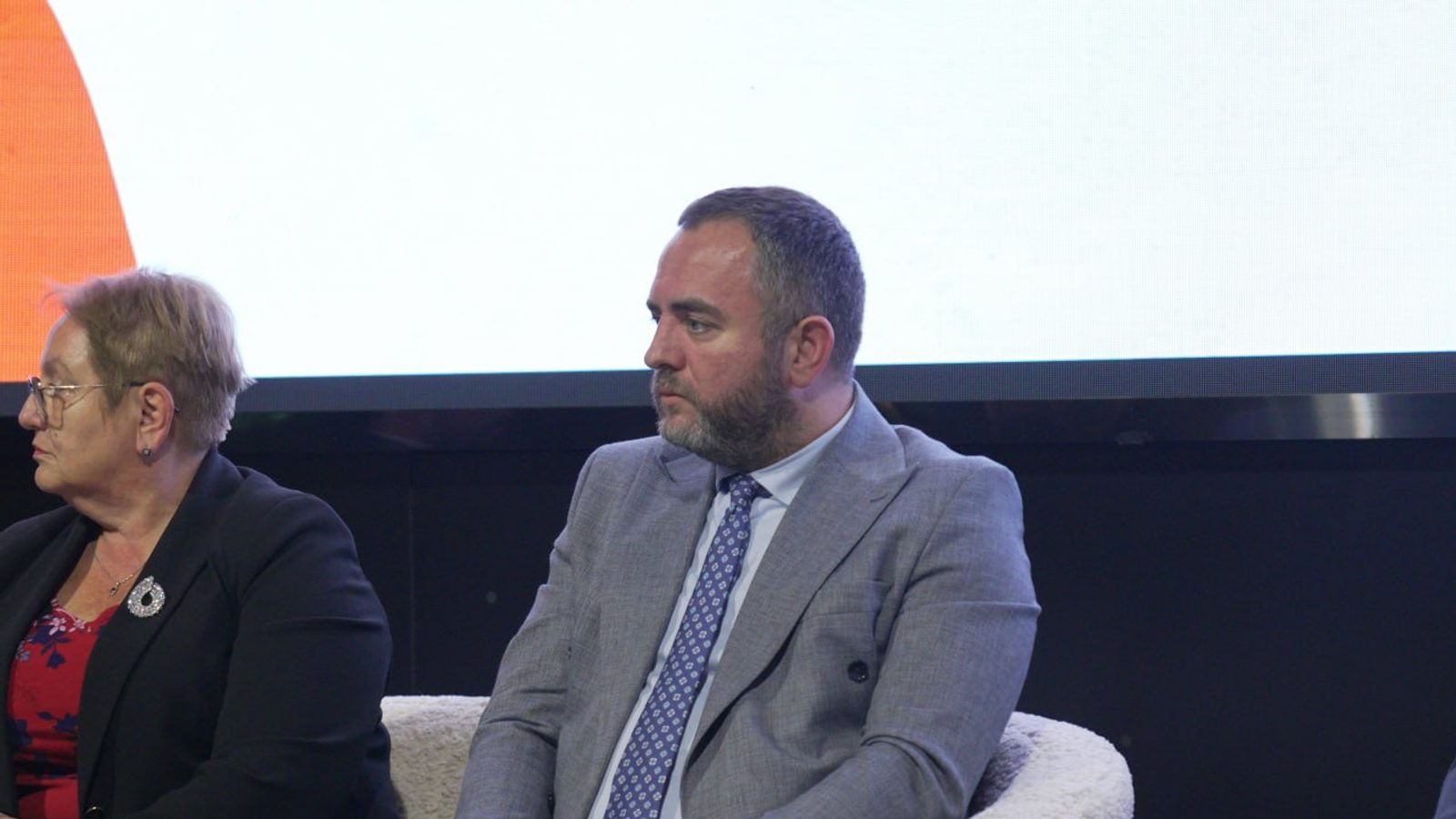
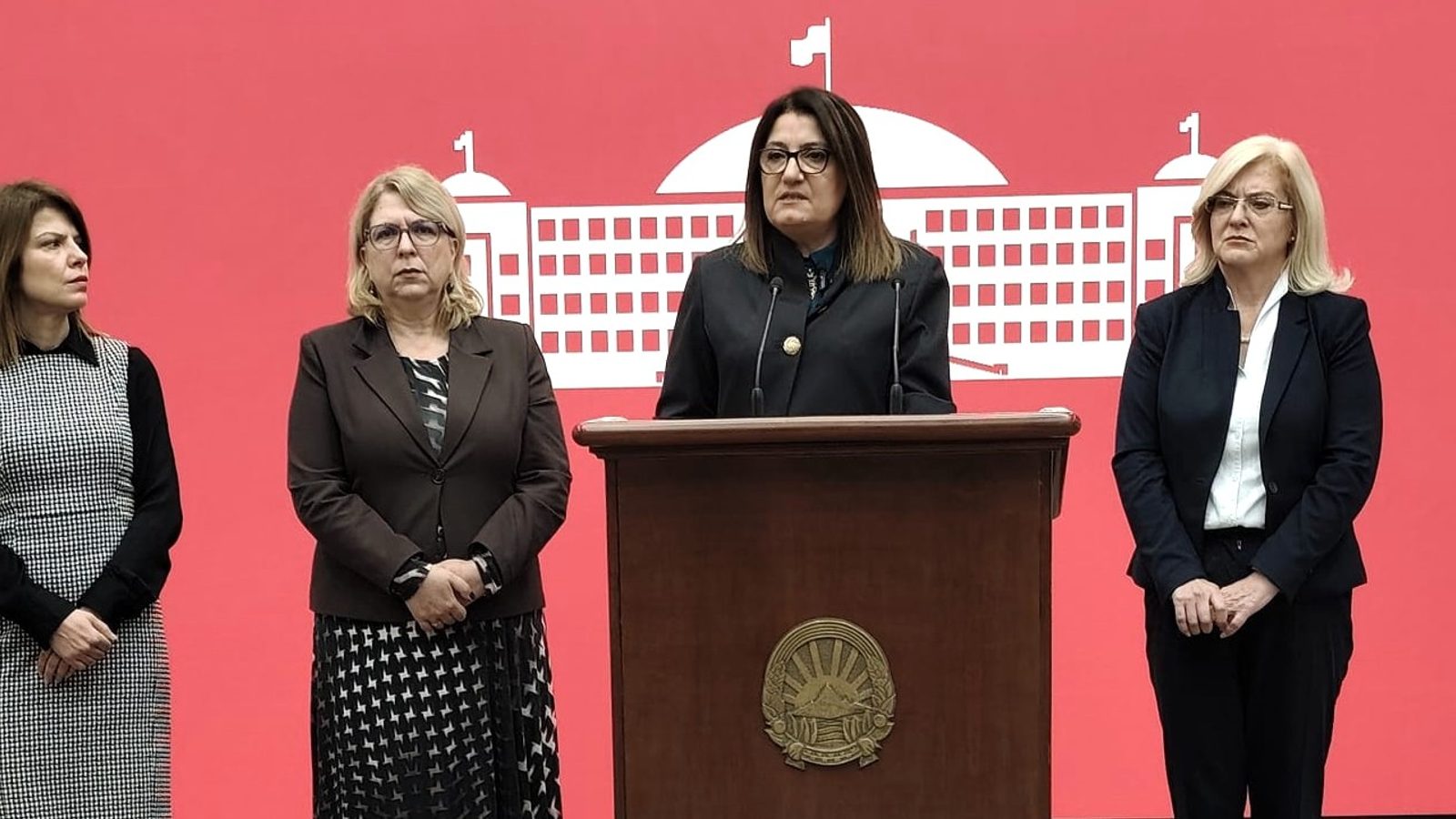
Interior Minister Panche Toshkovski questioned why participants in today's march against femicides did not demand resignations in 2018 and 2022, when the number of victims was the same as in 2026. Toshkovski spoke at an event held under the motto "United we act, determined against violence," organised by the Union of Women, the City Committee and the Youth Union of VMRO-DPMNE as part of the "16 Days of Activism" campaign.
Addressing the gathering, he accused some critics of rewriting priorities. "By deceiving themselves, they are trying to deceive the Macedonian people that what they are doing now, that which for them is today the highest priority, was also the highest priority in 2022 and in 2018. But when they were in power, it was not; yet then too the seven victims of femicide had names and surnames, as they do today," the minister said.
Toshkovski also posed a series of rhetorical questions about public memory and consistency, asking whether anyone remembers the names of the women who died in earlier years. "Do you remember any name from 2002? That is not a number. Seven women died as a result of domestic violence in 2022. Does anyone of you remember the name of any of those women? Seven is the number of women killed as a result of domestic violence in 2018. Do any of those who protested today — citizens whose anger I understand, whose dissatisfaction I understand, whose disappointment I understand — does anyone of them remember the name of a woman who lost her life as a result of domestic violence in 2018?" Toshkovski asked.
Law changes and statistics, he said, show increased institutional response
Toshkovski defended the government's record on institutional measures taken this year, pointing to changes in the Criminal Code in 2026 that make bodily injury a criminal offence prosecuted ex officio by the Ministry of Internal Affairs. He cited enforcement statistics to illustrate the point.
"Last year there were 44 pre-trial detentions for suspected perpetrators of domestic violence; this year there are 163," he said, adding that, according to his calculation, the application of the strictest institutional measure — remand — has increased by 300 percent.
On responsibility across society, he stressed that policing is only one part of the response. "Is the police the only institution within the social system that must act, or are there other institutions that must contribute as well — non-governmental organisations, and above all I would start with the family," he said.
He closed by appealing to a shared national aim. "I assure you that we will make Macedonia a more beautiful place to live with work and openness, with courage and unity. If the goal of all of us is to live in a safe Macedonia, then the focus of Macedonia must be the woman and the child," Toshkovski said.
Earlier today in Skopje a protest march organised by the civic initiative "Not One More" began in front of the Assembly and ended near the Ministry of Internal Affairs. Protesters placed a makeshift grave outside the ministry and said they would not remain silent or obedient as they demand urgent institutional accountability and timely protection for victims of gender-based violence.
Photo: press material from the event